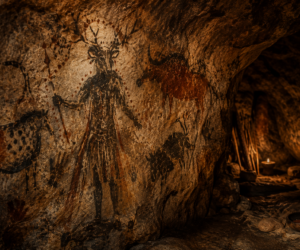
Around 30,000 to 35,000 years ago, something shifted in human culture. There was an explosion of symbolic activity. Art appearing simultaneously in Europe, Australia, and elsewhere. As though the species had crossed a threshold into a new kind of consciousness. And the art that emerged was not simple. It was not casual. Much of it was placed in the most inaccessible parts of the caves, as if the difficulty of reaching it was part of the point.
 Written by Keeper
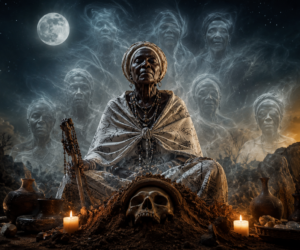
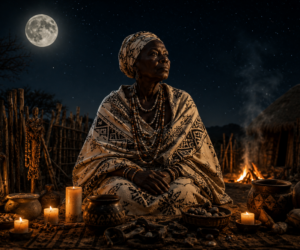
She stood at the gallows and refused to convert.
The British colonial authorities had captured her after two years of eluding them across the hills of Mashonaland. They had tried her for murder, found her guilty, and sentenced her to hang. They offered her, as they had offered her ally Sekuru Kaguvi, the possibility of a Christian death — the consolation of a new religion, the last rite of the civilization that had invaded her land, confiscated her people’s cattle, and imposed a tax on the very act of existing in one’s own home.
Kaguvi converted. Nehanda did not.
She is reported to have wept at his conversion — not out of fear for herself, but out of grief that he had, in her understanding, abandoned his people at the last moment. She died as she had lived: as a medium of the Nehanda spirit, as a Shona woman who had organized a national uprising against the most powerful empire in the world, and as someone who understood that her death was not an ending.
Her last words, as recorded across oral tradition: My bones will rise.
 Written by Keeper
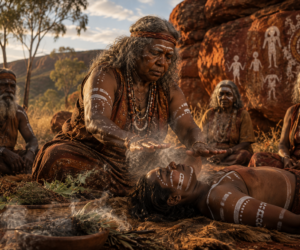
In April or May of 1856, a fifteen-year-old Xhosa girl went to fetch water from a pool near the mouth of the Gxarha River.
When she returned, she told her uncle that she had met the spirits of three of her ancestors.
The spirits had given her a message for the Xhosa people. If the people destroyed their crops and killed their cattle, every last head of livestock, the foundation of their wealth and their food, the ancestors would rise from the dead. New, uncontaminated cattle would come. New grain would fill the empty storehouses. And a great wind would rise and drive the British settlers into the sea.
The people would be free. The land would be restored. Everything that had been taken would be given back.
Her name was Nongqawuse.
And the story of what happened next is one of the most complex, most devastating, and most theologically significant events in the history of African prophetic tradition.
 Written by Keeper
The oldest culture on Earth is not a museum piece.
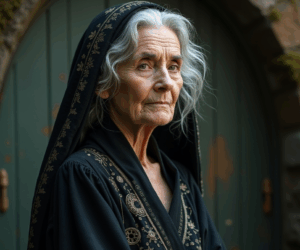
It lives in the red country of central Australia, in the knowledge held by Anangu elders, in the healing practices of ngangkari who work today in both remote communities and city hospitals, in the songs and stories and law that have been maintained across tens of thousands of years of continuous human presence on this continent.
Aboriginal Australian spiritual traditions are, by any reasonable reckoning, the oldest unbroken spiritual practices currently in existence.
 Written by Keeper
Not everyone gets the family story.
Some of us grew up with gaps where the history should have been, or were handed versions of it that didn’t hold up, or came from people who simply weren’t interested in passing anything down. Some of us had mothers who made it very clear, in one way or another, that we were on our own.
I’m one of those people. My family history is full of silence and misdirection, and what little I do know doesn’t light a clear path backward. There’s no grandmother’s windowsill to look back on fondly. No folk wisdom quietly handed down between women over generations.
For a long time I thought this meant I was starting from nothing.
I wasn’t. I just had to learn to look differently.
Here’s what I’ve come to understand: the path found me before I had words for it. Long before I knew what any of this was called, before I’d read a single book or found a single community, something in me was already oriented in this direction. Toward the unseen. Toward meaning beneath the surface of things. Toward fire and symbol and the question of what persists.
 Written by Keeper
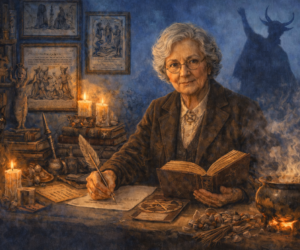
In 1921, a fifty-eight-year-old British Egyptologist published a book that changed the history of witchcraft. Not because it was right, but because it arrived at exactly the right moment with exactly the right idea, in exactly the right voice.
The book was The Witch-Cult in Western Europe: A Study in Anthropology. The woman was Margaret Alice Murray. And the idea, that the accused witches of the early modern witch trials were not deluded, hysterical, or innocent victims but actual practitioners of an ancient pre-Christian religion that had survived underground for centuries, was, as subsequent scholarship would show in some detail, largely wrong.
And yet.
 Written by Keeper
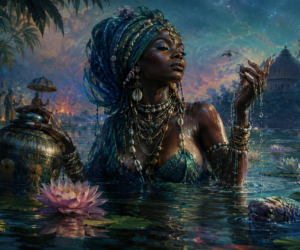
She rises from the water at night.
She is impossibly beautiful. Her hair is long and falls loose around her shoulders. Her eyes hold the particular quality of deep water, dark, reflective, suggesting depths that the surface does not reveal. She may wear a snake coiled around her body like living jewellery. She may have the tail of a fish where her legs should be, or she may appear entirely human, more human than any human you have ever seen, which is itself the sign.
She is Mami Wata. Mother Water. And she has been present in the spiritual life of West and Central Africa, and the African Atlantic world, for longer than any written record can reach.
She is not a goddess in the distant, untouchable sense. She is immediate. Capricious. Generous and dangerous in equal measure. She takes lovers and brings them fortune, or she takes them entirely. She heals. She curses. She appears to those she chooses, often without being asked, and the encounter changes the person forever.
To be chosen by Mami Wata is not
 Written by Keeper
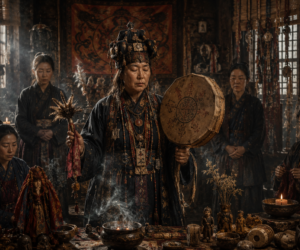
Before Confucius. Before the dynasties that gave China its recognisable historical shape. Before the texts that would define Chinese philosophy and religion for millennia – there were the Wu.
They danced in long-sleeved robes until the spirits entered them. They spoke in the language of gods and communicated the will of the dead to the living. They performed rain ceremonies, healed the sick, drove off malevolent forces, interpreted dreams, and predicted the future through divination. They were called to the oracle bones, the ancient Chinese practice of writing questions and submitting them to flame. And their voices were recorded in the inscriptions that survive as some of the oldest writing in the world.
And they were, predominantly, women.
The wu (巫) ~ the word translates as shaman, sorceress, spirit-medium, or ritual specialist depending on context and century,
 Written by Keeper
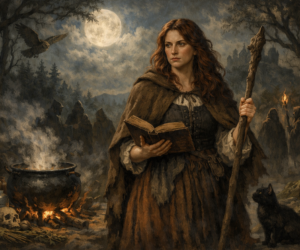
In the spring of 1662, in the small parish of Auldearn on the Moray coast of Scotland, a woman named Isobel Gowdie began to speak.
Over six weeks, between April 13th and May 27th, she gave four separate confessions to a panel of ministers, landowners, and a public notary named John Innes, who wrote everything down. She was not, as far as the records indicate, subjected to the spectacular physical tortures that characterised some witch trials. She simply spoke. At length, in detail, with a richness and internal consistency that scholars have been returning to ever since.
What she described was a world saturated with magic. A coven of thirteen, each with a named spirit attendant. Meetings at Earlseat Hills and the Kirk of Nairn and Darnaway Palace. The Devil as a large, dark, cold man. The Queen of Faerie in white linens.
 Written by Keeper
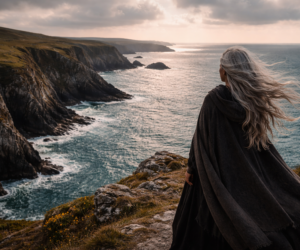
Her name evokes images of dark magic, seduction, and betrayal. Morgan le Fay, or Morgana, Morgaine, Morgen, stands as one of the most complex and misunderstood figures in Arthurian legend. Today she’s often portrayed as a villain, depicted as a witch or enchantress, the antagonist to King Arthur and the Knights of the Round Table. But this wasn’t always her story. The truth is far more fascinating. Morgan le Fay began her literary life as a powerful healer, a divine feminine figure, and Arthur’s protector, only to be systematically demonized by medieval male writers who couldn’t reconcile themselves to a woman wielding such extraordinary power.
This is the story of how a goddess became a witch, and what was done to one of the most powerful women in Western mythology.
The Ancient Roots ~ Goddess, Fairy, and Divine Healer
Morgan le Fay’s origins trace back to Celtic mythology and legend, first appearing in writing in the twelfth century but likely based on much older figures from Celtic folklore and mythology.
Her name itself offers clues to her divine origins. “Morgan” may derive from the Welsh “Morcant” (meaning sea-born or sea-circle) or connect to “Mor-rigan” (great queen), linking her to the Irish goddess Morrigan. A powerful deity associated with sovereignty, prophecy, war, and fate. She has also been linked with the supernatural mother Modron, derived from the continental mother goddess figure Dea Matrona and featured in medieval Welsh literature.