Friday the 13th ~ Reclaiming the Magic of a Misunderstood Day

For centuries, Friday the 13th has been shrouded in superstition and fear. But what if I told you that this date holds powerful transformative energy that witches and spiritual seekers can harness for deep inner work and manifestation? The Origins of Friday the 13th The fear of Friday the 13th, known as paraskevidekatriaphobia, is a relatively modern phenomenon. Historically, both Fridays and the number 13 held sacred significance: Friday was named after the Norse goddess Freya (or Frigg), the goddess of love, beauty, fertility, and magic. In many pagan traditions, Friday was considered an auspicious day for spellwork, particularly love magic. The number 13 has long been associated with the divine feminine. There are 13 lunar cycles in a year, connecting this number to moon magic and the goddess. Many ancient cultures revered 13 as a number of completion and transformation. The negative associations likely arose during the patriarchal shift in medieval Europe, when the Church sought to demonize pagan practices and feminine power. What was once sacred became “sinister.” Reclaiming Friday the 13th Energy Rather than fearing this day, we can embrace it as a portal for: ~ Shadow work and self-reflection ~ This is an ideal time to explore the hidden aspects of yourself~ Breaking through limiting beliefs ~ Challenge the fears and superstitions that hold you back~ Transformation and release ~ Use this potent energy to shed what no longer serves you~ Divine feminine connection ~ Honor the goddess within and tap into intuitive wisdom~ Protection magic ~ Turn the tables on fear-based energy by strengthening your spiritual boundaries 🪄 Rituals for Friday the 13th Mirror Scrying: Gaze into a black mirror or darkened water to receive messages from your subconscious or spirit guides. Banishing Ritual Write down fears, bad habits, or toxic patterns on biodegradable paper and burn them safely, releasing their hold on you. Goddess Meditation Connect with Freya, Hecate, or another deity associated with transformation and feminine power. Protection Sachet Create a small bag filled with protective herbs like rosemary, bay leaf, and black salt. Carry it with you or place it in your home. Tarot Reading Pull cards specifically asking about what needs to be released and what transformative energy is available to you now. ✍️ Journal Prompts Grab your grimoire or journal and explore these shadow-work prompts: On Fear and Superstition ~ What superstitions or irrational fears do I still carry? Where did they come from?~ How has fear held me back from pursuing my desires or expressing my authentic self?~ What would change in my life if I released these fears completely? On Transformation ~ What part of my old self is ready to die so something new can be born?~ What patterns or beliefs have I outgrown but am still clinging to out of habit?~ If I could transform one aspect of my life with magic, what would it be and why? On Shadow Work ~ What parts of myself do I hide from others? What am I afraid they’ll see?~ What emotions do I tend to suppress or avoid? What might they be trying to tell me?~ How do I sabotage my own success or happiness? What protective purpose did this behavior once serve? On Feminine Power ~ How do I embody the divine feminine in my life? Where could I embrace it more fully?~ What aspects of my power or intuition have I been taught to doubt or diminish?~ How can I honor my cyclical nature (like the moon) rather than forcing linear productivity? On Luck and Manifestation ~ Do I truly believe I’m worthy of receiving good… …

Membership Required

You must be a member to access this content.

View Membership Levels

Already a member? Log in here

Devil’s Breath ~ Separating Dangerous Reality from Viral Misinformation

A Word of Caution Before We Begin I recently saw someone on TikTok claim that creating Devil’s Breath is as simple as mixing pepper and flour, or something similar. Let me be absolutely clear: please don’t believe everything you see on social media without confirming it. This kind of misinformation is not only false but potentially dangerous. Devil’s Breath is real. It’s dangerous. And it’s definitely not a kitchen spice mix. Devil’s Breath (scopolamine) is a serious alkaloid compound derived from specific plants, not a kitchen concoction. Spreading or believing such myths can lead to harmful experimentation or unnecessary panic. Always verify information, especially when it involves substances that could affect health and safety. Let me give you the actual facts about what this substance is, how it works, what’s true about the sensationalized stories, and what’s been exaggerated by media panic and urban legends. What Is Devil’s Breath? Devil’s Breath, also known as scopolamine or burundanga, has earned a terrifying reputation as a mind-control drug that can turn victims into compliant zombies. But how much of this is fact, and how much is urban legend? Let’s separate the reality from the sensationalism. Devil’s Breath is a tropane alkaloid derived from plants in the Brugmansia and Datura families, particularly Brugmansia arborea (angel’s trumpet) and related species native to South America. The active compound, scopolamine, affects the nervous system by blocking certain neurotransmitters, particularly acetylcholine. In controlled medical settings, scopolamine has legitimate uses for treating motion sickness, nausea, and certain eye conditions. However, in criminal contexts, the substance has allegedly been weaponized in powder or liquid form. The Alleged Effects According to numerous reports and testimonials, Devil’s Breath can supposedly render victims into a suggestible, compliant state where they: ~ Lose their free will and follow commands~ Remain conscious but have no memory of events~ Willingly hand over belongings or access to bank accounts~ Appear normal to outside observers Victims reportedly awaken hours or days later with no recollection of what happened, sometimes finding their apartments emptied or bank accounts drained. The History and Geography Devil’s Breath has been most commonly associated with Colombia, particularly in cities like Bogotá and Medellín, though reports have emerged from other South American countries as well. The drug’s connection to indigenous South American plants gives it deep historical roots. These plants were used ceremonially and medicinally by indigenous peoples long before their criminal exploitation. Criminal use allegedly began appearing in earnest in the late 20th century, with reports of the substance being blown into victims’ faces, mixed into drinks, or absorbed through business cards and flyers handed to unsuspecting targets. Separating Fact from Fiction While scopolamine is a real substance with documented effects, the “zombie drug” narrative has been questioned by medical experts and researchers. Here’s what we know: The Science: Scopolamine does cause sedation, amnesia, and confusion at certain doses. It’s a deliriant that can impair judgment and memory formation.The Skepticism: Medical professionals point out that the dose required to cause complete compliance without rendering someone unconscious or obviously impaired is extremely narrow. Many documented cases lack toxicology reports confirming scopolamine was actually used.Media Amplification: Sensational news reports and documentary segments have potentially exaggerated the drug’s prevalence and effects, creating a modern urban legend that feeds on genuine fears. The Real Danger Whether or not Devil’s Breath works exactly as portrayed in popular media, scopolamine poisoning is genuinely dangerous. High doses can cause: ~ Severe hallucinations and delirium~ Respiratory failure~ Seizures~ Coma~ Death Additionally, the fear of Devil’s Breath has real consequences, affecting tourism and creating anxiety in affected regions. URBAN MYTHS AND EXAGGERATIONS… …

Membership Required

You must be a member to access this content.

View Membership Levels

Already a member? Log in here

Hidden Magic ~ What Witches Concealed in Walls and Why

When renovating old homes, construction workers and homeowners sometimes make startling discoveries, like, shoes hidden in chimneys, bottles filled with strange objects sealed behind walls, bundles of bones tucked into rafters, and mysterious markings carved into beams. These aren’t random curiosities, they’re protective magic, deliberately concealed by our ancestors to guard their homes and families from harm. This practice of hiding magical objects within the structure of buildings spans centuries and cultures, revealing a fascinating tradition of household witchcraft and folk magic that thrived long before modern Wicca emerged. The Origins of Concealed Magic The practice of hiding magical objects in walls, under floors, and within the structure of buildings has roots stretching back to medieval times and likely even earlier. While we often associate these practices with “witches,” the reality is that these were folk magic traditions practiced by everyday people. Hhomeowners, builders, midwives, and cunning folk who served their communities as magical practitioners. This tradition was particularly prevalent in Britain from the 16th through the 19th centuries, though similar practices existed across Europe and eventually traveled to colonial America. During the height of witch persecution (roughly 1450-1750), ironically, protective magic became even more widespread as people sought to defend themselves against malevolent witchcraft, the evil eye, demons, and other supernatural threats. These concealed objects weren’t generally the work of people who would have called themselves “witches”, a dangerous label during persecution periods, but rather folk practitioners who blended Christian prayers with older magical traditions, creating a syncretic practice that felt both pious and protective. Concealed Shoes ~ Walking Away Evil Perhaps the most commonly discovered items in old buildings are shoes. Single shoes, pairs, or even collections hidden in walls, under floorboards, chimney breasts, and roofs. Thousands have been discovered across Britain, Europe, and North America. Purpose and Meaning: Shoes were believed to absorb the essence and energy of their wearer. A well-worn shoe carried the spiritual imprint of the person who walked in it. When concealed in a home, particularly near entrances like doors, windows, and chimneys (which were seen as vulnerable points where evil could enter), the shoe acted as a decoy or trap for malevolent spirits. The spirit would be drawn to the human essence in the shoe rather than the living occupants. Historical Origins: The practice seems to have peaked between the 17th and 19th centuries. Shoes were often children’s shoes or women’s shoes, possibly because these family members were seen as most vulnerable to supernatural attack. The placement near chimneys was particularly strategic. Chimneys were traditionally associated with witches’ entrances, and St. Nicholas (Santa Claus) wasn’t the only figure believed to travel by chimney. How They Were Used: Shoes were typically hidden during construction or major renovations, sealed into walls or tucked into concealed spaces where they wouldn’t be disturbed. They were meant to remain hidden, working their protective magic in secret. Finding them was never intended, as their power lay in remaining concealed. Witch Bottles ~ Trapping Malevolent Magic Witch bottles are among the most potent protective charms discovered in old buildings. These glass or stoneware bottles contained a mixture of items designed to attract, trap, and destroy harmful magic directed at the household. Purpose and Meaning: A witch bottle operated on the principle of sympathetic magic. It was designed to attract a witch’s curse or evil spell into the bottle, where it would be trapped and turned back upon the sender. The bottle essentially acted as a magical trap and mirror, reflecting harm back to its source. Historical Origins: Witch bottles are most commonly found dating from the late 16th through… …

Membership Required

You must be a member to access this content.

View Membership Levels

Already a member? Log in here

A Scorpio’s Year ~ 2025 Reflections and 2026 Visions

Coming Out of the Broom Closet 2025 was the year I finally stopped hiding. As a Scorpio, I’m no stranger to keeping secrets, to holding things close, to maintaining that protective shell around what matters most. But this year, something shifted. The weight of staying silent about my practice, about what I actually believe, about who I really am, it became heavier than the risk of speaking out. So I did it. I finally spoke openly about witchcraft. Not in hushed tones to a select few, but publicly, clearly, without apology. And in doing so, I made a decision that would shape everything that followed. I would build crafttalk.com as a learning and circle platform for practitioners who, like me, were looking for authentic community and genuine teaching. That moment of choosing visibility over safety? Pure Scorpio transformation energy. Death of the hidden self, rebirth into authenticity. It wasn’t comfortable, Scorpio growth never is, but it was necessary. The Lesson I Didn’t Expect Here’s what I thought I knew about myself going into 2025: I’m a solitary practitioner. I work best alone. I don’t need community or circles or other people’s energy in my practice. I’m self-sufficient, independent, perfectly content in my solitary path. Here’s what 2025 actually taught me: I love being on my own, but everyone needs a circle eventually. This was a hard lesson for a Scorpio to learn. We pride ourselves on our independence, our ability to go deep alone, our comfort in isolation. Admitting that I needed community felt like admitting weakness. But the truth kept revealing itself in ways I couldn’t ignore. The joy I felt connecting with other practitioners. The way my practice deepened when I could share insights and learn from others’ experiences. The energy that moved through group work in ways it never could in solitary practice. The validation of knowing I wasn’t the only one navigating these paths. Solitary work is powerful and necessary. But it’s not the whole story. Community amplifies what we can do alone. A circle creates energy that no individual can generate by themselves. This year taught me that accepting support and connection isn’t weakness – it’s wisdom. And maybe that’s why I was called to build crafttalk.com. Not just for others, but for myself. To create the circle I was finally ready to admit I needed. Walking My Own Path The most profound shift in my practice this year came from a simple realization: I didn’t need to follow someone else’s footsteps. I just needed to take my own, one at a time. For years, I’d been trying to fit my practice into existing frameworks. Following traditions that felt partially right but never quite complete. Reading books by practitioners whose paths I admired, then feeling inadequate when my practice didn’t look like theirs. Trying to force my intuition into someone else’s system. 2025 was when I finally stopped doing that. I stopped asking “Is this how I’m supposed to practice?” and started asking “Does this feel true to me?” I stopped looking for permission from established traditions and started trusting my own knowing. I stopped trying to master entire systems before I felt worthy to practice and started working with what called to me in the moment. This is peak Scorpio energy. Trusting our own depths, honoring our own intuition, refusing to be limited by what others say should be. We’re not followers by nature. We’re transformers, divers into depths, seekers of hidden truth. Of course my path wouldn’t look like anyone else’s. Each step I took on my own terms taught me more than… …

Membership Required

You must be a member to access this content.

View Membership Levels

Already a member? Log in here

The Uninvited Practitioner: When Your Cat Becomes Part of Your Ritual

Every full moon, I set out water beneath the night sky. By morning, it’s transformed, as the tradition goes, into moon water, charged with lunar energy and intention. I keep this water in a small brass holder on my gratitude altar, refreshing it each evening as part of my practice. And every morning, without fail, Freyja jumps onto the altar and drinks it. My cat has inserted herself into my ritual so completely that I’ve stopped questioning whether the water is really for me at all. She approaches the brass holder with the kind of reverence I’m still learning – no hesitation, no doubt, just pure presence. While I stumble through my gratitude practice some mornings, distracted and half-awake, she shows up with absolute certainty. Who Practices for Whom? I never asked Freyja if she wanted to be part of this. I never explained the full moon, or intention-setting, or why this particular water sits in this particular place. Yet she’s made it her ritual too, perhaps more faithfully than I have. This raises a question that’s been sitting with me, quiet but persistent. When we practice something spiritually, creatively, emotionally – how much of it ripples out to those who share our space? And do we have any right to create those ripples without asking first? The Unspoken Influence of Practice We think of spiritual practice as deeply personal, contained within the boundaries of our own consciousness. But practice doesn’t exist in a vacuum. It shapes the air in our homes, the rhythms of our days, the small objects we place with care in certain spots. It creates patterns that others, human or animal, learn to navigate. Freyja didn’t choose to live with someone who keeps an altar. She didn’t consent to the particular energy I’m trying to cultivate when I light incense or sit in meditation. Yet she’s shaped by it anyway, just as I’m shaped by her presence. The way she demands attention when I’m too much in my head, or settles beside me when the practice actually lands. The Ethics of Shared Space There’s something uncomfortable in this realization. We’re often careful about consent in explicit ways. We ask before sharing someone else’s story, before touching, before entering. But what about the subtler impositions? The mood we bring into a room. The practices that reorganize shared space according to our own seeking. I can’t ask Freyja if she minds. I can’t know if the energy I’m trying to cultivate feels like home to her or like living in someone else’s dream. All I can do is watch her return to that brass holder, morning after morning, and wonder if she’s found something in this practice that I’m still looking for. When Practice Becomes Ours Maybe the question isn’t whether my practice becomes hers, but whether any practice ever really belongs to just one person. The moment we bring something into being – a ritual, a creative routine, a way of moving through the day, it becomes part of the shared ecosystem. Others adapt to it, resist it, or surprisingly, join it. Freyja has taught me that practice isn’t about perfect intention or pristine isolation. It’s messy and collaborative, even when we didn’t plan for collaboration. It’s the brass holder that holds moon water some days and cat spit most days. It’s the altar that’s both sacred and functional, depending on who’s approaching it. The Gift of Unexpected Participation Perhaps there’s grace in not asking permission for every ripple we create. Perhaps some of the most profound practices emerge not from careful consent but from organic adaptation…. …

Membership Required

You must be a member to access this content.

View Membership Levels

Already a member? Log in here

Why Black Cats Have Such a Dark History

There’s something undeniably magical about a black cat crossing your path. Their sleek ebony fur, luminous eyes, and graceful movements have captivated humans for millennia. Yet these beautiful creatures have endured centuries of persecution, superstition, and fear. So how did black cats become so entwined with darkness, witchcraft, and bad luck? Ancient Reverence Turned to Fear The story of black cats hasn’t always been dark. In ancient Egypt, all cats were revered as sacred, and black cats were associated with the goddess Bastet, representing protection, fertility, and good fortune. Celtic mythology also held black cats in high regard, believing they brought blessings to homes. But this reverence began to shift dramatically during the Middle Ages in Europe. As the Christian church expanded its influence, it sought to suppress pagan traditions and beliefs. Cats, particularly black ones, became caught in this cultural transformation. The Witch Hunt Connection The true persecution of black cats began in earnest during the witch trials of the 14th through 17th centuries. The church taught that witches could transform themselves into animals, with black cats being a preferred form due to their ability to move silently through the night. This belief in “familiars”, demonic spirits that took animal form to assist witches, became deeply embedded in European folklore. Pope Gregory IX’s papal bull in 1233 explicitly linked cats with devil worship, effectively sanctioning the mass killing of cats across Europe. Women who lived alone and cared for cats were often accused of witchcraft, and their feline companions were viewed as evidence of their dark practices. The association was strengthened by the black cat’s natural behaviors. Their nocturnal habits, glowing eyes in darkness, and silent movements seemed mysterious and otherworldly to medieval minds. When a black cat appeared during times of illness or misfortune, it was blamed rather than seen as coincidence. The Cost of Superstition This persecution had devastating consequences. The mass killing of cats in medieval Europe likely contributed to the spread of the Black Death, as rat populations exploded without their natural predators. Yet the superstitions persisted and spread, particularly to Colonial America where witch trials continued the tradition of fearing black cats. Modern Echoes Today, remnants of these superstitions linger. Black cats remain the least adopted from shelters and are sometimes still targeted for harm, especially around Halloween. Some shelters even suspend black cat adoptions in October due to safety concerns. Yet there’s been a beautiful reclamation happening within witchcraft and pagan communities. Modern witches embrace black cats as companions and symbols of the magical arts, honoring them not as tools of evil but as representations of the mysterious, the feminine, and the misunderstood. Embracing the Shadow The dark history of black cats teaches us about the dangers of superstition and the persecution of the misunderstood. These elegant creatures became victims of humanity’s fear of the unknown and the feminine power that witchcraft represented. For those of us who walk magical paths today, black cats remind us to embrace the shadows, to honor what others fear, and to protect those who have been historically marginalized. They symbolize the very essence of what it means to be a witch – existing in the liminal spaces, seeing in the dark, and transforming fear into power. The next time a black cat crosses your path, consider it not a curse but a blessing. A living link to the ancient mysteries and a reminder that beauty often dwells in the darkness we’ve been taught to fear. What’s your experience with black cats? Do you share your home with one of these magical creatures? … Membership Required You must be …

Membership Required

You must be a member to access this content.

View Membership Levels

Already a member? Log in here

Halloween: Ancient Roots, Sacred Symbolism, and Modern Commercialism

As October 31st approaches, store shelves overflow with plastic decorations, mass-produced costumes, and candy by the ton. But beneath the commercial veneer lies a holiday steeped in ancient tradition, spiritual significance, and genuine magic. Let’s peel back the layers to discover what remains of Halloween’s sacred origins and what we’ve lost to capitalism. The Ancient Beginning: Samhain Halloween traces its roots to Samhain (pronounced “SOW-win”), the Celtic festival marking the end of harvest season and the beginning of winter, the “darker half” of the year. Celebrated from sunset on October 31st to sunset on November 1st, Samhain was one of the four major Gaelic seasonal festivals, alongside Imbolc, Beltane, and Lughnasadh. The Celts believed that on this night, the veil between the physical world and the spirit realm grew impossibly thin. The boundary between the living and the dead became permeable, allowing spirits, fairies, and otherworldly beings to cross over. This wasn’t viewed with horror, but with reverence and caution. A liminal time when the rules of ordinary reality loosened. Sacred Practices of Samhain Our ancestors honored this sacred night with rituals that carried deep meaning: ~ Lighting bonfires on hilltops to guide spirits and provide protection~ Setting places at the table for deceased family members~ Leaving offerings of food and drink outside for wandering souls~ Performing divination rituals, especially concerning marriage and death~ Wearing costumes or veils to confuse malevolent spirits or to honor the dead~ Carving turnips (later pumpkins) with faces to ward off harmful entities This was a time for honoring ancestors, releasing what no longer served, and preparing spiritually for the introspective winter months ahead. The Christian Overlay: All Hallows’ Eve As Christianity spread through Celtic lands, the Church did what it often did with pagan festivals – absorbed and rebranded them. In the 8th century, Pope Gregory III designated November 1st as All Saints’ Day (All Hallows’ Day), a time to honor saints and martyrs. The night before became All Hallows’ Eve, eventually shortened to Halloween. November 2nd became All Souls’ Day, dedicated to praying for the dead. While the Church reframed the meaning, many of the old customs persisted, creating a syncretic blend of Christian and pagan traditions. The remembrance of the dead remained central, even if the theological understanding shifted. Symbolism That Endures Despite centuries of change, many Halloween symbols retain their original potency: The Jack-O’-Lantern Originally carved from turnips in Ireland and Scotland, these illuminated faces served as protection against evil spirits and as lights to guide benevolent souls. The practice transferred to pumpkins in America, where they were more plentiful. The flickering light within still represents the soul, the thin membrane between life and death, and the protective fire of transformation. Black Cats and Witches Medieval persecution linked cats (especially black ones) with witchcraft and devil worship, but the older connection runs deeper. Cats were sacred to the Celtic goddess Brigid and were believed to be shapeshifters or familiars, spirit guides in animal form. The witch herself embodies the wise woman, herbalist, and keeper of old ways that the patriarchy sought to destroy. Skeletons and Skulls The skull has been a symbol of mortality, wisdom, and ancestral knowledge across cultures. On Halloween, it reminds us that death is not an ending but a transformation. A doorway we all must pass through. In many traditions, skull imagery honors the ancestors and acknowledges the temporary nature of physical existence. Bats and Owls These nocturnal creatures represented messages from the spirit world. Bats, drawn to Samhain bonfires where they feasted on insects, became associated with the festival. Owls, as silent hunters of the night,… …

Membership Required

You must be a member to access this content.

View Membership Levels

Already a member? Log in here

What the Bible Actually Said About “Witches”: A Mistranslation That Changed History

For centuries, the phrase “Thou shalt not suffer a witch to live” from Exodus 22:18 has been used to justify persecution, torture, and murder. But what if the Bible never actually condemned witches at all? What if the wise women, the herbalists, the midwives, and the village healers were never the target of this ancient text? The truth is far more complex, and far more tragic, than most people realize. The Word That Changed Everything: Kashap In the original Hebrew text of Exodus 22:18, the word translated as “witch” is kashap (כָּשַׁף). This is critical, because kashap doesn’t mean what we think of as a witch at all. Kashap refers specifically to someone who uses poison or harmful potions with malicious intent – a poisoner, a sorcerer who causes harm through toxic substances. The root of the word is associated with muttering or whispering incantations while preparing harmful concoctions. This wasn’t about the wise woman brewing healing tea or the midwife easing labor pains with herbal remedies. In ancient Near Eastern context, a kashap was closer to what we might call a malicious poisoner or one who used substances to harm, manipulate, or kill others, often for payment. These were individuals who worked in secret to cause genuine harm, not community healers working openly to help their neighbors. The verse, more accurately translated, might read: “You shall not allow a poisoner to live” or “Do not tolerate one who harms through toxic sorcery.” The Wise Women Who Were Never Condemned Throughout the Biblical narrative, we actually see women in roles that would later be called “witchcraft” by European standards, and they’re not condemned for it. Midwives like Shiphrah and Puah are celebrated as heroes who defied Pharaoh to save Hebrew babies. The woman of En-dor, though operating outside official religious channels, isn’t condemned in the text for her abilities, Saul seeks her out, and the narrative treats her sympathetically. The “virtuous woman” of Proverbs 31 is praised for her knowledge of herbs and textiles, skills that would later mark women as suspicious. The Biblical text distinguishes between harmful magic (kashap, using poisons to harm) and the everyday wisdom of women who understood plants, healing, and the mysteries of birth and death. The herbalist mixing remedies, the midwife catching babies, the woman who knew when to plant by the moon. These were never the target. When Religion Became a Weapon: Europe’s Dark Turn Fast forward to medieval and early modern Europe. Christianity had spread across the continent, but something sinister was brewing. As the Church consolidated power and patriarchal structures tightened their grip, fear became a useful tool of control. The translation of the Bible into Latin, then into vernacular European languages, carried that single word kashap into a completely different cultural context. European translators, influenced by their own cultural fears and misogyny, chose words like “witch” (English), Hexe (German), and sorcière (French) – words loaded with meaning in their own cultures. But European “witches” weren’t poisoners. They were often simply women who: ~ Possessed knowledge of herbal medicine~ Served as midwives and healers~ Lived independently without male oversight~ Owned property or spoke too boldly~ Were elderly and no longer “useful” to patriarchal society~ Were convenient scapegoats when crops failed or illness struck The mistranslation provided Biblical justification for something the text never actually endorsed: the systematic persecution of women, particularly those with knowledge, independence, or property. Fear as a Weapon of Control The European witch hunts (roughly 1450-1750) resulted in the execution of an estimated 40,000 to 60,000 people, with some historians suggesting the number could be much higher. The… …

Membership Required

You must be a member to access this content.

View Membership Levels

Already a member? Log in here

October Scorpio Energy: A Birthday Reflection

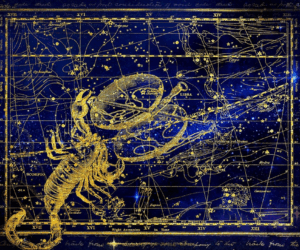
Today marks another trip around the sun for me, and as an October Scorpio, I’ve been reflecting on what makes our energy so distinctly different from our November Scorpio siblings. While we share the same intense, magnetic sign, the cosmic timing of our births creates two very different expressions of Scorpio power. The Dual Rulership: Mars and Pluto Scorpio is unique in that it’s ruled by two powerful planets: Mars, the ancient ruler, and Pluto, the modern ruler. But here’s where October and November Scorpios diverge. Those of us born in October carry more of Mars’ fierce, warrior-like energy. We’re the first-decan Scorpios, and that Martian influence makes us quick to react, ready to strike, and always prepared to take immediate action. Mars gives us that signature fire in our veins. We don’t just feel intensely, we move intensely. When something triggers our passion or our protective instincts, we respond with lightning speed. There’s no hesitation, no second-guessing. We see what needs to be done, and we do it. November Scorpios, on the other hand, lean more heavily into Pluto’s transformative, mysterious energy. They’re the strategists, the ones who play the long game. While we’re charging forward, they’re planning ten moves ahead, working in the shadows to orchestrate deep, lasting change. Fiercely Independent and Ready for Battle As an October Scorpio, independence isn’t just a preference – it’s a necessity. We need to feel autonomous, capable, and self-sufficient. The idea of relying on others or being constrained by someone else’s timeline or decisions? It makes our skin crawl. We’re the ones who would rather do something ourselves than wait for help, even if it means taking the harder path. This fierce independence is deeply tied to our Mars influence. We’re warriors at heart. We don’t back down from challenges; we run toward them. When life throws obstacles in our path, our first instinct isn’t to retreat or strategize, it’s to face them head-on with courage and determination. No Games, No Secrets: What You See Is What You Get Here’s something that sets October Scorpios apart from the typical Scorpio stereotype – we express our emotions openly. While November Scorpios are known for being mysterious, secretive, and hard to read, we wear our hearts on our sleeves, albeit armored ones. We speak our minds without hesitation. We don’t play games. If we like you, you’ll know. We’ll show up for you, fight for you, and make our loyalty crystal clear. If we don’t like you? You’ll definitely know. We’re not the type to smile politely while harboring resentment. We’re direct, sometimes brutally so, and we’d rather have an honest confrontation than maintain a false peace. This transparency comes from that Mars-driven fearlessness. We’re not afraid of conflict or confrontation. In fact, we sometimes prefer it to the alternative of pretending everything’s fine when it’s not. Driven, Fearless, and Explosive We are warriors in the truest sense. We don’t hide, we don’t manipulate from the shadows, and we certainly don’t wait for things to come to us—we chase what we want with relentless determination. This makes us incredibly driven and fearless, but it also makes us impulsive. That Martian quickness is both our superpower and our challenge. We react fast, sometimes too fast. When we feel threatened, disrespected, or passionate about something, our response is immediate and intense. We’re prone to explosive reactions when provoked. That fire doesn’t just burn; it erupts. This can make us incredibly effective in crisis situations. When everyone else is frozen in indecision, we’re already three steps ahead, taking action and solving problems. But it can also… …
Membership Required

You must be a member to access this content.

View Membership Levels

Already a member? Log in here

The Case for One Beautifully Illogical Thing: Why Your Home Needs an Object That Makes No Sense

We live in an age of optimization. Our homes are curated for function, flow, and aesthetic cohesion. Marie Kondo taught us to keep only what sparks joy. Minimalism tells us less is more. Every lifestyle influencer has a system, a method, a five-step process for making your space “work better.” And yet, I’m here to argue for the opposite: You need at least one object in your home that makes absolutely no logical sense. Not something quirky-but-practical. Not a conversation starter that you can explain away. I mean something truly, wonderfully, stubbornly illogical. Something that violates every principle of good design and sensible living. Something that exists simply because it exists, and for no other reason. Why You Need the Illogical It Keeps You Human When everything in your life has a purpose, you start to feel like a machine. The coffee maker makes coffee. The meditation cushion facilitates mindfulness. The art on the wall “ties the room together.” But humans aren’t efficient. We’re gloriously, messily irrational creatures who fall in love with things for reasons we can’t articulate. That ceramic frog wearing a top hat? That broken clock you’ll never fix? That inexplicable collection of hotel soap you’ll never use? These things remind you that you’re allowed to want things without justification. You’re allowed to occupy space in the world without earning it through productivity or purpose. It’s a Rebellion Against Optimization Culture We’re drowning in efficiency. Our phones track our steps. Our homes learn our preferences. Every object is supposed to serve multiple functions. Like the ottoman that’s also storage, the mirror that’s also a medicine cabinet, the couch that becomes a bed. The illogical object is a middle finger to all of that. It serves no function. It doesn’t optimize anything. It might even make your space slightly less efficient. And that’s precisely the point. It declares: “Not everything needs to be useful. Not everything needs to make sense. Some things just are.” It Creates Necessary Imperfection Perfect spaces feel sterile. They feel like showrooms, not homes. The illogical object is the crack in the marble, the thread that doesn’t match, the note that’s slightly off-key but makes the song memorable. Wabi-sabi, the Japanese aesthetic philosophy, celebrates imperfection and impermanence. Your illogical object is your personal practice of wabi-sabi. It’s the thing that makes your space yours, not just another Pinterest board come to life. It Tells a Story Only You Know Maybe it’s a piece of driftwood you picked up on a terrible vacation that somehow became wonderful. Maybe it’s a toy from your childhood that means nothing to anyone else. Maybe it’s something you bought in a strange mood at 2 AM that still makes you laugh. These objects are portals to private moments. They don’t need to make sense to visitors because they’re not for visitors. They’re for you, holding memories or feelings that can’t be explained in a neat elevator pitch. How to Choose Your Illogical Object Rule 1: It Cannot Be Justified If you can explain why it’s there in any reasonable way, it doesn’t count. “It was a gift from my grandmother” is logical. “I thought the asymmetry was interesting” is logical. “I genuinely don’t know why I love this, but I do” is what we’re after. Rule 2: It Should Slightly Confuse Guests Not in an alarming way. No one should feel unsafe. But the ideal illogical object makes people pause and think “huh?” before moving on. It creates a tiny moment of cognitive dissonance. A taxidermied squirrel in Victorian dress. A single rollerskate on a bookshelf. A collection of… …

Membership Required

You must be a member to access this content.

View Membership Levels

Already a member? Log in here