Candle Magic for Beginners ~ Light, Intention, and the Oldest Spell You Already Know

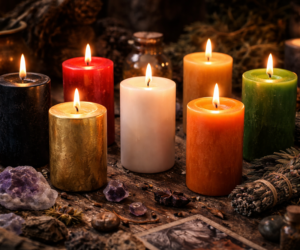
You have already done candle magic. Every birthday cake you ever stood before, eyes closed, holding a wish in your chest before you blew out the candles – that was candle magic. The flame, the intention, the breath that carries the wish outward into the world. The structure is identical. The only difference between that and what we are going to discuss in this post is the degree of consciousness you bring to it. Candle magic is the most accessible form of working magic that exists. It requires no special lineage, no expensive tools, no years of training before you are permitted to begin. It asks for a flame, an intention, and your full attention. Most people already own everything they need. This will help you understand what transforms a lit candle from a simple mood-setter into a conscious act of intention. So that you know what you are doing and why, and what you do carries real weight. What Candle Magic Actually Is Candle magic is a form of sympathetic and elemental magic. It works on two levels simultaneously. On the elemental level, it calls on fire: the oldest of the transformative forces, the element that takes one thing and turns it into another. Fire does not merely move matter from place to place, the way water or wind does. It transforms it, changes its fundamental state. The ash that remains when a candle has burned is not what the candle was. Fire is the element of change, of becoming, of the irreversible transformation from one state into another. On the sympathetic level, candle magic works through the principle that like affects like. That by representing something symbolically (through color, through written intention, through carved words or symbols) and then directing energy toward it through the act of burning, you affect the actual thing. The candle becomes a stand-in for your intention, and what happens to the candle mirrors and amplifies what you are working toward in your life. These two levels together make candle magic particularly potent. The fire transforms the physical representation of your intention into energy and smoke, releasing it into the world. Into whatever forces you work with, into the wider field of possibility, into the channels through which manifestation moves. And practically speaking: the focused attention required to sit with a burning candle and hold an intention in mind is itself a form of concentration practice that aligns your whole system – mind, body, emotion – with what you are calling in. This alignment is, in many traditions, the actual mechanism of magic. The Basics: What You Need One of the most liberating things about candle magic is that it genuinely does not require much. The Candle Any candle can be used for candle magic. Taper candles are traditional in many folk magic systems because they burn completely in a single working and leave nothing behind . The candle is consumed by the working. Pillar candles can be burned in sections over multiple sessions, which suits longer-term intentions. Tea lights and votive candles are practical and accessible. Chime candles, small, slender candles about four inches long, are popular in contemporary practice because they burn relatively quickly and completely and come in a wide range of colors. The size of the candle is less important than the intention you bring to it. A single tea light held with full attention is more potent than an elaborate candle array approached distractedly. A note on beeswax: In the magical tradition, beeswax candles are considered particularly potent because beeswax is itself a substance associated with abundance, sweetness, and… …

Membership Required

You must be a member to access this content.

View Membership Levels

Already a member? Log in here

The Best Categories to Lay Out Your Book of Shadows

Your Book of Shadows is a deeply personal grimoire, but having a clear structure helps you find what you need when you need it. Here are some essential categories to consider: Core Sections Dedications & Beliefs Start with your personal dedication, spiritual philosophy, and the ethical guidelines you follow in your practice. This grounds your entire book in intention. Sabbats & Esbats* Document the Wheel of the Year sabbats and moon phases, including rituals, correspondences, recipes, and personal observations for each celebration. Spellwork Your collection of spells organized by purpose (protection, love, prosperity, healing, banishing). Include ingredients, timing, results, and notes on what worked. Divination Tarot spreads, rune meanings, pendulum techniques, scrying methods, and records of your readings and their accuracy. Correspondences Quick reference charts for herbs, crystals, colors, planetary hours, elemental associations, and deity attributes. Rituals & Ceremonies Circle casting methods, invocations, quarter calls, and ceremonial formats for different occasions. Deities & Spirits Information about gods, goddesses, ancestors, and spirit guides you work with, including offerings and experiences. Herbalism & Kitchen Witchery Magical recipes, herbal remedies, tea blends, and the properties of plants you use. Personal Reflections Dream journals, meditation experiences, magical successes and failures, and lessons learned. Remember Your Book of Shadows evolves with you. Start with what resonates, and let it grow organically. There’s no wrong way to organize your practice – only what serves you best. Blessed be! ✨ Book of Shadows Blessing By moon and star, by earth and flame, I consecrate this book by name. A sacred space for wisdom’s art, Where magic flows from mind and heart. Guard these pages, keep them true, Protect the old and welcome new. May ink and intention here combine, And every word hold power divine. As I will it, so shall it be, This book is blessed, so mote it be. **Esbats are celebrations or rituals held in honor of the full moon (and sometimes the new moon) in Wiccan and pagan practices. While Sabbats mark the eight seasonal festivals of the Wheel of the Year (like Samhain, Beltane, and the solstices), Esbats are the monthly lunar celebrations. Since there are typically 13 full moons in a year, practitioners observe about 13 Esbats annually. What happens during an Esbat ~ Moon magic and spellwork (the full moon is considered a powerful time for manifestation)~ Divination and scrying~ Charging crystals, tools, and moon water~ Honoring lunar deities (like Diana, Selene, or Hecate)~ Personal reflection and spiritual work~ Coven gatherings for ritual Full Moon vs. New Moon Esbats ~ Full Moon – Peak magical power, manifestation, gratitude, celebration ~ New Moon – New beginnings, setting intentions, shadow work, rest The word “Esbat” likely comes from Old French s’esbattre, meaning “to frolic or enjoy oneself,” reflecting the celebratory nature of these lunar gatherings. Many solitary practitioners and covens consider Esbats just as important as Sabbats, using them as regular touchpoints for their magical practice throughout the year…. Membership Required You must be a member to access this content.View Membership LevelsAlready a member? Log in here...
Membership Required

You must be a member to access this content.

View Membership Levels

Already a member? Log in here

Symbols to Wear for Protection ~ Ancient Wisdom for Modern Times

Throughout human history, people have turned to symbols and amulets for protection, comfort, and spiritual guidance. These powerful emblems, worn as jewelry or carried as talismans, serve as personal guardians that connect us to ancient wisdom and cultural traditions. Whether you’re drawn to their historical significance, spiritual meaning, or simply their aesthetic appeal, protective symbols offer a sense of security and connection to something greater than ourselves. Understanding Amulets vs. Talismans Before exploring specific symbols, it’s important to understand the distinction between amulets and talismans. Amulets refer to any object which has the power to avert evil influences or ill luck, while a talisman provides good fortune. A concept that brings us great peace, a bubble of protection. In contrast, a talisman is believed to give the wearer more power. Many symbols can function as both, depending on the wearer’s intention and cultural context. The Evil Eye: Ancient Protection Against Envy Origin and Meaning The “evil eye” is a belief found in many cultures that someone can cause you harm, like bad luck, illness, or other misfortune, just by looking at you with jealousy or ill will. This concept is said to have originated in ancient Mesopotamia some 5000 years ago, where it was used as a way to ward off evil spirits. How It Works The evil eye symbol, typically depicted as a blue eye, acts as a protective shield. The belief is that when someone with malicious intent looks at the wearer, the evil eye symbol will deflect that negative energy back to its source, protecting the wearer from harm. Modern Use Evil eye jewelry has gained tremendous popularity in recent years, with celebrities and everyday people alike wearing these protective talismans. The symbol is commonly found on necklaces, bracelets, rings, and earrings, often crafted in blue and white enamel or featuring blue gemstones like turquoise or lapis lazuli. The Hamsa Hand: Universal Symbol of Protection Cultural Significance Fatima’s hand – a palm-shaped amulet popular throughout North Africa and in the Middle East and commonly used in jewelry and wall hangings. Also known as the Hand of Fatima in Islamic tradition or the Hand of Miriam in Jewish culture, this symbol transcends religious boundaries. Protective Properties This hamsa symbol deflects harmful intentions and symbolizes protection, blessings, power, and spiritual strength. The hand acts as a stop sign to all negative energies. Often the evil eye symbol is located in the palm of the hamsa for double protection. Wearing the Hamsa The hamsa can be worn facing up or down, each orientation carrying different meanings. Facing up, it’s said to provide protection against negative energies, while facing down, it’s believed to bring blessings and good fortune. The Ankh: Egyptian Key of Life Ancient Egyptian Origins The Ankh is an ancient Egyptian symbol that represents life and immortality. It resembles a cross with a loop at the top and is often depicted in the hands of gods and goddesses. The Ankh represented eternal life. It signified wisdom and insight on the highest level and it was also a fertility symbol. Spiritual Meaning From the spiritual point of view the ankh represented the key to all hidden knowledge. The loop symbolized the eternal soul. The Ankh is believed to bring protection, fertility, and good fortune to its wearer. Contemporary Appeal Today, the ankh remains a popular symbol in jewelry, representing not only protection but also a connection to ancient wisdom and the eternal nature of the soul. It’s particularly meaningful for those drawn to Egyptian spirituality or seeking symbols of life and regeneration. The Cross: Universal Symbol of Faith and Protection… …

Membership Required

You must be a member to access this content.

View Membership Levels

Already a member? Log in here

The Iron Key in Magic ~ Unlocking Doors Between Worlds

Hold an old iron key in your hand. Feel its weight, its coldness, the way it seems to carry stories in its worn teeth and oxidized surface. A key is never just metal shaped into function. It is potential, threshold, permission, and power all forged into one. In magical practice, the iron key stands as one of the most versatile and potent tools available, a physical representation of access, boundaries, and the liminal spaces between states of being. The Nature of Iron and Keys To understand the iron key’s power, we must first understand its components separately. Iron itself has been sacred to humanity since we first learned to work it. Unlike bronze or copper, iron comes from the earth in ore form, requiring fire and knowledge to transform into usable metal. This process mirrors magical transformation. Iron is protective. Faerie lore across cultures warns that fae cannot abide iron’s presence. It grounds, it wards, it draws boundaries that spiritual entities cannot easily cross. Iron is of the earth but shaped by human will and fire. The key is symbolically dense. It grants access to what is locked away. It represents secrets, mysteries, hidden knowledge, and forbidden spaces. Keys control boundaries. They both lock and unlock, secure and reveal. A key is simultaneously barrier and passage. In mythology and folklore, keys appear repeatedly as tools of power. Keys to heaven, to the underworld, to treasure rooms and imprisoned towers. Hecate, goddess of witchcraft and crossroads, is often depicted carrying keys, emphasizing their connection to thresholds and liminal spaces. Combine these, iron’s protective, grounding, fairy-warding properties with the key’s symbolic power over access and boundaries, and you have an object of profound magical potential. Historical and Folkloric Uses Keys appear throughout magical traditions worldwide. In European folk magic, iron keys were hung over doorways or buried beneath thresholds to prevent unwanted spiritual entities from entering. A key under the pillow was said to bring prophetic dreams or prevent nightmares, depending on regional variation. Keys were carried as protective amulets, particularly keys that had opened significant doors – the key to one’s childhood home, to a church, to a place of safety. Skeleton keys, which can open multiple locks, hold special power in magical practice. They represent the master key, universal access, the ability to open any door, literal or metaphorical. Antique skeleton keys, worn smooth by countless hands and having opened countless doors, carry accumulated energy from all those thresholds crossed. In Hoodoo and folk magic traditions, keys appear in honey jars to “unlock” love, in mojo bags for opening the way to opportunities, and in workings designed to “unlock” someone’s generosity or favor. The key doesn’t just represent access, it actively creates it. Choosing Your Iron Key Not all keys carry the same energy. When selecting an iron key for magical work, consider its history and purpose. Antique keys found in thrift stores, estate sales, or inherited from family carry the weight of history. They’ve opened real doors, crossed real thresholds. A key that once locked a home holds the energy of protection and safety. A key to a church or sacred space carries spiritual resonance. These keys come with stories, and stories are power. Skeleton keys are particularly prized for their versatility in magic. Their ability to open multiple locks makes them ideal for spells focused on opening opportunities, removing obstacles, or gaining access to hidden knowledge. Keys with unknown locks create interesting magical potential. A key without a lock represents unlimited possibility – it could open anything because it hasn’t yet been limited to opening one specific thing…. …
Membership Required

You must be a member to access this content.

View Membership Levels

Already a member? Log in here

Smoke Sends Messages ~ The Ancient Art of Prayer Made Visible

Watch smoke rise from incense or a candle flame. See how it spirals upward, dissipating into air, becoming invisible yet still present, transformed from dense matter into ethereal mist. This rising, this transformation, this journey from earth to sky, this is message-sending made visible. Smoke is prayer given form, intention given wings, communication between worlds made tangible enough to see yet subtle enough to cross any threshold. Smoke is the messenger element. It exists between states, no longer solid like what burns to create it, not yet fully gaseous like the air it disperses into. This liminal nature makes smoke the perfect carrier for communication across boundaries between physical and spiritual, between human and divine, between this world and others, between you and what you seek to reach. When you burn something with intention and watch the smoke rise, you’re not engaging in superstition or metaphor. You’re utilizing one of magic’s most fundamental mechanisms the transformation of matter into information, the conversion of physical substance into spiritual communication, the sending of messages through the oldest postal system in existence – smoke that rises, travels, and delivers what you’ve encoded within it. The Nature of Smoke as Messenger Understanding smoke’s power as message-carrier requires understanding what smoke actually is and does. Smoke is Transformation Visible When matter burns, it doesn’t disappear, it transforms. Solid becomes gas, dense becomes diffuse, heavy becomes light. Smoke is the visible stage of this transformation, the moment when matter transitions from one state toward another. This makes smoke inherently liminal, and liminal spaces are where magic happens most easily. Messages encoded in smoke ride that liminal edge between worlds. Smoke Rises Unlike ash which falls or water which flows downward, smoke naturally ascends. It moves from earth toward sky, from the mundane realm toward the celestial, from the physical plane toward the spiritual. This upward movement is why every culture uses smoke to send messages to gods, spirits, ancestors, and the universe. Smoke naturally travels in the direction of those we wish to reach. Smoke Disperses As it rises, smoke spreads, scatters, and eventually becomes invisible. But it doesn’t cease to exist. The particles disperse so widely they can no longer be seen, but they remain present in atmosphere. This scattering ensures your message reaches not just one destination but spreads across space, touching everything, potentially reaching multiple recipients or saturating an area with your intention. Smoke Carries Scent Whatever burns to create smoke imparts its scent into the smoke itself. Frankincense smoke smells of frankincense; sage smoke of sage; burning paper of paper. This scent is information. It identifies what burned and carries the properties of that substance. Spiritually, this means smoke doesn’t just carry your words or intentions; it carries the specific energy of what you burned to create it. Smoke is Visible but Intangible You can see smoke but cannot grasp it. You can track its movement but cannot control its exact path. This combination of visible and untouchable makes smoke perfect for spiritual work. Concrete enough to interact with consciously, ethereal enough to operate in spiritual realms. Smoke Alters Consciousness Inhaling certain smokes (safely – never toxic smoke) changes awareness. Incense smoke creates meditative states. Sacred smoke carries consciousness toward trance. This alteration of awareness facilitates communication. Both your ability to send messages clearly and your ability to receive responses. Historical Smoke Messaging Across Cultures Every human culture has used smoke to send messages to the divine, the dead, and the unseen. Indigenous American Smoke Ceremonies Sacred smoke from sage, sweetgrass, cedar, and tobacco carries prayers to the Great Spirit. The smoke… …
Membership Required

You must be a member to access this content.

View Membership Levels

Already a member? Log in here

The Magic of Ash Sacred Residue in Spellwork and Ritual

What remains after the fire has consumed everything it can reach? Ash. Grey, powdery, seemingly inert! Yet within this humble residue lies some of the most potent magical material available to practitioners. Ash represents the ultimate transformation, the final stage of elemental fire’s work, and it carries the memory of everything it once was. The Nature and Power of Ash Ash is paradox made manifest. It is both ending and beginning, destruction and purification, death and fertile ground for new life. When fire transforms matter into ash, it doesn’t simply destroys, refines, concentrates, and preserves essence in mineral form. What burns away is temporary; what remains is elemental truth. In magical practice, ash carries the concentrated energy of whatever was burned to create it. A love letter reduced to ash holds the imprint of those words and emotions. Herbs burned for protection leave behind their defensive properties in purified, amplified form. Even wood ash from your hearth contains the warmth and safety of home, the gathering place, the heart of shelter. Different traditions recognize ash’s power. In Hinduism, sacred ash (vibhuti) from ritual fires is worn on the forehead as a reminder of mortality and spiritual truth. Celtic practitioners used ash from sacred fires for blessing and protection. Folk magic traditions across Europe and the Americas have long incorporated ash into spells for banishing, cleansing, and marking boundaries. Types of Ash and Their Properties Not all ash is created equal. The source material determines the ash’s specific magical applications. Wood Ash The residue from burning wood carries grounding, protective energy. Different trees impart different qualities. Oak ash brings strength and endurance, willow offers intuition and emotional healing, cedar provides purification and spiritual connection. Hearth ash from your own fireplace is particularly powerful for home protection and domestic magic. Incense Ash When you burn incense for ritual purposes, the resulting ash is already consecrated to your intention. Frankincense ash carries the same elevating, spiritual properties as the resin itself. Dragon’s blood ash amplifies power and protection. Save your incense ash from meaningful rituals, it’s pre-charged magical material. Herb Ash Burning dried herbs specifically for their magical properties creates focused, potent ash. Sage ash for cleansing, lavender for peace and love, rosemary for remembrance and protection, mugwort for psychic work and dreams. The ash concentrates the plant’s essence into stable, storable form. Paper Ash Written spells, petitions, or intentions burned to ash transform words and will into elemental form. This is particularly powerful – you’ve encoded your desire in written form, then used fire to release it while preserving its essence. The ash becomes a physical anchor for that released energy. Bone Ash In some traditional practices, bone ash carries ancestral energy and the power of death and rebirth. This is advanced work and should be approached with deep respect. Many practitioners use ethically sourced animal bones from food preparation or natural deaths. Creating and Consecrating Ash for Magical Use The process of creating ash for spellwork is itself a ritual act. Approach it with intention. The Burning Choose a fire-safe vessel, a cauldron, cast iron pot, or large ceramic bowl. If burning outdoors, a small fire pit or chiminea works well. Arrange your material mindfully. As you light the fire, speak your intention aloud or hold it clearly in your mind. Watch the transformation. This is meditation and magic combined. Notice how flame consumes, how smoke carries away, how form becomes formless. Some practitioners chant or maintain focused visualization throughout the burning. Allow the material to burn completely to ash. Don’t rush this. The more thorough the burning, the purer and… …
Membership Required

You must be a member to access this content.

View Membership Levels

Already a member? Log in here

Fire Cleanses the Spirit ~ The Transformative Power of Flame

Watch a candle flame for long enough and you begin to understand what our ancestors knew instinctively fire is alive. It breathes, it dances, it consumes, it transforms. Fire doesn’t merely destroy, it purifies. It doesn’t just burn away, it transmutes. Where water cleanses by washing away, and earth cleanses by absorbing and composting, fire cleanses by complete transformation. What enters the flame cannot emerge unchanged. This is why, across every human culture and spiritual tradition, fire has been recognized as the supreme purifier of spirit. Fire is hunger made visible. It consumes everything it touches, but what looks like destruction is actually liberation. The smoke that rises carries away what was. The ash that remains holds only essence. The heat that radiates transforms not just what burns but everything near the flame. Fire cleanses because fire changes the fundamental nature of what it encounters. And sometimes, that’s exactly what our spirits need. The Nature of Fire as Spiritual Cleanser To understand how fire cleanses the spirit, we must first understand fire’s essential nature. Fire is transformation incarnate. It takes solid matter, wood, paper, herbs, and converts it into light, heat, smoke, and ash. The wood doesn’t simply cease to exist; it becomes something else entirely. This is the alchemical principle at its most visible fire is the agent of change, the force that breaks down old forms so new ones can emerge. Fire is rapid, total, and irreversible. Unlike other forms of cleansing which can be slow or partial, fire’s purification is complete. When something burns, it burns. There’s no taking it back, no undoing, no half-measures. This mirrors the kind of spiritual cleansing we sometimes need, not gentle washing but total release. Fire carries things away through smoke. As material burns, it transforms into smoke that rises and disperses. Energetically, this lifting and scattering is profound. What was heavy becomes light. What was earthbound rises skyward. Fire doesn’t just remove spiritual debris. It elevates it, transforms it, and releases it to the air element for final dispersal. Fire leaves only essence in ash. What remains after fire has done its work contains only what couldn’t burn away – the mineral content, the fundamental elements, the irreducible essence. Spiritually, this means fire burns away the superficial, the temporary, the false, leaving only truth. Fire requires oxygen, it breathes. A flame without air dies. This connects fire to breath, to spirit (both words deriving from roots meaning “breath”), to life force itself. When we use fire to cleanse spirit, we’re working with the element that most closely mirrors the breath of life. Historical and Cross-Cultural Fire Purification Every culture on Earth has recognized fire’s cleansing power. Ancient Indo-European traditions made fire offerings to purify and transform. The Vedic fire ritual (Agnihotra) specifically invokes fire as the mouth of the gods, the transformer of offerings, the purifier of space and spirit. Agni, the fire god, is the messenger between human and divine, the cleanser who makes sacred communication possible. European folk traditions jumped over bonfires at Beltane and Midsummer to purify and protect. Walking through smoke, passing objects through flame, and circling fires were all purification practices. Hearth fires were kept burning continuously, not just for practical warmth but because they were the spiritual heart and cleanser of the home. Native American traditions use sacred fires in sweat lodge ceremonies, where the fire heats stones that create purifying steam. Sage and sweetgrass smoke, fire’s breath carrying sacred herbs, cleanses people, spaces, and objects. The fire itself is honored as grandfather, as teacher, as the element that connects earth to sky. Christian… …

Membership Required

You must be a member to access this content.

View Membership Levels

Already a member? Log in here

The Red String of Protection ~ Ancient Magic for Modern Times

A simple red thread tied around the wrist, it seems almost too simple to be powerful magic. Yet this practice has endured across cultures, continents, and millennia, making it one of the most widespread and enduring forms of protective magic in human history. From ancient Babylon to modern Hollywood, from Jewish mysticism to Latin American folk magic, the red string remains a potent symbol of protection against the evil eye, negative energy, and malevolent forces. Historical Origins ~ Where Did Red String Magic Begin? The red string protection tradition has multiple origin points across different cultures, each adding its own layers of meaning and practice to this ancient form of magic. Ancient Mesopotamia and the Cradle of Civilization Some of the earliest references to red thread protection come from ancient Mesopotamia, where red wool was used in protective rituals against demons and evil spirits. Archaeological evidence suggests that red threads were tied around doorposts, worn on the body, and used in healing rituals as far back as 3000 BCE. Kabbalah and Jewish Mysticism One of the most well-known traditions comes from Kabbalah, Jewish mysticism that dates back centuries. In Kabbalistic tradition, the red string is associated with Rachel’s Tomb in Bethlehem. According to this tradition, red string is wrapped seven times around Rachel’s tomb, absorbing the protective and nurturing energy of the matriarch Rachel, who represents the ultimate protective mother figure in Jewish tradition. The number seven is deeply significant in Kabbalah, representing completion, divine protection, and spiritual perfection. Rachel, who died protecting her children, is invoked as a protective force against the evil eye (ayin hara in Hebrew) and negative energies. This practice gained mainstream visibility in the late 20th and early 21st centuries when celebrities and Kabbalah practitioners began wearing the red string publicly, but the tradition itself is ancient. Hindu and Buddhist Traditions In Hinduism, red threads called “kalava,” “mauli,” or “raksha” are tied around the wrist during religious ceremonies and festivals. These strings are blessed by priests and are believed to offer divine protection and blessings. The practice is particularly associated with the festival of Raksha Bandhan, where sisters tie protective threads on their brothers’ wrists. In Buddhism, particularly Tibetan Buddhism, red protection cords are blessed by monks and tied while reciting mantras, imbuing them with spiritual protection. Latin American and Mexican Folk Magic In Latin American folk traditions, particularly in Mexican and Central American curanderismo (traditional healing), the red string or “hilo rojo” is used to protect against “mal de ojo” (evil eye), envy, and negative energy. This practice blends indigenous traditions with Catholic influences, creating a unique syncretic approach to protection magic. European Folk Magic Throughout Europe, red thread appears in folk magic traditions. In some British and Irish traditions, red wool was tied around livestock to protect them from faeries and witches. In Eastern European folk magic, red threads were used to bind healing charms and protect against the evil eye. The Power of Red ~ Why This Color? Red is not arbitrary in protection magic. The color carries deep symbolic and energetic significance across cultures: Life Force and Blood: Red is the color of blood, representing life force, vitality, and the essence of living beings. Wearing red symbolically surrounds yourself with life energy that repels death and harm. Visibility and Warding: Red is highly visible and attention-grabbing. In magical theory, this makes it effective at catching the “eye” of malevolent forces, stopping them before they reach their intended target. The red string acts as a decoy or first line of defense. Fire and Transformation: Red is associated with fire, which purifies and… …

Membership Required

You must be a member to access this content.

View Membership Levels

Already a member? Log in here

The Magic of Color ~ A Guide to Color Symbolism in Mystical Practice

Color has been woven into magical traditions across cultures for thousands of years. Each hue carries its own energetic signature, associations, and symbolic meanings that practitioners draw upon in spells, rituals, and meditation. Whether you’re selecting candles for a ritual, choosing crystals for healing work, or simply surrounding yourself with intentional energy, understanding color symbolism can deepen your practice. White ~ Purity and Divine Connection White represents purity, clarity, and spiritual enlightenment. In magical practice, white serves as a universal color that can substitute for any other when specific colors aren’t available. It’s associated with new beginnings, cleansing, and connection to higher consciousness. How to Use: Burn white candles during full moon rituals or when cleansing a space with sage or incense. Wear white clothing for purification ceremonies. Use white crystals like clear quartz or selenite on your altar. Write intentions on white paper when seeking clarity or new beginnings. Light Blue ~ Tranquility and Communication Light blue embodies peace, serenity, and calm waters. This gentle shade is connected to healing, particularly emotional healing, and promotes tranquility in chaotic times. Light blue also governs communication and truth-speaking, making it ideal for throat chakra work or when you need clarity in expression. How to Use: Light blue candles during meditation or before difficult conversations to promote peaceful dialogue. Place blue lace agate or aquamarine on your throat while speaking affirmations of truth. Visualize light blue light surrounding you when you need emotional calm. Use light blue cloth to wrap healing tools or create a calming altar space. Drink water from a light blue glass while setting intentions for peaceful communication. Dark Blue ~ Wisdom and Intuition Deeper shades of blue align with wisdom, intuition, and psychic abilities. This is the color of the third eye, associated with inner vision and spiritual insight. Dark blue supports deep meditation, dreamwork, and the development of psychic gifts. It’s also connected to loyalty, trust, and the mysteries of the subconscious mind. How to Use: Burn dark blue or indigo candles during divination sessions with tarot or scrying. Place lapis lazuli or sodalite on your third eye during meditation. Keep a dream journal with a dark blue cover and review it by dark blue candlelight. Wear dark blue during psychic development work or when you need to access deep wisdom. Green ~ Growth and Prosperity Green pulses with the energy of nature, growth, and renewal. This is the color of abundance, fertility, and physical healing. In magical work, green attracts prosperity, supports plant magic, and encourages new ventures to flourish. It’s also deeply connected to the heart chakra, promoting balance, compassion, and harmony with the natural world. How to Use: Burn green candles anointed with prosperity oil during money spells. Plant seeds in green pots while visualizing your goals taking root. Carry green aventurine or jade in your wallet to attract abundance. Create a prosperity altar with green cloth, fresh herbs, and coins. Work with green during spring rituals or when starting new projects. Use green in healing sachets with herbs like mint and basil. Orange ~ Creativity and Enthusiasm Orange combines red’s energy with yellow’s joy, creating a vibrant color of creativity, enthusiasm, and personal power. This warm hue stimulates the sacral chakra, enhancing creative expression, sensuality, and emotional balance. How to Use: Burn orange candles in your creative workspace to overcome blocks. Place carnelian on your lower abdomen during sacral chakra meditation. Drink orange juice or tea mindfully while setting creative intentions. Use orange paper for brainstorming sessions or vision boards. Wear orange when you need a confidence boost before presentations or performances. Surround… …

Membership Required

You must be a member to access this content.

View Membership Levels

Already a member? Log in here

Building Your First Apothecary ~ A Beginner’s Essential Guide

Starting your herbal apothecary journey can feel overwhelming. Walk into any herb shop or browse online suppliers and you’ll find hundreds of plants, oils, tools, and supplies. All promising to be essential. The truth is, you need far less than you think to begin making effective remedies, tinctures, salves, and magical preparations. This guide breaks down exactly what you need as a beginner, why you need it, and how to use it. Think of this as your apothecary starter pack – the foundation you’ll build on as your knowledge and practice grow. Essential Tools ~ Your Apothecary Toolkit Mason Jars and Glass Containers What you need: A variety of sizes from 2 oz to quart-sized jars Mason jars are the backbone of any apothecary. You’ll use them for storing dried herbs, making tinctures, infusing oils, creating herbal vinegars, mixing salves, and storing finished products. Glass is non-reactive, doesn’t leach chemicals, and allows you to see your preparations at a glance. Start with at least six 4-oz jars for storing dried herbs, four 8-oz jars for tinctures and infusions, and two or three pint or quart jars for larger batches. Having lids that seal properly is crucial. A standard two-piece canning lids work perfectly for most applications. For long-term herb storage, consider investing in a few amber or cobalt blue glass jars to protect light-sensitive herbs from UV degradation. However, regular clear jars stored in a dark cupboard work just fine and are much more budget-friendly when you’re starting out. Mortar and Pestle What you need: One medium-sized mortar and pestle (4-6 inch diameter) This ancient tool grinds, crushes, and powders dried herbs, releasing their essential oils and increasing surface area for better extraction. You’ll use it constantly, breaking down resinous herbs like frankincense, grinding seeds and roots, creating custom spice and herb blends, and pulverizing ingredients for incense. Materials matter. Granite, marble, and stone mortars are heavy, stable, and excellent for tough materials like roots and resins. Ceramic works well for most herbs and is easier on your budget. Wooden mortars are beautiful but can absorb oils and colors from herbs, making them harder to clean and potentially causing cross-contamination between batches. Avoid tiny decorative mortars, they’re frustrating to actually use. A bowl diameter of 4-6 inches gives you room to work without herbs flying everywhere. Mixing Bowls What you need: Two or three bowls in various sizes (glass, ceramic, or stainless steel) You’ll need dedicated bowls for mixing salves, combining dry herb blends, preparing poultices, and general preparation work. Glass and ceramic are ideal because they’re non-reactive and easy to clean. Stainless steel works well too. Avoid plastic when working with essential oils or hot preparations, as some plastics can leach chemicals or absorb strong scents. Having at least one small bowl (for quick herb blends), one medium bowl (for salve mixing), and one large bowl (for big batches) covers most needs. Strainers and Cheesecloth What you need: Fine-mesh strainer, cheesecloth or muslin cloth, and a funnel Straining is a constant task in apothecary work. You’ll strain tinctures, infused oils, herbal teas, and decoctions. A fine-mesh stainless steel strainer handles most jobs and can be washed and reused indefinitely. Cheesecloth or unbleached muslin cloth allows you to squeeze out every last drop from your preparations. Essential when working with expensive herbs or carefully crafted tinctures. You can wash and reuse these cloths multiple times before composting them. A funnel (glass or stainless steel) helps you pour strained liquids into bottles without spilling. Once you’ve lost half a batch of laboriously made tincture to a clumsy pour, you’ll never skip… …

Membership Required

You must be a member to access this content.

View Membership Levels

Already a member? Log in here