
A magical library is not an accumulation of books. It is a curated conversation. A selection of voices, perspectives, and traditions that challenge, inform, and deepen your practice over a lifetime. Choose carefully. Read critically. Let the best books change you.
 Written by Keeper
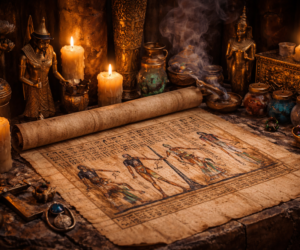
It is not a book of death. It is a book of becoming.
The title was coined by a German Egyptologist in 1842 – Das Todtenbuch – and it stuck, even though it misses the point entirely. The ancient Egyptians called it Reu Nu Peret Em Hru: “The Chapters of Coming Forth by Day.” A manual not for dying, but for moving through darkness and emerging on the other side transformed.
That distinction matters. It shapes everything about how you read it.
What It Is
The Book of the Dead is a collection of spells, prayers, hymns, and ritual instructions used in ancient Egypt from roughly 1550 BCE through the first century BCE. A span of over 1,500 years. It is not one fixed text. It is a living tradition: a pool of around 200 spells from which individual copies were assembled, personalized, and commissioned for specific people.
No two copies are identical.
 Written by Keeper
For centuries, the phrase “Thou shalt not suffer a witch to live” from Exodus 22:18 has been used to justify persecution, torture, and murder. But what if the Bible never actually condemned witches at all? What if the wise women, the herbalists, the midwives, and the village healers were never the target of this ancient text?
The truth is far more complex, and far more tragic, than most people realize.
The Word That Changed Everything: Kashap
In the original Hebrew text of Exodus 22:18, the word translated as “witch” is kashap (כָּשַׁף). This is critical, because kashap doesn’t mean what we think of as a witch at all.
Kashap refers specifically to someone who uses poison or harmful potions with malicious intent – a poisoner, a sorcerer who causes harm through toxic substances. The root of the word is associated with muttering or whispering incantations while preparing harmful concoctions. This wasn’t about the wise woman brewing healing tea or the midwife easing labor pains with herbal remedies.
In ancient Near Eastern context, a kashap was closer to what we might call a malicious poisoner or one who used substances to harm, manipulate, or kill others, often for payment. These were individuals who worked in secret to cause genuine harm, not community healers working openly to help their neighbors.
The verse, more accurately translated, might read: “You shall not allow a poisoner to live” or “Do not tolerate one who harms through toxic sorcery.”