Where Spirit Meets Reality ~ Understanding Spirituality and Metaphysics

The Dance Between the Seen and Unseen We live in a world that exists on multiple levels simultaneously. There’s the physical reality we navigate each day, the coffee cup in your hand, the ground beneath your feet, the people you encounter. And then there’s something else, something harder to define but just as real: the energy of a room when you walk in, the inexplicable knowing that precedes a phone call, the sense that consciousness extends beyond the boundaries of our skin. This is where spirituality and metaphysics meet, in that liminal space where the material and immaterial dance together, where ancient wisdom and personal experience converge to reveal deeper truths about existence. What Is Metaphysics? Metaphysics, at its heart, is the study of what lies beyond the physical. The word itself comes from the Greek “meta” (beyond) and “physika” (physical things). It asks the fundamental questions that have haunted and inspired humanity since we first looked up at the stars: What is the nature of reality? Does consciousness create reality or merely observe it? What is time, truly? Do we have souls, and if so, what are they made of? Is there a purpose to existence, or do we create purpose through living? These aren’t idle philosophical musings. These questions shape how we understand ourselves, how we move through the world, and what we believe is possible. The Bridge Between Philosophy and Practice While Western academic philosophy often treats metaphysics as purely theoretical, spiritual metaphysics understands these questions as lived experience. It’s one thing to debate whether consciousness survives death in a classroom; it’s quite another to feel the presence of a deceased loved one or remember what feels like a past life. Spiritual practitioners engage with metaphysical questions not just intellectually but experientially. Through meditation, ritual, energy work, and altered states of consciousness, we explore these realities directly. What Is Spirituality? Spirituality is the practice of connecting with something larger than our individual selves. That “something” takes different forms for different people, God, Goddess, the Universe, Source, Spirit, the Divine, Nature, or simply the interconnected web of all existence. Unlike religion, which provides specific doctrines and structures, spirituality is deeply personal. It’s the individual’s direct relationship with the sacred, however they understand it. The Many Faces of Spiritual Practice Spirituality manifests in countless ways: Nature-based spirituality finds the divine in the cycles of seasons, the wisdom of plants and animals, the power of earth, air, fire, and water. Practitioners might work with herbs, stones, and natural cycles to deepen their connection to the living world. Energy work and healing operates on the premise that consciousness and energy are fundamental to reality. Practices like Reiki, chakra balancing, or qi gong work with subtle energies that Western science is only beginning to acknowledge and measure. Mystical traditions across cultures, from Sufism to Kabbalah to Buddhist meditation, seek direct experience of the divine through contemplation, ecstatic practice, or disciplined inner work. Eclectic and syncretic paths draw from multiple traditions, creating personalized spiritual practices that honor diverse wisdom while remaining authentic to individual experience and cultural respect. Secular spirituality finds transcendence in connection, awe, creativity, and meaning without necessarily invoking supernatural elements. The sense of being part of something vast when viewing the night sky or feeling moved by music can be profoundly spiritual experiences. Core Metaphysical Concepts in Spiritual Practice Certain metaphysical ideas appear across spiritual traditions, though they may be described in different language. Understanding these concepts can deepen your spiritual practice and help you navigate metaphysical experiences. Consciousness as Fundamental Many spiritual traditions hold that consciousness isn’t produced by… …
Membership Required

You must be a member to access this content.

View Membership Levels

Already a member? Log in here

The Seventh Wave: Understanding the Sacred Frequency of Group 7

Throughout human history, across cultures and spiritual traditions, the number seven has held profound significance. From the seven chakras to the seven heavens, from the seven days of creation to the seven colors of the rainbow. This sacred number appears again and again as a symbol of completeness, spiritual perfection, and divine order. But what is the “seventh wave,” and why does this frequency matter so deeply in our spiritual evolution? What Is the Seventh Wave? The seventh wave represents the culmination of a cycle, the point of completion and mastery before a new octave begins. In metaphysical traditions, it’s understood as the frequency of spiritual maturity, divine alignment, and the integration of all previous lessons. When we talk about “group 7” or working with seventh wave energy, we’re referring to those who carry or are working with this completion frequency. People who are here to synthesize, integrate, and bridge the material and spiritual realms. Think of it like this: if the first six waves represent stages of learning, building, and experiencing, the seventh wave is the integration of all that wisdom into conscious mastery. It’s the sabbath after six days of creation, the crown chakra after six energy centers, the final heaven that contains and transcends all others. The Origins: Where Does This Understanding Come From? The sacred nature of seven appears across virtually every major spiritual tradition and mystical teaching: The Seven Chakras In Hindu and yogic traditions, the seven primary chakras represent the journey from root to crown, from earth to heaven, from survival consciousness to divine union. The seventh chakra, Sahasrara, is the crown – the point of enlightenment and connection to universal consciousness. The Seven Rays of Creation In Theosophical and esoteric teachings, the Seven Rays represent the seven primary emanations of divine consciousness. Each ray carries a specific quality and purpose, and the seventh ray is often associated with ceremonial magic, transmutation, and the manifestation of heaven on earth. The Seven Heavens Found in Islamic, Jewish, and various mystical traditions, the seven heavens represent ascending levels of spiritual reality. The seventh heaven is the dwelling place of divine presence, the ultimate destination of the soul’s journey. Biblical Significance Seven appears throughout scripture – seven days of creation, seven churches, seven seals, seven spirits before the throne. It represents divine completion and perfection. Natural Cycles Seven days in a week, seven notes in a musical scale (before the octave), seven colors in the visible spectrum. Nature itself reflects this pattern of seven as a complete cycle. Working With Cloves: Practical Tips When incorporating cloves into your practice, remember that a little goes a long way. Their energy is concentrated and powerful. Start with small amounts and observe how they affect your workings. Always source cloves that feel energetically alive. They should have a strong, warm aroma. Dull or old cloves have lost much of their magical potency along with their scent. Whole cloves are generally more powerful for magical work than ground cloves, as they retain their essential oils and life force longer. However, ground cloves can be useful in powder blends, floor washes, and when you need their energy dispersed quickly. If you’re sensitive to strong energies, approach cloves with respect. Their protective fire can feel overwhelming to some practitioners. You can balance their intensity by combining them with gentler herbs like lavender or rose. The Symbolism and Frequency of Seven The number seven represents ~ Completion and wholeness: The end of a cycle before transformation into a new octave~ Spiritual wisdom: The integration of material experience with divine understanding~ Rest and reflection: The… …
Membership Required

You must be a member to access this content.

View Membership Levels

Already a member? Log in here

Understanding the Qabalah: A Journey Through Jewish Mysticism

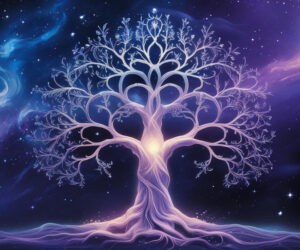
The Qabalah (also spelled Kabbalah, Cabala, or other variations) stands as one of humanity’s most profound mystical traditions, offering seekers a systematic approach to understanding the divine mysteries that connect God, universe, and soul. Far from being a single, monolithic system, the Qabalah has evolved through centuries of spiritual inquiry, each era contributing its own unique perspectives and innovations to this rich tapestry of Jewish mysticism. The Foundation: Core Concepts and Structure At the heart of Qabalistic teaching lies the Tree of Life (Etz Chaim), an intricate diagram consisting of ten interconnected spheres called sephiroth, linked by twenty-two paths. This sacred geometry maps the divine emanation from the highest spiritual source, Keter (Crown), down through various levels of consciousness and reality, culminating in Malkuth (Kingdom), our physical world. The tradition encompasses several interconnected elements that work together to create a comprehensive spiritual system. The sacred texts, primarily the medieval Zohar alongside earlier works like the Sefer Yetzirah (Book of Creation), employ complex symbolism and allegory to explore divine mysteries. Gematria, the numerological system assigning values to Hebrew letters, reveals hidden connections between concepts sharing numerical equivalence. The cosmological framework of the Four Worlds describes different levels of reality, from pure spirit to physical matter, while practical applications focus on meditation, prayer, and ethical living as pathways to divine understanding. Medieval Spanish Qabalah: The Golden Age of Mystical Innovation The medieval period in Spain, roughly from the 12th to 15th centuries, witnessed what many consider the golden age of Qabalistic development. This era produced some of the tradition’s most influential texts and thinkers, fundamentally shaping how subsequent generations would understand Jewish mysticism. The Spanish Qabalists developed sophisticated theological concepts that addressed fundamental questions about God’s nature and relationship to creation. They grappled with the apparent contradiction between God’s infinite, unknowable essence (Ein Sof) and the divine attributes described in scripture. Their solution involved the concept of divine emanation through the sephiroth. A process by which the infinite gradually manifests through increasingly defined stages until reaching the material world. Key figures like Moses de León, traditionally credited with authoring the Zohar, created works of extraordinary literary and spiritual depth. The Zohar itself, written in Aramaic and presented as the teachings of the 2nd-century sage Rabbi Shimon bar Yochai, became the foundational text of theoretical Qabalah. Its pages are filled with mystical interpretations of biblical passages, exploring themes of divine sexuality, cosmic repair, and the soul’s journey through multiple levels of reality. Spanish Qabalah also developed the concept of the Shekhinah, the divine feminine presence, in unprecedented detail. This tradition understood the Shekhinah as both the tenth sephirah (Malkuth) and as a dynamic aspect of divinity that could be in exile or union depending on human actions and cosmic conditions. This innovation added profound psychological and theological dimensions to Jewish understanding of the divine nature. The Spanish school’s influence extended beyond mystical theory into practical spirituality. They developed elaborate systems of meditation on divine names, letter combinations, and sephirotic configurations. Their approach emphasized that proper spiritual practice could literally affect the divine realm, healing cosmic fractures and promoting divine unity. Lurianic Qabalah: Revolutionary Cosmology from 16th-Century Safed The destruction of Spanish Jewry in 1492 created both crisis and opportunity for Qabalistic development. Many Spanish Jewish refugees settled in Safed, a small city in northern Palestine that became an extraordinary center of mystical activity. Here, in the 16th century, Rabbi Isaac Luria (known as the Ari, “the Lion”) developed revolutionary ideas that would transform Qabalah forever. Lurianic Qabalah introduced three fundamental concepts that radically reimagined the cosmic process: tzimtzum (contraction), shevirat ha-kelim (breaking of… …

Membership Required

You must be a member to access this content.

View Membership Levels

Already a member? Log in here