Friday the 13th ~ Reclaiming the Magic of a Misunderstood Day

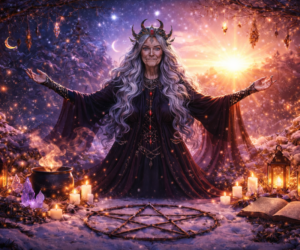
For centuries, Friday the 13th has been shrouded in superstition and fear. But what if I told you that this date holds powerful transformative energy that witches and spiritual seekers can harness for deep inner work and manifestation?

The Origins of Friday the 13th
The fear of Friday the 13th, known as paraskevidekatriaphobia, is a relatively modern phenomenon. Historically, both Fridays and the number 13 held sacred significance:

Friday was named after the Norse goddess Freya (or Frigg), the goddess of love, beauty, fertility, and magic. In many pagan traditions, Friday was considered an auspicious day for spellwork, particularly love magic.

The number 13 has long been associated with the divine feminine. There are 13 lunar cycles in a year, connecting this number to moon magic and the goddess. Many ancient cultures revered 13 as a number of completion and transformation.

The negative associations likely arose during the patriarchal shift in medieval Europe, when the Church sought to demonize pagan practices and feminine power. What was once sacred became “sinister.”

Reclaiming Friday the 13th Energy
Rather than fearing this day, we can embrace it as a portal for:

Devil’s Breath ~ Separating Dangerous Reality from Viral Misinformation

A Word of Caution Before We Begin
I recently saw someone on TikTok claim that creating Devil’s Breath is as simple as mixing pepper and flour, or something similar. Let me be absolutely clear: please don’t believe everything you see on social media without confirming it. This kind of misinformation is not only false but potentially dangerous.

Devil’s Breath is real. It’s dangerous. And it’s definitely not a kitchen spice mix.

Devil’s Breath (scopolamine) is a serious alkaloid compound derived from specific plants, not a kitchen concoction. Spreading or believing such myths can lead to harmful experimentation or unnecessary panic. Always verify information, especially when it involves substances that could affect health and safety.

Let me give you the actual facts about what this substance is, how it works, what’s true about the sensationalized stories, and what’s been exaggerated by media panic and urban legends.

What Is Devil’s Breath?

Hidden Magic ~ What Witches Concealed in Walls and Why

When renovating old homes, construction workers and homeowners sometimes make startling discoveries, like, shoes hidden in chimneys, bottles filled with strange objects sealed behind walls, bundles of bones tucked into rafters, and mysterious markings carved into beams. These aren’t random curiosities, they’re protective magic, deliberately concealed by our ancestors to guard their homes and families from harm. This practice of hiding magical objects within the structure of buildings spans centuries and cultures, revealing a fascinating tradition of household witchcraft and folk magic that thrived long before modern Wicca emerged.

The Origins of Concealed Magic
The practice of hiding magical objects in walls, under floors, and within the structure of buildings has roots stretching back to medieval times and likely even earlier. While we often associate these practices with “witches,” the reality is that these were folk magic traditions practiced by everyday people. Hhomeowners, builders, midwives, and cunning folk who served their communities as magical practitioners.

This tradition was particularly prevalent in Britain from the 16th through the 19th centuries, though similar practices existed across Europe and eventually traveled to colonial America. During the height of witch persecution (roughly 1450-1750), ironically, protective magic became even more widespread as people sought to defend themselves against malevolent witchcraft, the evil eye, demons, and other supernatural threats.

These concealed objects weren’t generally the work of p

A Scorpio’s Year ~ 2025 Reflections and 2026 Visions

Coming Out of the Broom Closet
2025 was the year I finally stopped hiding.

As a Scorpio, I’m no stranger to keeping secrets, to holding things close, to maintaining that protective shell around what matters most. But this year, something shifted. The weight of staying silent about my practice, about what I actually believe, about who I really am, it became heavier than the risk of speaking out.

So I did it. I finally spoke openly about witchcraft. Not in hushed tones to a select few, but publicly, clearly, without apology. And in doing so, I made a decision that would shape everything that followed. I would build crafttalk.com as a learning and circle platform for practitioners who, like me, were looking for authentic community and genuine teaching.

That moment of choosing visibility over safety? Pure Scorpio transformation energy. Death of the hidden self, rebirth into authenticity. It wasn’t comfortable, Scorpio growth never is, but it was necessary.

The Lesson I Didn’t Expect
Here’s what I thought I knew about myself going into 2025: I’m a solitary practitioner. I work best alone. I don’t need community or circles or other people’s energy in my practice. I’m self-sufficient, independent, perfectly content in my solitary path.

The Uninvited Practitioner: When Your Cat Becomes Part of Your Ritual

Every full moon, I set out water beneath the night sky. By morning, it’s transformed, as the tradition goes, into moon water, charged with lunar energy and intention. I keep this water in a small brass holder on my gratitude altar, refreshing it each evening as part of my practice.

And every morning, without fail, Freyja jumps onto the altar and drinks it.

My cat has inserted herself into my ritual so completely that I’ve stopped questioning whether the water is really for me at all. She approaches the brass holder with the kind of reverence I’m still learning – no hesitation, no doubt, just pure presence. While I stumble through my gratitude practice some mornings, distracted and half-awake, she shows up with absolute certainty.

Who Practices for Whom?
I never asked Freyja if she wanted to be part of this. I never explained the full moon, or intention-setting, or why this particular water sits in this particular place. Yet she’s made it her ritual too, perhaps more faithfully than I have.

Why Black Cats Have Such a Dark History

There’s something undeniably magical about a black cat crossing your path. Their sleek ebony fur, luminous eyes, and graceful movements have captivated humans for millennia. Yet these beautiful creatures have endured centuries of persecution, superstition, and fear. So how did black cats become so entwined with darkness, witchcraft, and bad luck?

Ancient Reverence Turned to Fear
The story of black cats hasn’t always been dark. In ancient Egypt, all cats were revered as sacred, and black cats were associated with the goddess Bastet, representing protection, fertility, and good fortune. Celtic mythology also held black cats in high regard, believing they brought blessings to homes.

But this reverence began to shift dramatically during the Middle Ages in Europe. As the Christian church expanded its influence, it sought to suppress pagan traditions and beliefs. Cats, particularly black ones, became caught in this cultural transformation.

The Witch Hunt Connection

Halloween: Ancient Roots, Sacred Symbolism, and Modern Commercialism

As October 31st approaches, store shelves overflow with plastic decorations, mass-produced costumes, and candy by the ton. But beneath the commercial veneer lies a holiday steeped in ancient tradition, spiritual significance, and genuine magic. Let’s peel back the layers to discover what remains of Halloween’s sacred origins and what we’ve lost to capitalism.

The Ancient Beginning: Samhain
Halloween traces its roots to Samhain (pronounced “SOW-win”), the Celtic festival marking the end of harvest season and the beginning of winter, the “darker half” of the year. Celebrated from sunset on October 31st to sunset on November 1st, Samhain was one of the four major Gaelic seasonal festivals, alongside Imbolc, Beltane, and Lughnasadh.

The Celts believed that on this night, the veil between the physical world and the spirit realm grew impossibly thin. The boundary between the living and the dead became permeable, allowing spirits, fairies, and otherworldly beings to cross over. This wasn’t viewed with horror, but with reverence and caution. A liminal time when the rules of ordinary reality loosened.

Sacred Practices of Samhain
Our ancestors honored this sacred night with rituals that carried deep meaning:

~ Lighting bonfires on hilltops to guide spirits and provide protection

What the Bible Actually Said About “Witches”: A Mistranslation That Changed History

For centuries, the phrase “Thou shalt not suffer a witch to live” from Exodus 22:18 has been used to justify persecution, torture, and murder. But what if the Bible never actually condemned witches at all? What if the wise women, the herbalists, the midwives, and the village healers were never the target of this ancient text?

The truth is far more complex, and far more tragic, than most people realize.

The Word That Changed Everything: Kashap
In the original Hebrew text of Exodus 22:18, the word translated as “witch” is kashap (כָּשַׁף). This is critical, because kashap doesn’t mean what we think of as a witch at all.

Kashap refers specifically to someone who uses poison or harmful potions with malicious intent – a poisoner, a sorcerer who causes harm through toxic substances. The root of the word is associated with muttering or whispering incantations while preparing harmful concoctions. This wasn’t about the wise woman brewing healing tea or the midwife easing labor pains with herbal remedies.

In ancient Near Eastern context, a kashap was closer to what we might call a malicious poisoner or one who used substances to harm, manipulate, or kill others, often for payment. These were individuals who worked in secret to cause genuine harm, not community healers working openly to help their neighbors.

The verse, more accurately translated, might read: “You shall not allow a poisoner to live” or “Do not tolerate one who harms through toxic sorcery.”

October Scorpio Energy: A Birthday Reflection

Today marks another trip around the sun for me, and as an October Scorpio, I’ve been reflecting on what makes our energy so distinctly different from our November Scorpio siblings. While we share the same intense, magnetic sign, the cosmic timing of our births creates two very different expressions of Scorpio power.

The Dual Rulership: Mars and Pluto
Scorpio is unique in that it’s ruled by two powerful planets: Mars, the ancient ruler, and Pluto, the modern ruler. But here’s where October and November Scorpios diverge. Those of us born in October carry more of Mars’ fierce, warrior-like energy. We’re the first-decan Scorpios, and that Martian influence makes us quick to react, ready to strike, and always prepared to take immediate action.

Mars gives us that signature fire in our veins. We don’t just feel intensely, we move intensely. When something triggers our passion or our protective instincts, we respond with lightning speed. There’s no hesitation, no second-guessing. We see what needs to be done, and we do it.

November Scorpios, on the other hand, lean more heavily into Pluto’s transformative, mysterious energy. They’re the strategists, the ones who play the long game. While we’re charging forward, they’re planning ten moves ahead, working in the shadows to orchestrate deep, lasting change.
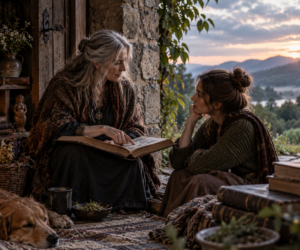
The Case for One Beautifully Illogical Thing: Why Your Home Needs an Object That Makes No Sense

We live in an age of optimization. Our homes are curated for function, flow, and aesthetic cohesion. Marie Kondo taught us to keep only what sparks joy. Minimalism tells us less is more. Every lifestyle influencer has a system, a method, a five-step process for making your space “work better.”

And yet, I’m here to argue for the opposite: You need at least one object in your home that makes absolutely no logical sense.

Not something quirky-but-practical. Not a conversation starter that you can explain away. I mean something truly, wonderfully, stubbornly illogical. Something that violates every principle of good design and sensible living. Something that exists simply because it exists, and for no other reason.

Why You Need the Illogical
It Keeps You Human
When everything in your life has a purpose, you start to feel like a machine. The coffee maker makes coffee. The meditation cushion facilitates mindfulness. The art on the wall “ties the room together.” But humans aren’t efficient. We’re gloriously, messily irrational creatures who fall in love with things for reasons we can’t articulate.