Pink Moon – Full Moon in Libra

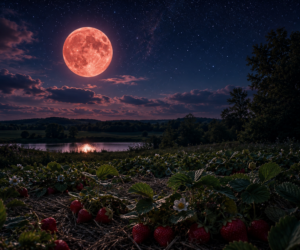
April’s full moon is called the Pink Moon. Not because the moon turns pink, but because it rises alongside the first wild blooms of spring. Creeping phlox, also known as moss pink, carpets the ground in soft rose just as this moon swells full. It’s one of the oldest seasonal markers we have. Other names across cultures tell the same story of awakening: Tradition Name Algonquin Breaking Ice Moon Lakota Moon When the Ducks Come Back Cree Frog Moon Dakota Moon When the Geese Lay Eggs Traditional Egg Moon This particular Pink Moon is also the Paschal Moon, the first full moon after the spring equinox, which sets the date of Easter. It falls in Libra, the sign of balance, partnership, and beauty. “Spring is no longer a promise – it is a visible reality.” ✍️ Journal Prompts Libra asks us to look at our relationships ~ with others, and with ourselves. Use the fullness of this moon to reflect and release. 1. What in your life is in full bloom right now ~ and what is it finally time to release? 2. Where have you been out of balance? What would more equilibrium look and feel like? 3. Which relationships are nourishing you, and which ones are asking for more honesty? 4. What new beginning ~ however small ~ has quietly started since the new moon two weeks ago? 5. If this season of your life were a wildflower, what would it be? What conditions does it need to thrive? 6. What beauty have you been walking past without noticing? What deserves more of your attention? How to Mark This Moon ~ Go outside and just look up~ Light a candle~ Write down something you’re releasing, then burn it~ Arrange fresh flowers~ Keep rose quartz nearby~ Open a window and let the night air in… Membership Required You must be a member to access this content.View Membership LevelsAlready a member? Log in here...

Membership Required

You must be a member to access this content.

View Membership Levels

Already a member? Log in here

Mercury in Retrograde ~ What It Actually Is, What It Actually Does, and Why Everyone Panics

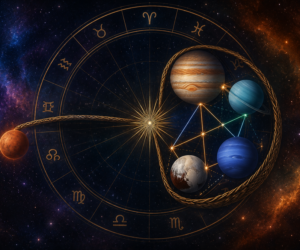
Your flight gets cancelled. Your ex texts you out of nowhere. Your laptop dies in the middle of something important. Your words come out wrong in a meeting you had been dreading, and then your phone autocorrects a message to your boss in a way that requires three follow-up messages to clarify. Someone in your life says: Mercury must be in retrograde. And you either nod knowingly, or you roll your eyes, or – if you are like a lot of people, you do both simultaneously, because you are not entirely sure what it means but you have noticed that things do seem to go sideways in a particular way at particular times, and the phrase has become the closest shorthand we have for that particular quality of wrongness. This post is going to be honest about Mercury retrograde. Honest about what it actually is, where the idea came from, what the evidence says, and what, if anything, you can actually do with it beyond blaming your technology. What Mercury Retrograde Actually Is: The Astronomy Mercury retrograde is a real astronomical phenomenon. That part is not in dispute. Mercury is the planet closest to the Sun, and it orbits the Sun far more quickly than Earth does. Completing a full orbit in approximately 88 days, compared to Earth’s 365. Because Mercury moves faster and on a tighter orbit, there are periods when, from our perspective on Earth, it appears to slow down, stop, and then move backward against the backdrop of the stars before reversing again and resuming its forward motion. This apparent backward motion is called retrograde, from the Latin retrogradus, stepping backward. It is an optical illusion created by the relative speeds and positions of two planets moving in the same direction around the Sun at different rates. A useful analogy: when you are driving on the motorway and you pass a slower car, that car briefly appears to move backward relative to you, even though it is still moving forward. Mercury retrograde is the cosmic version of this effect. Mercury goes retrograde approximately three to four times per year, for roughly three weeks at a time. So in any given year, Mercury is in retrograde for somewhere between nine and twelve weeks. Meaning that if you are attributing everything that goes wrong in those periods to Mercury, you are attributing roughly a quarter of your year’s difficulties to a single astrological phenomenon. That is worth keeping in mind. The dates are predictable, consistent, and published well in advance. There is nothing mysterious about when Mercury will go retrograde. Any ephemeris or basic astrology app will tell you the exact dates years into the future. Where the Idea Came From: The History Astrology is among the oldest systematic attempts humanity has made to understand its place in the cosmos and to find patterns in the relationship between celestial movements and earthly events. Its roots go back at least four thousand years, through Babylonian sky-watching, through Hellenistic synthesis, through the Arabic tradition that preserved and developed it through the medieval period, and into the Renaissance and early modern period when it was a serious intellectual discipline practiced by some of the most sophisticated minds of the era. In this tradition, each planet was understood to govern a particular domain of human experience. Mercury, named for the Roman messenger god who was also the patron of communication, commerce, travel, trickery, and the crossing of boundaries, was associated with exactly those domains: the mind, language, contracts, journeys, trade, and the transmission of information. The association was not arbitrary. Mercury, as the… …

Membership Required

You must be a member to access this content.

View Membership Levels

Already a member? Log in here

The Snow Moon in Leo ~ February 2026 Full Moon Guide

When Winter’s Stillness Meets Leo’s Fire Full Moon Peak Sunday, February 1, 2026, at 509 PM ET / 209 PM PT Astrological Sign Leo (13°03′) Traditional Name Snow Moon The first full moon of February 2026 arrives with unique timing and potent energy. Not only does it fall on the very first day of the month, but it also coincides with Imbolc, the Celtic festival marking the midpoint between winter solstice and spring equinox. This convergence creates a powerful portal – winter’s contemplative stillness meeting Leo’s bold, fiery expression. This isn’t your typical quiet winter moon. The Snow Moon in Leo asks you to find your inner fire even when the world outside is frozen, to remember your light when everything feels dormant, and to prepare to step into visibility as spring approaches. The Snow Moon History and Folklore Why “Snow Moon”? The name comes from practical observation – February is historically the snowiest month across much of North America. When Indigenous peoples named the lunar cycles, they chose descriptors that reflected the immediate reality of their environment. In February, that reality was often deep snow, harsh cold, and the challenge of survival in the heart of winter. Other Traditional Names Native American ~ Hungry Moon or Bony Moon (Cree) ~ Reflecting the scarcity of food and difficulty of hunting in deep winter~ Bear Moon or Black Bear Moon (Ojibwe and Tlingit) ~ Bear cubs are born in February~ Deep Snow Moon (Mahican) ~ Acknowledging the depth of winter’s snowfall~ Midwinter Moon (Oneida) ~ Marking the middle point of the cold season~ Makes Branches Fall In Pieces Moon (Abenaki) ~ When ice buildup causes tree limbs to break~ When Trees Crack Because of Cold Moon (Lakota) ~ The sound of freezing wood splitting Celtic and European ~ Ice Moon ~ Honoring the frozen landscape~ Storm Moon ~ Acknowledging February’s harsh weather~ Eagle Moon ~ Some traditions associate this time with eagle activity Each name tells a story about the relationship between people and the natural world during this challenging time of year. The Astrological Significance Leo Energy While the Snow Moon occurs during Aquarius season (the Sun is in Aquarius), the full moon itself is in Leo, Aquarius’s opposite sign. This creates a dynamic tension between Aquarian themes (collective consciousness, innovation, detachment, humanitarian ideals) and Leonine themes (individual expression, creativity, passion, recognition). What Leo Energy Brings Confidence and Self-Expression Leo is ruled by the Sun itself, and this moon illuminates everything related to how you shine, how you show up, and how you express your authentic self. This is not a moon for hiding or playing small. Creative Fire Leo governs creativity, playfulness, and artistic expression. Under this moon, creative projects come to fruition, artistic blocks can break open, and you may feel inspired to create simply for the joy of it. Heart-Centered Living Leo rules the heart, both literally and metaphorically. This moon asks What does your heart truly desire? Where are you living from your head instead of your heart? What would change if you led with love? Recognition and Visibility Leo needs to be seen, acknowledged, and appreciated. This full moon may bring recognition for your efforts, or it may reveal where you’ve been dimming your light to make others comfortable. Courage and Bravery The lion is brave. This moon supports bold moves, courageous conversations, and stepping into leadership roles you’ve been avoiding. The Leo-Aquarius Polarity This full moon creates a conversation between ~ Personal glory vs. collective good ~ How can you shine without overshadowing others?~ Heart vs. mind ~ When should you follow passion, when… …
Membership Required

You must be a member to access this content.

View Membership Levels

Already a member? Log in here

New Moon in Capricorn Building Your Empire from the Ground Up

The new moon arrives like a blank page in the night sky – invisible yet potent with possibility. This lunar phase, when the moon sits between Earth and the sun, has long been honored as a sacred time for planting seeds of intention and turning inward to contemplate what we want to call into our lives. In the darkness of the new moon, we’re invited to pause, reset, and dream. While the full moon illuminates and reveals, the new moon asks us to trust what we cannot yet see. It’s a reminder that all growth begins in darkness – seeds beneath soil, ideas before manifestation, potential before form. What Makes This New Moon Significant The new moon on January 18, 2026, at 250 p.m. EST, occurs at 28 degrees Capricorn, marking the first new moon of the year and arriving with particularly potent energy for anyone ready to get serious about their goals. This isn’t just any lunar reset. It’s the foundation-laying new moon of 2026. The Power of Capricorn Energy This new moon takes place in the cardinal earth sign of Capricorn, inspiring everyone to fine-tune their New Year’s resolutions, find manageable first steps, and start working steadily toward success. Capricorn energy is about building something lasting from the ground up. It’s practical, strategic, and sometimes uncomfortable, but it’s also deeply empowering. This sign teaches us that growth should not be rushed and that success is earned through consistent effort over time. Capricorn reminds us to take ourselves seriously, take our dreams seriously, and take responsibility for materializing our visions into form. A Powerful Capricorn Stellium At the time of this new moon, the sun and moon will be in a tight conjunction with both mental Mercury and action-oriented Mars, creating what’s known as a Capricorn stellium, multiple planets clustered together amplifying the sign’s energy. This Capricorn stellium requires consistency, dedication, and patience, with long hours steadily working around the clock. This concentrated planetary energy gives you both the mental clarity and the stamina necessary to set realistic goals and actually follow through on them. The key is finding something you genuinely want to pursue, so the work never feels like a burden. Saturn’s Final Days in Pisces This new moon reflects a concluding chapter as Saturn gets ready to enter Aries in February. Saturn has been moving through Pisces since 2023, teaching us lessons about compassion, spirituality, and the dissolution of old structures. This new moon offers one last opportunity to crystallize those lessons before Saturn moves into fiery, action-oriented Aries. We’re in a threshold moment, finishing one chapter while preparing for the next. The dreamy, boundary-dissolving energy of Saturn in Pisces is giving way to Saturn in Aries, which will demand direct action and personal accountability. Supportive Cosmic Alignments This Capricorn new moon stellium is making a gorgeous trine to innovative Uranus, adding an unexpected and unconventional edge to Capricorn’s traditionalist energy. You don’t have to stick to the tried-and-true path, since, there’s room for experimentation and creativity in your approach to success, as long as you’re building on a solid foundation. The Broader Context of 2026 This is the first new moon of 2026, and numerologically, 2026 adds up to a 1, the number of beginnings, initiation, and fresh cycles. We’re standing at the beginning of a year that astrologers will talk about for decades to come. Major planetary shifts are happening throughout 2026, with both Saturn and Neptune entering Aries within weeks of this new moon, signaling a collective move from dreaming to doing, from waiting to acting. Working with This New Moon Energy This… …
Membership Required

You must be a member to access this content.

View Membership Levels

Already a member? Log in here

The Wolf Moon Rises ~ January 2026’s Supermoon Marks the Last Until Year’s End

As we step into 2026, the cosmos gifts us with a spectacular celestial welcome. The first full moon of the year, January’s Wolf Moon, will be a supermoon, appearing larger and brighter because it will be at or near its closest point to Earth in its elliptical orbit. But what makes this supermoon particularly special is its timing. It’s the last supermoon we’ll see until November 2026. What Makes This Wolf Moon Special The Full Wolf Moon rises on Saturday, January 3, 2026, reaching peak illumination at 10:03 GMT (5:03 AM EST). This isn’t just any full moon. The January Supermoon will be 362,312 km (225,130 miles) from Earth, appearing 6% bigger and 13% brighter than an average full moon. It will be the last of four consecutive supermoons in 2025–2026, creating a powerful closing chapter to an extraordinary lunar sequence. After this moon wanes, we’ll enter what some are calling a “supermoon drought”, nearly eleven months before the next one graces our night sky. Why We Call It the Wolf Moon The name “Wolf Moon” carries the weight of centuries. It’s thought that January’s Full Moon came to be known as the Wolf Moon because wolves were more likely to be heard howling at this time. While folklore once claimed wolves howled from winter hunger, we now understand they vocalize for different reasons. To communicate with their pack, mark territory, and strengthen social bonds. Indigenous and colonial cultures have given this moon other evocative names that capture the harshness of deep winter. The Cree called it the Cold Moon or Frost Exploding Moon. The Dakota peoples knew it as the Severe Moon or Hard Moon, referring to the frozen crust that forms on deep snow. The Assiniboine called it the Center Moon, acknowledging that this lunar cycle marks the midpoint of the coldest season. A Supermoon Hiatus ~ The Long Wait Ahead Here’s what makes January’s Wolf Moon a must-see event – after this supermoon, you’ll have to wait until the end of 2026 to see more supermoons. The gap between January and the next supermoon in November represents one of the longest stretches without a supermoon that we’ll experience in this lunar cycle. In 2026, there will be three supermoons, on Jan. 3, Nov. 24 and Dec. 23. The December supermoon will be particularly noteworthy, as at just 221,668 miles (356,740 kilometers) from our planet, it will edge out the Feb. 19, 2019, supermoon by about 60 miles (100 km), making it the biggest and brightest full moon in nearly eight years. When and How to See It The Wolf Moon will be visible throughout the night of January 3-4. But for the most dramatic viewing experience, timing is everything. For the most dramatic view, it’s best to watch as it rises and sets, right around sunset and sunrise. Why does the moon appear so much larger when it’s near the horizon? The human eye perceives the moon as especially large when it’s near the horizon, even though it’s the same size when it’s overhead. An optical trick known as the moon illusion. The moonrise color adds to the awe; overhead, the full moon looks bright white, but on the horizon, it glows an eerie orange because the moonlight travels through more of the atmosphere when it’s low in the sky. A Celestial Bonus ~ Jupiter Joins the Show The January Full Moon will shine near Jupiter, the brightest star-like object in the sky that month. Throughout the night, you’ll be able to see the luminous giant planet traveling alongside the brilliant moon, creating a stunning astronomical pairing…. …
Membership Required

You must be a member to access this content.

View Membership Levels

Already a member? Log in here

Moon Phase Rituals ~ Working With Lunar Energy Through Every Cycle

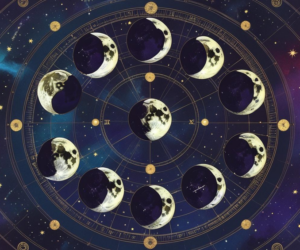
The moon doesn’t care whether you notice her. She’ll keep waxing and waning, pulling the tides, marking time in her ancient rhythm whether you’re paying attention or not. But when you do start paying attention, when you begin to align your intentions with her phases, something shifts. You stop fighting against natural rhythms and start flowing with them. Each phase of the moon carries its own energy, its own invitation. Working with these phases isn’t about rigid rules or complicated ceremonies. It’s about recognizing where the moon is in her cycle and asking yourself: what does this energy support? What am I ready to plant, grow, release, or rest with? Here’s how to work with each moon phase, complete with rituals you can adapt to your own practice. New Moon ~ The Dark Beginning Energy: New beginnings, intention-setting, planting seeds, rest, introspection, the void, potential What’s Happening: The moon sits between Earth and the sun, invisible to us. This is the darkest night, the blank page, the moment before creation. How It Feels: You might feel quieter, more introspective, tired, or uncertain. The new moon asks you to sit in the darkness without immediately reaching for the light. It’s okay to not know yet. New Moon Rituals  Intention Setting Ceremony The new moon is the most powerful time to set intentions for what you want to grow over the coming month. What You Need:~ A quiet space~ Journal and pen~ A white or black candle~ Optional: crystals (clear quartz, moonstone, labradorite) The Ritual:1. Cleanse your space with sage, sound, or simply opening windows2. Light your candle3. Sit in meditation for a few minutes, getting quiet and centered4. Ask yourself: “What wants to begin? What am I ready to call in?”5. Write your intentions in present tense, as if they’re already happening: “I am…” “I have…” “I feel…”6. Read them aloud to seal them7. Place the paper under your pillow or on your altar for the lunar cycle Optional: Charge a crystal with these intentions to carry with you Why This Works: The new moon is a cosmic reset button. You’re planting seeds in fertile darkness, trusting they’ll grow even though you can’t see them yet. New Moon Bath Ritual What You Need:~ Bath or foot bath~ Sea salt or Epsom salt~ Black tourmaline or obsidian (optional)~ Lavender or mugwort (dried or essential oil)~ Black or white candles The Ritual:1. Draw a bath and add salt (cleansing), herbs (intuition and dreams)2. Place crystals at the corners of the tub or hold them3. Light candles around the space4. As you soak, visualize yourself in a dark, warm void. Completely safe and held5. Let any old energy, stress, or worry dissolve into the water6. When you emerge, see yourself as newly cleansed and ready for the new cycle7. Let the water drain while saying: “I release what was, I welcome what will be” Why This Works: Water is transformative and the new moon is about release before beginning. You’re washing away the old cycle to make space for the new. Waxing Crescent ~ Taking Action Energy: Emergence, momentum, taking first steps, courage, growth begins What’s Happening: A sliver of moon appears, growing. Light is returning, visibility increases. How It Feels: You might feel more energized, ready to act on those new moon intentions, motivated to take first steps. Waxing Crescent Rituals Action Plan Ritual Now that you’ve set intentions, it’s time to decide what actions will support them. What You Need:~ Your new moon intentions (written or remembered)~ Journal and pen~ Green or yellow candle~ Bay leaves or basil (action and success) The… …
Membership Required

You must be a member to access this content.

View Membership Levels

Already a member? Log in here

The Moon Calendar ~ Your Guide to Lunar Rhythms in 2026

Long before we had smartphones buzzing with notifications and digital calendars syncing across devices, humans tracked time by watching the moon. The lunar cycle, that reliable 29.5-day journey from new moon to full and back again, provided our ancestors with a natural clock, a planting guide, and a sacred rhythm that shaped everything from festivals to fishing expeditions. Even now, when we’re surrounded by artificial light and climate-controlled environments, something in us still responds to the moon. We feel the pull toward introspection during the dark moon, the surge of energy as she waxes full. Whether you’re setting intentions, making moon water, planning rituals, or simply trying to understand why you feel restless on certain nights, understanding the moon calendar can help you work with these natural rhythms instead of against them. Understanding the Lunar Cycle The moon doesn’t produce her own light, she reflects the sun’s. As she orbits Earth every 29.5 days, the angle of sunlight hitting her surface changes, creating the phases we observe from down here. This cycle, called a synodic or lunar month, has eight distinct phases: New Moon The moon sits between Earth and the sun, invisible to us. This is the dark moon, the blank slate, the moment of new beginnings. Waxing Crescent A sliver of light appears, growing. The moon is building energy, gathering momentum. First Quarter Half the moon is illuminated. This is a time of action, of overcoming obstacles, of making decisions. Waxing Gibbous More than half full now, still growing. The moon is approaching her peak, refinement and adjustment happen here. Full Moon The Earth sits between the sun and moon, and her entire face glows. This is the moment of culmination, revelation, full power. Waning Gibbous Just past full, the moon begins to release. This is a time for gratitude, for sharing what you’ve learned. Last Quarter Half illuminated again, but shrinking now. Time to let go, to release what no longer serves. Waning Crescent A thin sliver remains before darkness returns. This is the moment of rest, surrender, completion. The Full Moons of 2026 Each month’s full moon carries its own traditional name, most originating from Native American, Colonial American, and European traditions. These names reflect seasonal changes and the natural world’s rhythms. Wolf Moon ~ January 3 Named for the howling of hungry wolves in the depths of winter. This is the first full moon of the year, a time for setting foundations and acknowledging what you’re hungry for. Snow Moon ~ February 1 February’s heavy snowfall inspired this name. Under this moon, we honor stillness, the quiet work that happens beneath frozen ground. Worm Moon ~ March 3 (Total Lunar Eclipse) As the earth thaws, earthworms emerge. This moon marks the transition into spring, the return of life, the promise of growth. 2026’s Worm Moon features a total lunar eclipse visible from North and South America, Asia, Australia, and the Pacific. A powerful time for transformation and shadow work. Pink Moon ~ April 2 Named for the pink wildflowers (moss phlox) that bloom in early spring. This moon celebrates beauty emerging from dormancy, color returning to the world. Flower Moon ~ May 2 Flowers bloom abundantly in May. Under this moon, we celebrate fertility, creativity, and the full expression of our gifts. Strawberry Moon ~ May 31 (Blue Moon) Marks the strawberry harvest season. 2026 gives us a rare Blue Moon—the second full moon in May. This is a powerful time for manifestation and breaking from convention, honoring both sweetness and the unexpected. Buck Moon ~ June 30 Male deer grow their new antlers in… …

Membership Required

You must be a member to access this content.

View Membership Levels

Already a member? Log in here

Winter Solstice 2025 ~ Ancient Rituals and Modern Celebrations

On Sunday, December 21, 2025, at 10:03 AM EST, the Northern Hemisphere will experience the winter solstice. That’s the instant when the Sun reaches its southernmost point in the sky, marking the official beginning of astronomical winter and when daylight hours are at their minimum before they start lengthening again. Also known as the shortest day and longest night of the year. This astronomical event has captivated humanity for millennia, inspiring celebrations, rituals, and traditions that continue to resonate in our modern world. What Is the Winter Solstice? The winter solstice occurs when the northern half of the Earth is tilted its farthest away from the sun, causing the sun to reach its lowest point in the sky. While many think of it as an entire day, the solstice actually lasts just a moment. A precise astronomical alignment that marks the official beginning of winter. The word “solstice” comes from the Latin words meaning “sun” and “still,” reflecting how the sun appears to pause in its southward journey before reversing direction. After December 21st, the days gradually begin to lengthen again, offering the promise of returning light and the eventual arrival of spring. Why Our Ancestors Celebrated For ancient peoples without modern scientific understanding, the shortening days of autumn and early winter were deeply unsettling. The sun, source of all warmth and life, appeared to be abandoning the world. Would it return? Would crops grow again? Would they survive the harsh months ahead? To combat their fear that the Sun would be gone forever, our ancestors held various celebrations and rites to light up the darkness encouraging the Sun to return and bring new life. These solstice celebrations were not merely parties, they were sacred acts of faith, community bonding, and hope in the face of winter’s darkness and scarcity. Ancient Solstice Celebrations Around the World Stonehenge and the Druids (England) Perhaps no place is more iconic for solstice celebrations than Stonehenge. This 5,000-year-old structure in England was built to align with the sun at the solstice. The monument’s massive stones frame the sunset on the winter solstice and the sunrise on the summer solstice with stunning precision. Every year, Stonehenge hosts a winter solstice ceremony, with crowds gathering in the early hours of the morning to see the sunrise over its stones. For 2025, the site will open at 5:15 AM, with sunrise occurring around 8:09 AM. Those unable to attend can watch via English Heritage’s YouTube livestream. Yule (Norse and Germanic Traditions) The ancient Norse and Germanic peoples celebrated Yule, a festival that began on the winter solstice and lasted for twelve days. During Yule, families would burn a specially selected log, the Yule log, which was meant to burn throughout the twelve days of celebration. The ashes were kept and used for protection and fertility in the coming year. Yule festivities included feasting, drinking mead, honoring ancestors, and sacrifices to the gods to ensure the sun’s return and a bountiful year ahead. Many of our modern Christmas traditions, including the Yule log, evergreen decorations, and gift-giving, trace their roots to these ancient celebrations. Saturnalia (Ancient Rome) The Romans celebrated Saturnalia in honor of Saturn, the god of agriculture and time. This week-long festival, which began around December 17th and coincided with the solstice, was characterized by role reversals, feasting, gambling, and gift-giving. Social norms were temporarily suspended. Slaves were treated as equals, and a “Lord of Misrule” was chosen to preside over the festivities. Homes were decorated with wreaths and greenery, candles were lit to drive away darkness, and clay figurines called sigillaria were exchanged as gifts…. …

Membership Required

You must be a member to access this content.

View Membership Levels

Already a member? Log in here

The Final Full Moon of 2025 ~ A Time for Reflection and Release

As we approach the winter solstice, the night sky gifts us with one last celestial spectacle of 2025. On December 19th at 6:43 PM MST, the final full moon of the year will rise, offering us a powerful opportunity for closure, reflection, and intention-setting as we prepare to welcome a new year. The Cold Moon’s Significance December’s full moon is traditionally known as the Cold Moon, named by Native American tribes for the long, frigid nights that accompany this time of year. It’s also called the Long Night Moon, as it occurs near the winter solstice when darkness reaches its peak in the Northern Hemisphere. This moon carries with it a particular energy of completion, rest, and inner contemplation. A Moment of Cosmic Closure There’s something profoundly symbolic about experiencing the year’s final full moon just days before the solstice and less than two weeks before the new year. This lunar event marks a natural pause point, a cosmic full stop that invites us to take stock of where we’ve been and where we’re heading. The full moon has long been associated with illumination, both literal and metaphorical. It reveals what has been hidden in shadow and brings clarity to situations that have felt murky or unclear. As the last full moon of 2025, this particular lunar phase asks us to examine what we’re carrying forward into 2026 and what we’re ready to release. How to Harness This Moon’s Energy Whether you’re spiritually inclined or simply appreciate the beauty of celestial events, here are some ways to mark this significant moment. Create Space for Stillness The longest nights of the year naturally call us inward. Use this evening to disconnect from the noise of the holiday season and simply be present with yourself. Release What No Longer Serves Write down habits, relationships, beliefs, or patterns you’re ready to let go of. The full moon’s energy supports release and completion. Express Gratitude Reflect on the gifts this year has brought you, even the challenging moments that fostered growth. Set Intentions While new moons are traditionally for setting intentions, the final full moon offers a unique opportunity to plant seeds for the year ahead while honoring where you’ve been. ✍️ Journal Prompts for the Final Full Moon of 2025 Take some time on December 19th to sit with these reflective questions. Let your thoughts flow without judgment, allowing the moon’s illuminating energy to guide your insights. ✍️ Reflection & Release ~ What were the three most significant moments of 2025 for me? How did they shape who I am today? ~ What challenges did I face this year, and what strength did I discover within myself through them? ~ What patterns or habits have I outgrown? What am I ready to release as this year comes to a close? ~ Who or what do I need to forgive (including myself) before entering the new year? ~ What dreams or goals did I pursue this year? Which ones energized me, and which ones drained me? ✍️ Gratitude & Growth ~ What unexpected blessings appeared in my life in 2025? ~ How have I grown emotionally, mentally, or spiritually over the past twelve months? ~ What relationships deepened this year, and what made that possible? ~ What did I learn about myself in moments of discomfort or uncertainty? ~ What am I most proud of accomplishing or becoming this year? ✍️ Intention & Vision ~ As I stand in this moment of completion, what word or phrase best captures the energy I want to carry into 2026? ~ What do I want to feel… …

Membership Required

You must be a member to access this content.

View Membership Levels

Already a member? Log in here

The Witch’s Guide to Celebrating the 12 Days of Yule

What is Yule? Yule is one of the oldest winter celebrations in the world, a sacred festival marking the winter solstice and the rebirth of the sun. For witches, pagans, and spiritual practitioners, it represents a powerful turning point in the Wheel of the Year – the longest, darkest night that promises the return of light and warmth. Originating with Germanic peoples, particularly the Norse and Anglo-Saxons, Yule (from Old Norse “jól” and Old English “Geōl”) was historically a midwinter festival centered on themes of light, fire, feasting, and honoring the cycles of death and rebirth. Today’s modern witches and neo-pagans have revived and reimagined these ancient traditions, blending historical practices with contemporary spiritual needs. The Many Dates of Yule ~ Different Traditions, Different Timings One of the most fascinating aspects of Yule is that different belief systems celebrate it at different times, each with valid historical and spiritual reasoning. Winter Solstice Celebration (December 21-22) Most modern pagans and Wiccans celebrate Yule on the winter solstice, which falls on December 21 in the Northern Hemisphere, marking the astronomical moment when the sun reaches its lowest point in the sky. For Wiccans specifically, this represents the rebirth of the sun god, a powerful time of transformation and renewal. Why this date? It’s astronomically precise and connects directly to the observable phenomenon of the sun’s journey. The solstice represents the literal turning point when days begin to lengthen again. Historic Norse/Heathen Yule (January Full Moon) Historical research suggests that ancient Norse pagans celebrated Yule on the first full moon after the winter solstice, which can fall anywhere from early to mid-January. This lunisolar timing meant the celebration moved each year, following the natural cycles of both sun and moon. Why this date? Ancient peoples used lunar calendars, and the full moon provided practical illumination for nighttime festivities during the darkest time of year. For 2026, this would place historic Yule around January 3, lasting three nights during the full moon. Extended Yuletide (December 21 ~ January 1) Many modern practitioners celebrate Yule as a 12-day festival beginning at the winter solstice and extending through New Year’s Day. This approach combines the astronomical precision of the solstice with the historical tradition of extended midwinter celebrations. Why this timing? Historical records indicate that Yule was celebrated as a multi-day festival, with some accounts describing three-day feasts and others mentioning 12-day revelries. The extended celebration reflects the agricultural calendar. When work slowed during winter, communities gathered for prolonged festivities. Southern Hemisphere (June 20-21) For witches and pagans in the Southern Hemisphere, Yule falls during their winter solstice in June, maintaining the celebration’s connection to the actual seasonal turning point rather than calendar dates. Which date should you choose? There’s no single “correct” answer. Choose the timing that resonates with your practice, your tradition, and your spiritual path. Many solitary practitioners blend approaches, marking the solstice itself while extending celebrations over multiple days. Celebrating the 12 Days of Yule ~ A Witchy Journey The 12 days of Yule offer a beautiful structure for deepening your spiritual practice, honoring the season, and welcoming the returning light. Here’s how to celebrate each day with intention and magic. Remember: These are suggestions and inspirations. Your practice is your own. Adapt, modify, and personalize these celebrations to align with your path, your tradition, and your intuition. The most powerful magic is that which resonates authentically with your spirit. Journaling Prompts for all 12 Days of Yule are here. Day 1: Mother’s Night (December 20/21 ~ Solstice Eve) Theme: Honoring the Divine Feminine and Ancestral Mothers Mother’s Night is dedicated to… …

Membership Required

You must be a member to access this content.

View Membership Levels

Already a member? Log in here