
 Written by
 In April or May of 1856, a fifteen-year-old Xhosa girl went to fetch water from a pool near the mouth of the Gxarha River.
When she returned, she told her uncle that she had met the spirits of three of her ancestors.
The spirits had given her a message for the Xhosa people. If the people destroyed their crops and killed their cattle, every last head of livestock, the foundation of their wealth and their food, the ancestors would rise from the dead. New, uncontaminated cattle would come. New grain would fill the empty storehouses. And a great wind would rise and drive the British settlers into the sea.
The people would be free. The land would be restored. Everything that had been taken would be given back.
Her name was Nongqawuse.
And the story of what happened next is one of the most complex, most devastating, and most theologically significant events in the history of African prophetic tradition.
The World She Was Born Into
To understand what Nongqawuse did and why tens of thousands of people followed her prophecy, you have to understand the world she was born into.
Nongqawuse was born around 1841 near the Gxarha River in what was then independent Xhosaland, close to the border of the recently established British colony of British Kaffraria in the Eastern Cape. She was an orphan, her parents died when she was young, and was raised by her uncle Mhlakaza, a Xhosa spiritualist who would become the primary interpreter and organiser of her visions.
Mhlakaza was not untouched by the colonial world pressing in around the Xhosa. He had come into contact with Christianity, likely through missionary activity in the region, and had absorbed enough of its framework to sit in an uncomfortable, complicated position between Xhosa ancestral tradition and the new religious order being imported alongside conquest. This matters. A man shaped by both worlds, holding both frameworks, raises a young orphaned girl in a time of existential crisis. When her vision comes, he is the one who receives it from her and carries it outward.
The Xhosa people had been under direct assault since at least 1779. By the time Nongqawuse was a child, they had fought a series of devastating frontier wars against the British colonists. The 1835 war had left the Xhosa economically and psychologically devastated. Vast tracts of land were given to white farmers and military officers. Xhosa people had no legal rights. Their customs were systematically undermined.
In the early 1850s, lungsickness, a highly contagious cattle disease, swept through Xhosa cattle herds, destroying the primary source of wealth, food, and cultural identity for a people already under catastrophic pressure. The cattle that remained were weakened. The land that remained was threatened. The people were not merely poor; they were watching the systematic dismantlement of the world that gave their lives meaning.
Into this context, a fifteen-year-old girl at a pool near the Gxarha River encountered the ancestors.
The Vision and the Man Who Wrote It Down
What Nongqawuse experienced at the river was hers. What became of that experience, how it was shaped, ordered, and delivered to an entire people, passed through her uncle’s hands.
Mhlakaza transcribed her vision into a set of specific instructions. The ancestors, he communicated, had demanded the following: that the dead would rise again; that all living cattle must be slaughtered, having been raised by hands made impure through contamination; that the people must cease cultivation entirely; that new grain must be dug fresh from the earth; that new houses must be built and new cattle enclosures erected; that new milk sacks must be made; that doors must be woven from buka roots; and that the people must renounce witchcraft, incest, and adultery.
Read that list carefully. It is extraordinarily detailed. Suspiciously detailed, some might say, for a vision received by a fifteen-year-old girl at a pool.
A girl in genuine spiritual encounter does not typically return with itemised construction specifications. She returns with feeling, with image, with the overwhelming weight of what she has witnessed. The translation of mystical experience into numbered instruction is almost always the work of the interpreter. The one who stands between the visionary and the people, deciding what gets emphasis, what gets added, what gets left out.
Mhlakaza was a man caught between worlds, shaped by Xhosa tradition, touched by Christian frameworks, living through the collapse of his society. The resurrection of the dead, the purification of contaminated things, the moral requirements around sexual conduct and spiritual practice, the radical act of destruction as the precondition for a new world. These are not purely Xhosa ancestral concepts. They carry the unmistakable architecture of millennial Christian thought.
The question of how much of that architecture belonged to Nongqawuse’s vision and how much was supplied by the uncle who received it is one that historians have never been able to definitively answer.
What we can say is this: Mhlakaza stood to gain something. Not material gain, there is no evidence of that, but authority. Purpose. Relevance. The role of prophet’s interpreter is not a small one. It places you at the centre of history. It makes you the necessary mediator between the girl who saw and the people who need to know what she saw. Whether Mhlakaza consciously shaped the vision to serve his own understanding of the world, or whether he genuinely believed he was transmitting it faithfully, the effect was the same: a young girl’s experience at the water became, by the time it reached the people, something far more structured, far more politically legible, and far more catastrophic in its implications than any fifteen-year-old could have engineered alone.
She may have seen something real. But what the people were told she saw – that is a more complicated question.
The Vision and the Belief
Nongqawuse’s message, as it was transmitted through her uncle Mhlakaza, was specific and urgent. The ancestors who had died, the warriors of the old wars, the chiefs who had held the land, were gathered, ready to return. They had new cattle and new grain. They had the power to drive the settlers into the sea. But the living had to prove their faith. They had to give up everything they had left. They had to act as though the new world were already certain, in order for it to become real.
This is, in its structure, not an unusual prophetic demand. Across many traditions and many centuries, the threshold between the present world and the transformed world has required an act of radical trust – the burning of the boats, the sacrifice of the certain for the possible. The theological logic of the Cattle Killing was not irrational on its own terms.
What made it devastating was the colonial context in which it occurred.
Xhosa society divided sharply between the believers who followed the prophecy, slaughtering their cattle, destroying their crops, waiting, and the unbelievers who refused. The believers were sustained, through the long months of waiting, by a combination of genuine faith, the spiritual authority of Nongqawuse and Mhlakaza, and the desperate logic of people who had already lost so much that the gamble of losing the rest did not feel irrational.
The great day came and went. The ancestors did not rise. The cattle did not come. The wind did not blow the settlers into the sea.
And the Xhosa people starved.
The Scale of the Catastrophe
 By the time the famine and unrest subsided in 1862, over 50,000 Xhosa people had died as a result of the Cattle Killing. Tens of thousands more were displaced, driven by starvation into the colonial labour economy. Exactly the workforce the British administration had been seeking to create. The colonial authorities who had watched the prophecy unfold, who in several cases appear to have actively encouraged the belief, moved swiftly to absorb the shattered remnants of an independent Xhosa society into a system of controlled labour and dispossession.
The Cattle Killing did not happen in isolation. It happened in the context of a colonial system that had spent decades destroying everything that Xhosa society depended on. The lungsickness had been introduced on European ships. The land dispossession had been systematic. The wars had been engineered. And now the starvation could be used to consolidate control.
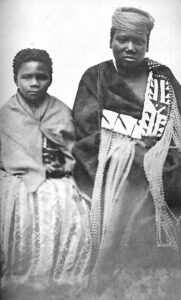
Nongqawuse herself was taken into colonial custody after the prophecy failed. She was held at the home of Major Gawler for a period, dressed in colonial clothing. She eventually moved to a farm in the Eastern Cape, where she lived quietly under the name Sara until her death in 1898.
The Questions That Remain
Who was Nongqawuse?
The question has been asked by every subsequent generation, and the answers have varied with the politics and theology of whoever was asking.
Colonial accounts were straightforward: she was a deluded child, manipulated by a corrupt uncle, whose credulity had destroyed her people. This reading served the colonial narrative perfectly. It blamed the Xhosa for their own dispossession.
Post-independence readings have been more complicated. Some historians have suggested that Mhlakaza may have had his own political motivations. That the prophecy was, at some level, a political project dressed in spiritual clothing. Others have argued that Nongqawuse was a genuinely visionary young woman, living in a world under such catastrophic pressure that the apocalyptic logic of the prophecy was the only coherent response available.
My own reading sits somewhere uncomfortable. I think she may have seen something. And I think what she saw was taken from her (not violently, not cynically perhaps, but effectively) and remade into something that served a larger set of purposes than a fifteen-year-old girl at a river could have conceived.
Mhlakaza was not simply a passive relay. He was an interpreter, and interpretation is never neutral. He was a man standing at the collision of two worlds, holding frameworks from both, with everything around him burning. What came out the other side was her vision and his architecture, fused together in a way that could never fully be separated again.
The most honest answer to who Nongqawuse was is that we may never fully know. What we know is that she was an orphaned fifteen-year-old in a society under existential threat, raised by a deeply religious man whose own beliefs had been complicated by colonial contact, and that she sat by a pool and experienced something she understood to be genuine contact with the ancestral world. Whether that contact was what she understood it to be. Whether the ancestors she met at the Gxarha River were truly the ancestors she thought they were. Is a question that sits in the territory this practice is always navigating: the territory of discernment, of testing visions against reality, of the enormous responsibility that comes with being the one who says the spirits have spoken.
And it is a question about what happens when that responsibility is not solely held by the one who received the vision.
For the Practitioner
Nongqawuse’s story is uncomfortable in ways that are instructive.
It is uncomfortable because she was not a cynical manipulator. There is no credible evidence that she fabricated her visions. She appears to have been exactly what she claimed to be. A young woman who had received a communication from the ancestral world and who transmitted it faithfully.
It is uncomfortable because the people who followed her were not credulous fools. They were a devastated people reaching for the only framework that could make sense of their situation. And that framework, the framework of ancestral promise and prophetic fulfillment, was a real and coherent one within Xhosa tradition. They trusted the chain of transmission. They had no way to examine where the vision ended and the interpretation began.
And it is uncomfortable because the stakes of getting it wrong were catastrophic.
Any practitioner working with ancestral communication, prophetic vision, or the transmission of spirit messages to a community carries a version of this question. Not at the scale of Nongqawuse, almost nothing in human history has been at that scale, but structurally analogous.
This is the question that Nongqawuse’s story presses on every practitioner: when you receive something and pass it on, how much of you goes with it? How do you remain a clear vessel rather than a shaping hand? And when you are the one on the receiving end of someone else’s transmission, how do you ask those questions of them, with care and without dismissal?
Nongqawuse does not provide easy answers to these questions. She provides the most serious possible demonstration of why they cannot be avoided.
The transmission being caught, shaped, expanded, and delivered back to the world as divine instruction, is where the story becomes a warning that practitioners of spirit work need to sit with honestly.
The vision does not always arrive in the same hands that will deliver it. And the gap between the one who sees and the one who speaks is where so much can go wrong. Not through malice, but through the weight of a person’s own beliefs, their own needs, their own understanding of what the moment requires. Mhlakaza may have genuinely believed every word he transmitted. That does not make what he transmitted purely hers.
She sat by the water and the ancestors came. And then came everything else.
Nongqawuse, c.1841 – 1898. Prophetess of the Gxarha. Her vision moved a people and broke a world. The questions her story raises have not been answered.