Before there were candles on altars or circles cast in salt, before there were books of correspondences or crystals arranged by intention, there was the human voice. Every tradition of magic and spiritual practice that has ever existed uses sound. Drumming, chanting, singing, humming, toning, the ringing of bells, the crack of a clapper, the whispered charm. The world’s oldest known musical instruments, bone flutes found in cave sites in Germany and Slovenia, dated to around 40,000 years ago, were found alongside evidence of ritual and ceremony. Whoever made those flutes was not only making music. They were doing something sacred with sound. We have largely forgotten this. In the modern world, music is entertainment, background, content to be consumed. It streams from every device, present in every café and waiting room, stripped of its context and its power. We have separated sound from meaning so thoroughly that many practitioners feel embarrassed to use their voice in their practice, to chant, to hum, to sing, to speak a charm aloud, as though the vocalisation itself is somehow less legitimate than the silent manipulation of energy. It is not. It is, in many traditions, the most powerful form of magic available to the human body. Why Sound Works Sound is not merely symbolic. It is physical. Sound is vibration, the actual movement of molecules through a medium, waves of compression and rarefaction that physically interact with everything they pass through, including your body. When you sing a sustained note, the vibration travels through the bones of your skull into your brain. When a drum is struck at certain frequencies, it entrains the brain’s electrical activity toward theta and alpha waves. The states associated with meditation, creativity, and altered consciousness. When a group of people tone together, they entrain to each other, their nervous systems synchronizing, their energy fields becoming temporarily coherent. This is not spiritual metaphor. These are documented physiological effects. The traditions that built entire systems of sacred sound – Vedic chanting, Buddhist toning, shamanic drumming, the Gregorian chant of medieval Christianity, the Sufi dhikr, the bardic traditions of the Celtic world – were working with something real, even if they described it in different terms than modern neuroscience does. Sound vibration: ~ Shifts consciousness. Sustained toning, drumming at approximately 4-7 Hz, and repetitive chanting all move brain activity toward theta states. The states most conducive to magical working, visionary experience, and genuine openness to whatever the practice is reaching toward~ Clears and shifts energy. The physical vibration of sound in a space quite literally disrupts stagnant or accumulated energy. Not metaphorically but physically, by moving the air and the surfaces it interacts with. There is a reason that ringing bells and clapping hands are used across traditions to clear ritual space~ Focuses and charges intention. Giving an intention a sound, a tone, a word, a melody, is a different kind of commitment than thinking or writing it. The body is fully engaged. The breath is carrying it. The voice is the most personal instrument there is, and what you put your voice behind, you are genuinely behind~ Creates connection. Sound travels outward into the world. What you project with your voice is not contained within you. It moves into the space around you and beyond, which is exactly the quality you want in a working that is meant to go out and do something. Your Voice as a Magical Instrument You already have the most powerful sound tool available. You do not need perfect pitch. You do not need musical training. You do not need to sound good. You… …
You have been performing magic with your body your entire life without calling it that. The way you cross your fingers for luck. The way you rock when you are distressed without being taught to. The way your hands move when you are trying to explain something important. Drawing it in the air, shaping it in space as though the gesture is part of the meaning. The way you instinctively stretch your arms wide when something is joyful, contract and wrap inward when something is frightening. The way children spin, and jump, and move in circles, and nobody teaches them these things. They arise from the body’s own wisdom about what it needs to process experience. The human body has always been a magical instrument. It is the original altar, the original ritual space, the original point of contact between the inner world and the outer one. Long before there were tools or traditions or words for what magic was, there was the body in motion. Dancing around fire, moving in the shapes of prayer, enacting in gesture and posture the things that needed to be made real. We have largely abandoned this knowledge. Most contemporary magical practice is sedentary: we sit at altars, we read, we think, we speak. The body is present but peripheral. We have inherited the intellectualised version of the craft and left behind its most ancient, most physical, most immediately powerful dimension. This is worth recovering. The Body Knows What the Mind Does Not Every major system of somatic therapy, from Somatic Experiencing to EMDR to dance-movement therapy, has arrived at the same understanding that traditional magical and healing cultures held without needing to prove it: the body holds what the mind cannot process. Trauma, stuck emotion, unresolved energy, these do not live primarily in thoughts. They live in the body, in specific patterns of tension, posture, movement, and restriction. This is not only relevant to healing. It is directly relevant to magical practice. The practitioner who works exclusively with their mind, who raises power through visualisation, who casts through spoken word, who works with intention but never with the physical body, is working with perhaps a third of what is available to them. The rest is in the body. In the breath. In the capacity for genuine physical movement. In the felt sense of energy moving through a nervous system that is fully engaged rather than sitting still in a chair. Traditional magical and spiritual cultures understood this instinctively: ~ The shamanic dance that exhausts the dancer into altered states~ The Sufi sama, the whirling that the dervishes use to dissolve the ego~ The ecstatic dance of the Bacchic mysteries~ The Vodou ceremonies where practitioners dance until they are mounted by the lwa~ The circle dances of traditional folk witchcraft that raised the cone of power through physical motion~ The devotional dance offerings of Hindu puja~ The sweat lodge ceremonies where heat and breath and the physical endurance of the body are themselves the working In every case, the body in deliberate motion is understood to be doing something that the body at rest cannot do: raising power, shifting states, making contact, crossing thresholds. What Movement Does Magically It raises energy. The most reliable way to raise energy is through the body. Moving, particularly in repetitive patterns, circling, swaying, spinning, generates physical heat and activates the nervous system in ways that produce genuine altered states. The raised energy is not metaphorical. It is the actual physiological arousal of the body, its endocrine and nervous systems engaged, its capacity for perception and transmission heightened. It… …
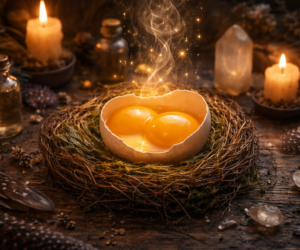
The universe is always speaking. Sometimes it whispers through dreams, sometimes it shouts through synchronicities, and often it communicates through the small, seemingly mundane moments we might otherwise overlook. An omen is simply a sign. A message encoded in the ordinary world, waiting for those with eyes to see and minds open enough to interpret. Our ancestors lived immersed in omen-reading. They watched how bread rose in the oven, observed which direction birds flew, noted when mirrors cracked or candles flickered. These weren’t superstitions but rather a sophisticated system of paying attention. Of recognizing that the material world reflects spiritual patterns, and that meaning hides in plain sight. What Makes Something an Omen? Not every occurrence is an omen. A bird flying past your window is just a bird. But a bird flying directly at your window three times while you’re contemplating a major decision? That’s worth noting. An omen carries weight, unusualness, or timing that makes it stand out from the background noise of daily life. True omens often have these qualities: Timing: They occur at significant moments. During important decisions, life transitions, or when you’re actively seeking guidance. Repetition: The same symbol, animal, or occurrence appears multiple times in a short period. Unusual circumstances: Something happens that’s out of the ordinary – the bizarre timing, the strange behavior, the unexpected appearance. Emotional impact: You feel something when it happens, a chill, a knowing, an intuitive ping that says “pay attention.” Personal resonance: The omen means something specific to you based on your life, culture, or intuitive understanding. The key to reading omens is developing a relationship with signs over time. Your interpretation matters more than any book’s definitive meaning. The universe speaks your language. The symbols that appear to you carry messages calibrated to your understanding. Omens in Food and Cooking The kitchen has long been considered a magical space, and the behavior of food, how it cooks, how it breaks, how it appears, carries messages. Bread Splitting Down the Middle When bread splits unexpectedly down the center while baking or cooling, traditional interpretation suggests division, separation, or a parting of ways. This might indicate a coming split in a relationship, a choice between two paths, or the need to separate something that’s been joined. The clean center split specifically suggests this division is natural or necessary rather than forced or harmful. However, context matters. If you’re baking bread while contemplating divorce, this omen reinforces what you already sense. If you’re happily partnered with no conflict, it might indicate a necessary division of responsibilities or a fork in the road requiring you both to choose a direction. Eggs with Double Yolks Finding double yolks is traditionally a sign of good fortune, unexpected abundance, or duality. Some interpret it as an omen of twins or partnership. Others see it as getting more than you expected, a windfall, a bonus, double blessings. Eggs that Won’t Crack Cleanly When an eggshell shatters into tiny pieces instead of cracking cleanly, or when shell bits keep falling into your bowl, this suggests complications ahead. Things won’t be as simple as expected. You might need more effort to achieve your goal, or there will be small annoyances that accumulate. Salt Spilling Spilled salt is one of the oldest omens, traditionally considered bad luck. The antidote, throwing a pinch over your left shoulder, supposedly blinds the devil or bad spirits waiting there. More broadly, spilled salt suggests carelessness leading to consequences, waste of precious resources, or tears to come (salt being associated with tears). Bubbles in Coffee or Tea Bubbles forming on the surface of… …
Remember when you were a kid and you’d blow on a dandelion while making a wish? Or when you’d search for four-leaf clovers for good luck? What if I told you that many of those innocent childhood rituals were actually forms of folk magic and witchcraft? Before you had any concept of spells or magic, you were already practicing it. These seemingly mundane childhood habits are rooted in ancient traditions, folk magic, and intuitive spiritual practices that have been passed down through generations. Let’s explore some common childhood activities that were actually witchcraft all along. Wishing on Dandelions What You Did: Picked a fluffy white dandelion, made a wish, and blew the seeds into the wind. The Witchcraft: This is a classic form of wish magic and sympathetic magic. The act of blowing the seeds represents releasing your intention into the universe, allowing the wind (a powerful elemental force) to carry your wish out into the world. Each seed represents a piece of your desire being planted and spread. Dandelions are also associated with divination. Some traditions say the number of breaths it takes to blow all the seeds away tells you something about your wish or future. Crossing Fingers for Luck What You Did: Crossed your fingers when hoping for something good to happen or when telling a “harmless” lie. The Witchcraft: Finger crossing is an ancient protective gesture dating back to early Christianity and even earlier pagan practices. The crossed fingers form the shape of a cross or an X, which has been used for centuries as a symbol of protection and blessing. When you cross your fingers for luck, you’re essentially creating a mini protective charm with your own body, asking for divine favor or warding off bad outcomes. Holding Your Breath Past Graveyards What You Did: Held your breath while passing a cemetery or graveyard, maybe even lifting your feet off the car floor. The Witchcraft: This is a form of spiritual protection and respect for the dead. Many cultures believe that breathing near graves could invite spirits to enter your body or attach to you. By holding your breath, you were creating an energetic boundary between yourself and the spirit world. Lifting your feet is an additional protective measure,staying physically disconnected from the ground prevents spirits from following you home. Avoiding Cracks in the Sidewalk What You Did: Carefully stepped over cracks while chanting “step on a crack, break your mother’s back.” The Witchcraft: This is sympathetic magic and threshold magic combined. In many magical traditions, cracks and breaks represent doorways to the spirit world or weak points in reality. By avoiding them, you were protecting yourself from bad luck and protecting your loved ones from harm. The rhyme itself is a spell – words spoken with intention while performing a physical action. Making Wishes on Falling Stars What You Did: Frantically wished on a shooting star before it disappeared from view. The Witchcraft: Celestial magic and wish magic. Stars have been used in magical practices for millennia. A shooting star is considered an especially powerful moment because it represents a brief opening between the earthly and cosmic realms. The urgency of making your wish before the star disappears adds focused intention and energy to the spell, making it more potent. Searching for Four-Leaf Clovers What You Did: Spent hours searching through clover patches hoping to find that rare four-leaf clover for good luck. The Witchcraft: This is plant magic and luck magic. Four-leaf clovers have been considered magical for centuries, with each leaf representing something different – hope, faith, love, and luck. The act… …
Low Energy Witchcraft – Because magic doesn’t always have to be overwhelming In a world of elaborate rituals, expensive crystals, and Instagram-worthy altars, it’s easy to forget that some of the most powerful magic happens in the quiet moments of everyday life. Low energy witchcraft isn’t about being lazy or uncommitted. It’s about recognizing that magic flows through the mundane, that intention can transform the ordinary, and that sometimes the most profound spells are the ones whispered over a cup of coffee or woven into the simple act of washing your hands. This approach to witchcraft honors the reality that life is demanding, energy is precious, and not every magical moment needs to involve elaborate ceremony. Whether you’re chronically ill, overwhelmed by daily responsibilities, new to the craft, or simply someone who finds magic in simplicity, low energy witchcraft offers a sustainable path to spiritual practice. The Philosophy of Gentle Magic Low energy witchcraft operates on several key principles: Intention Over Spectacle The power of a spell doesn’t come from its complexity but from the clarity of your intention. A heartfelt wish whispered over morning coffee can be more effective than an elaborate ritual performed without genuine focus. Integration Over Separation Rather than setting aside special time for magical practice, low energy witchcraft weaves magic into activities you’re already doing. Every meal becomes a potential spell, every shower a cleansing ritual, every bedtime routine an opportunity for protection. Accessibility Over Exclusivity This practice doesn’t require expensive tools, rare ingredients, or perfect conditions. It works with what you have, where you are, as you are. Sustainability Over Intensity Magic should enhance your life, not exhaust it. Low energy witchcraft creates a practice you can maintain even on your worst days, building magical habits that support rather than drain your energy. Morning Magic: Starting Your Day with Intention The Morning Coffee or Tea Spell Your morning beverage is one of the most powerful magical tools you possess. As you prepare your coffee or tea, you’re already working with the elements: water, fire (heat), earth (the beans or leaves), and air (the steam and aroma). The Basic Brew Spell:1. As you prepare your drink, set a clear intention for your day2. Stir clockwise while visualizing your goals manifesting3. As you add milk, sugar, or honey, think of sweetening your path4. Before your first sip, hold the mug in both hands and whisper: “With this first taste, I welcome the day. May it bring me what I need in every way.” 5. Take your first sip mindfully, feeling the warmth and energy entering your body Variations for Different Needs:~ For Confidence: Add a pinch of cinnamon while affirming your capabilities~ For Peace: Stir in some chamomile or lavender and breathe deeply~ For Clarity: Add a few drops of lemon and visualize mental fog clearing~ For Abundance: Stir in honey while thinking of sweetness flowing into your life The Two-Minute Morning Intention Even before you get out of bed, you can set the magical tone for your day: 1. Take three deep breaths2. Place your hand on your heart3. Speak your intention for the day, such as: “Today I am protected, today I am guided, today I am exactly where I need to be.” 4. Visualize a golden light surrounding you as you rise Cleansing Magic: Transformation Through Water The Shower Cleanse Ritual Your daily shower is a perfect opportunity for spiritual cleansing. Water has been used for purification across cultures for millennia, and you can tap into this ancient wisdom every day. The Basic Shower Cleanse:1. As you step into the shower, set the… …
Magic doesn’t always come in chants and circles. Sometimes it’s in brushstrokes, poems, songs, or dances. Creation is spellwork. The Creative & Expressive Magic path is for witches, artists, writers, and anyone who channels their power through creative acts. Here we’ll explore: Art as ritual and invocation Music, sound, and movement as spellwork Journaling and poetry for healing and manifestation Making magical tools and talismans by hand Tapping into the muse, the flow, the spirit of creation Your art doesn’t need to be “perfect” to be powerful. When you create with intention, you weave energy into the world. Mini Practice Choose a creative tool (pen, brush, voice, etc.) and create something small with the intention of protection or blessing — no one else needs to see it. Let it be magic just for you…. Membership Required You must be a member to access this content.View Membership LevelsAlready a member? Log in here...