Shadow Work and the Dark Botanicals ~ Plants for the Work Nobody Talks About

Not every plant wants to help you flourish. Some of them want to strip things away. Some of them are drawn to what rots, what ends, what dissolves at the edges of ordinary life. Some of them grow precisely in the places that most people walk past quickly – the shadow of the wall, the disturbed earth at the margin, the place where something has recently died. These are the dark botanicals, and they have been the companions of shadow work long before shadow work had a name. In the contemporary practice of magic, plant work and inner work are often kept separate. Herbs for spells, therapy for the psyche. But in the older tradition, this division would have been incomprehensible. The plant you burned for clarity was also the plant that forced you to see what you had been avoiding. The herb you carried for protection was also the herb that showed you what you actually needed protecting from. The boundary between the inner and the outer was a working boundary, not a permanent wall. The dark botanicals are the plants that dissolve that wall most effectively. They are the allies for going down. What Makes a Botanical “Dark” Dark does not mean dangerous, though some of these plants are genuinely dangerous and will be handled accordingly. Dark, in the botanical sense, means belonging to the threshold. Growing in liminal territory, operating at the edges of ordinary perception, associated with transformation through dissolution rather than growth through accumulation. A dark botanical is a plant that understands endings. That has an affinity with the underworld, with the ancestor realm, with the places where what was solid begins to loosen. That works not by adding something to you but by removing what does not belong – the calcified belief, the inherited wound, the identity you have outgrown and are still carrying out of habit. These plants are not for everyday magic. They are not for the general altar, the daily practice, the spell for a parking space. They are for the serious inner descent. The deliberate, prepared, intentional work of going into your own depths and bringing back what you find there. Used with respect and clear intention, they are among the most powerful allies a practitioner can have for shadow work. Used casually or without preparation, they are likely to produce discomfort without integration, darkness without illumination. The difference is always the quality of the practitioner’s attention. The plant does not do the work. It accompanies you while you do the work. And for that to be useful, you have to be genuinely doing the work. Mugwort: The Dreaming Plant Artemisia vulgaris Mugwort is the gateway botanical for shadow work, and she is the safest place to begin. She does not force anything. She does not strip or dissolve or demand. She opens a door. Specifically the door between waking consciousness and the deeper layers of the mind where shadow material lives. And then she accompanies you through it. She grows everywhere she is not specifically cultivated, appearing in vacant lots, along roadsides, at the edges of fields, in the disturbed earth at the margin of the managed world. Her silvery-green leaves are unremarkable until you crush one between your fingers, at which point she releases an aroma that is simultaneously bitter, aromatic, and strangely familiar. As though you have smelled it before in a place you can’t quite locate in memory…. Membership Required You must be a member to access this content.View Membership LevelsAlready a member? Log in here...

Membership Required

You must be a member to access this content.

View Membership Levels

Already a member? Log in here

Shadow Work for Beginners ~ Going Deeper Into the Dark

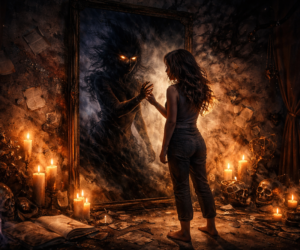
You have already met your shadow. It was there in the moment you heard yourself say something cruel and didn’t know where it came from. It was in the envy you felt and immediately pushed down, the one you told yourself you weren’t feeling. It was in the way you flinched from a compliment, or sabotaged something good, or found yourself doing the exact thing you promised yourself you’d never do. The shadow is not dramatic. It is not demonic. It is not even particularly unusual. It is simply the sum of everything you have decided, consciously or not, does not fit the version of yourself you are trying to be. And it lives in the dark precisely because you have looked away from it. Shadow work is the practice of turning back around. The Territory You’re Entering Carl Jung gave us the map, but the territory itself is ancient. Every culture that has ever wrestled honestly with what it means to be human has had some way of naming the parts of us that operate beneath the surface. The impulses that embarrass us, the fears that direct us without our permission, the wounds that never quite healed because we never quite looked at them. In the magical tradition, the shadow is not simply a psychological construct. It is the domain of the threshold. The place where the managed self meets the unmanaged self, where the face you show the world ends and the face you rarely show anyone begins. This is the territory that liminal magic knows well: the boundary place, the between space, where transformation becomes possible precisely because the usual rules don’t fully apply. Shadow work in a magical context is what happens when you bring a practitioner’s attention – deliberate, symbol-literate, ceremony-willing – to the work of honest self-confrontation. It takes the psychological insight that unexamined parts of ourselves drive our behavior in ways we don’t choose, and adds to it the tools of the craft: ritual, the working with symbol and archetype, the understanding that transformation requires genuine engagement with what is dark, not just what is light. You are not going into the dark to suffer there. You are going in to retrieve what you left behind. What You Will Actually Find Most people approach shadow work expecting monsters. What they find is much more human than that. You will find the parts of yourself that learned to disappear. The anger that was too dangerous to express as a child and became, over time, an absence. A flattening of your own presence, a habit of making yourself smaller to keep the peace. You will find the neediness that was shamed out of you and turned into its opposite: a fierce, exhausting self-sufficiency that never lets anyone close enough to help. You will find the ambition that you learned to call selfishness, the sexuality you learned to call wrong, the grief you learned to call weakness, the voice you learned to call too much. These are not the worst parts of you. They are the parts that were deemed unacceptable by the world around you before you were old enough to evaluate that judgment for yourself. And so you buried them, and they went on living underground, influencing everything from below. What you find in the shadow is often not darkness at all. It is light that was driven underground – vitality, passion, creativity, power – that you have been inadvertently suppressing along with the things you genuinely needed to grow past. This is why Jung called the integration of the shadow the retrieval of… …

Membership Required

You must be a member to access this content.

View Membership Levels

Already a member? Log in here

Familiar Spirits and How to Work With Them ~ A Practitioner’s Guide

Something has been watching you. Not with menace, with interest. You have felt it in the way a particular animal keeps appearing at the edges of your life, in the dream that recurs without resolution, in the presence you sense at the corner of a room you have just walked into. You have dismissed it, probably. Told yourself it was coincidence, pattern recognition, the human brain doing what it does – finding meaning in the noise. But the feeling persists. In the magical tradition, there is a name for what you are sensing. A familiar is not a pet with a witch. It is not a demonic servant from a medieval woodcut. It is not a totem animal you read about in a book and decided suited your personality. A familiar is a relationship. A sustained, specific, reciprocal connection between a practitioner and a spirit that has chosen to work alongside them. You do not fully choose your familiar. This is the first thing to understand. The familiar chooses too. What a Familiar Spirit Actually Is The word familiar comes from the Latin familiaris – of the household, intimate, belonging to the family. In its earliest uses it referred to the household spirits of Roman tradition, the Lares and Penates who inhabited the domestic space and protected those within it. By the medieval period the word had shifted to refer specifically to a spirit ally of a magical practitioner. A being that accompanied them, assisted their work, and was known to them in the intimate way the word’s root suggests. This is the essential nature of the familiar: not a tool or a servant but a companion. Not something you possess but someone you know. The tradition of familiar spirits is genuinely ancient and genuinely cross-cultural, though it takes different forms in different places. In British and European folk magic the familiar was often understood as a spirit that took animal form – a cat, a hare, a toad, a bird, a dog. In Indigenous shamanic traditions the concept of the spirit helper or power animal covers similar ground. In West African and Afro-diasporic traditions the relationship between practitioner and spirit being has its own vocabulary and its own protocols. In Japanese tradition the shikigami, spirit beings called and directed by practitioners of onmyōdō, occupy related conceptual space. What these traditions share is the understanding that certain practitioners develop specific, sustained relationships with spirit beings who assist their work. Not every practitioner has a familiar in this sense. But many do, and when the relationship is present it is unmistakable: not a general sense of spiritual connection but a specific, consistent presence with a recognizable character, a recognizable way of communicating, and a recognizable set of gifts it brings to the working. Types of Familiar Spirits Not all familiar spirits are the same, and the tradition recognizes several distinct types. Understanding which kind of familiar is present, or which kind you may be called to work with, shapes how the relationship is understood and how it is cultivated. Animal familiars are the most widely recognized in Western tradition. These may be physical animals with whom a special connection exists – a cat, a dog, a bird, a wild animal that appears repeatedly and behaves in ways that feel significant. Or they may be purely spirit presences that take animal form in dreams, visions, and the inner landscape of the practitioner. The distinction matters: a physical animal can be a beloved companion without being a familiar in the magical sense, and a familiar can be present without ever manifesting as a… …

Membership Required

You must be a member to access this content.

View Membership Levels

Already a member? Log in here

How to Know When Your Familiar Is Speaking

The familiar does not knock. It does not wait to be introduced, does not announce itself with ceremony, does not send a calling card. It communicates the way the spirit world has always communicated – sideways, through the cracks in ordinary attention, in the language of sensation and symbol and the small strangeness of moments that should be unremarkable but aren’t. Most practitioners who have a familiar don’t miss the relationship. They miss the communication. They feel something, a chill, a pull of attention, a recurring image that surfaces at odd moments, and they talk themselves out of it before it has a chance to become information. The rational mind is fast, and it is merciless, and it has a hundred explanations for everything that does not require the word familiar. Learning to know when your familiar is speaking is the work of two things happening simultaneously: developing the sensitivity to receive the communication, and developing the trust to take it seriously when it arrives. This is about both. Why Familiar Communication Is Subtle Before getting into the specific signs, it is worth understanding why familiar communication tends toward the subtle rather than the dramatic. Because this understanding will save you from spending years waiting for something that was never going to arrive in the form you were waiting for. Crossing the boundary between the spirit world and the physical one requires energy. Significant energy. The dramatic manifestations of popular imagination, voices from nowhere, objects moved by invisible hands, unmistakable visual appearances, require a level of energetic force that is genuinely difficult to sustain and genuinely rare in ordinary circumstances. Most spirit communication, including familiar communication, operates at the level of least resistance: the subtle, the suggestive, the easily-overlooked-but-present-if-you-look. This is not the familiar being coy. It is the familiar being practical. It communicates through the channels that are actually available. Through the body’s sensitivity, through the permeability of the dreaming mind, through the electromagnetic field that surrounds and interpenetrates the physical world, through the orchestration of small coincidences that would each mean nothing in isolation but together constitute a clear and consistent signal. The familiar’s communication is subtle the way a whisper is subtle. Not weak – subtle. A whisper can carry as much meaning as a shout. But you have to be genuinely listening. The Body as First Receiver Your body knows before your mind does. This is not mysticism, it is straightforward phenomenology. The body is constantly processing information that the conscious mind has not yet reached. When a familiar is present, or when it is attempting to communicate, the body registers this before the analytical mind has had a chance to explain it away. Learning to read your body’s response to familiar presence is one of the most fundamental skills in this work. And it begins with paying attention to sensations you have probably been dismissing as meaningless for years. Sudden chills in warm environments. Not the general chill of a cold room, but a specific, localized chill that arrives abruptly, often running down the back of the neck, along the spine, or through one arm. This is among the most consistent physical signatures of spirit presence across cultures and traditions. When a chill arrives at a significant moment, when you have just asked a question, when you are thinking about something important, when you are at a threshold of some kind, it is worth treating as a response rather than a coincidence. Pressure or warmth. A sense of weight or warmth at specific locations on the body, the shoulders, the back of the head, the… …

Membership Required

You must be a member to access this content.

View Membership Levels

Already a member? Log in here

Developing Psychic Sensitivity for Spirit Work ~ A Practitioner’s Guide

Psychic sensitivity is not a gift you either have or you don’t. It is a capacity, like strength, or flexibility, or the ability to hold a sustained note, that exists in everyone in some form and that develops through practice. The practitioner who seems to perceive things others miss has not been granted special access to the spirit world. They have simply been paying attention longer, in more disciplined ways, and they have developed the trust to act on what they perceive rather than explaining it away before it has a chance to become information. This is for the practitioner who knows there is more happening around them than they can currently receive . Who feels the edge of perception without being able to cross it reliably, who has experiences that seem significant but cannot yet read them clearly, who wants to develop genuine sensitivity rather than perform it. What follows is honest about what this development actually requires. It is not fast. It is not dramatic. It does not produce extraordinary abilities on a schedule. What it produces, over time and with consistent practice, is something more valuable than extraordinary: a reliable, grounded, trustworthy relationship with your own subtle perception. Understanding What You Are Developing Before working on developing psychic sensitivity, it helps to understand what sensitivity actually is. What you are trying to develop and why the development takes the form it does. Psychic sensitivity is the capacity to consciously receive information through channels that operate outside ordinary sensory perception. Not instead of the ordinary senses, alongside them. The subtle information available through these channels is always present. The question is whether you are calibrated to receive it, and whether you trust what you receive enough to act on it. Most adults are significantly less sensitive to subtle perception than they were as children. Not because the capacity diminished, but because it was systematically trained out of them. The child who reported sensing things no one else acknowledged was probably told, in various ways, that they were mistaken. The intuitive impression that proved accurate was explained as luck. The felt sense of a room or a person that later proved exactly right was attributed to observation rather than to something less explicable. Over years of this re-training, most people learn to filter subtle perception before it reaches consciousness. To process it and discard it before the analytical mind even has a chance to evaluate it. Developing psychic sensitivity is partly the work of identifying and dismantling those filters. Not abandoning discernment, developing discernment is equally important, but learning to let the subtle information through long enough to examine it. This means that the development process often involves a period of apparent regression before it involves clear progress. As you begin paying more deliberate attention to subtle perception, you will notice things you had been successfully filtering out for years. Including things that turn out to be noise rather than signal. Learning to distinguish the two is part of the work, and it takes time. The Foundation: Grounding Before Sensitivity The first and most important practice in developing psychic sensitivity has nothing to do with perception and everything to do with stability. Psychic sensitivity without grounding is not useful, it is destabilizing. A practitioner who opens their sensitivity without establishing a secure physical foundation becomes flooded. Every environmental emotion registers as their own, every spirit presence demands attention, every subtle signal arrives without the context needed to read it accurately. The result is exhaustion, confusion, and eventually the kind of energetic shutdown that makes development harder rather than easier…. …

Membership Required

You must be a member to access this content.

View Membership Levels

Already a member? Log in here

The Spell Your Ancestors Cast ~ Generational Curses, Cellular Memory, and When Magic Became Science

There’s a particular kind of magic that doesn’t announce itself with ritual or incantation. It whispers through bloodlines, encoded in the very marrow of who we are. We call them generational curses, ancestral patterns, or family karma. But what if these aren’t metaphors at all? What if the wounds and wisdom of our ancestors live within us in ways that blur the line between magic and biology? What Science Once Called Impossible, Magic Always Knew Our grandmothers knew things without being told. They felt storms in their bones, sensed pregnancy before tests could confirm it, and understood that trauma could be passed down like eye color or a family name. The scientific community dismissed these knowings as superstition, old wives’ tales, the foolishness of the uneducated. And yet. In recent decades, the field of epigenetics has revealed something witches have understood for millennia – our bodies remember what our minds have forgotten. Our cells carry the imprints of our ancestors’ experiences. Their traumas, their survival strategies, their hard-won wisdom. Studies on Holocaust survivors show that their descendants carry markers of that trauma in their DNA, even generations later. Research on famine survivors reveals that their grandchildren’s bodies still hoard calories as if starvation were imminent. Indigenous peoples have spoken for centuries about carrying ancestral memory; now Western science is finally catching up, discovering what it calls “transgenerational epigenetic inheritance.” This is the pattern: what was once dismissed as magic eventually becomes validated as science. The hedge witch’s herbal knowledge becomes pharmacology. The shaman’s trance states become studied as altered consciousness. Energy healing becomes biofield science. The witch was never wrong, she was simply ahead of her time. The Anatomy of a Generational Curse In magical practice, a generational curse isn’t necessarily cast by an enemy or angry deity. More often, it’s a spell of survival that outlived its usefulness. Your great-great-grandmother learned to silence herself to survive an abusive marriage. That silence became a survival strategy, a magical working encoded into the family lineage: Stay small. Don’t speak up. Swallow your truth. Three generations later, you find yourself unable to advocate for yourself, your voice catching in your throat when you need it most, and you can’t understand why. Your grandfather survived poverty through hypervigilance and the belief that money would always disappear. That belief was a protection spell in its time. But now you sabotage your own success, unconsciously ensuring you never have “too much” because deep in your cells, your body remembers that having too much made you a target, that abundance was dangerous. These are generational curses, adaptive behaviors that became maladaptive across time. They’re survival spells that kept working long after the danger passed. The Magic of Cellular Memory From a magical perspective, we are walking repositories of ancestral experience. Our bodies are living grimoires, each cell a page inscribed with the spells our lineage has cast. This isn’t metaphor, or rather, it’s a metaphor that became literal through the mechanism of epigenetics. When your ancestor experienced profound trauma or stress, it didn’t just affect their mind. It changed the expression of their genes, and those changes could be passed down. The body, in its infinite wisdom, tried to prepare future generations for a world as dangerous as the one the ancestor knew. This is sympathetic magic on a biological level: as above, so below. As in the ancestor, so in the descendant. The past reaches forward, casting long shadows into the present. But here’s where it gets interesting for practitioners: if trauma can be inherited, so can resilience. The strength your ancestors needed to survive… …

Membership Required

You must be a member to access this content.

View Membership Levels

Already a member? Log in here

Your Body is a Compass ~ Trusting the Wisdom of Intuition

Your body knows things your mind hasn’t figured out yet. It tightens in your chest when someone lies. It lightens in your belly when you’re on the right path. It pulls you toward certain people and repels you from others before you consciously understand why. Your shoulders rise when danger approaches. Your heart opens when love is near. Your gut churns when betrayal lurks unseen. This isn’t random, this is navigation. Your body is a finely tuned instrument for reading reality, a compass that always points toward truth, a divination tool you carry with you constantly. We live in a culture that privileges mind over body, logic over feeling, thinking over sensing. We’re taught to ignore what our bodies tell us, to override physical knowing with rational analysis, to trust experts and data over our own felt experience. This is a profound error. Your body has access to information your conscious mind cannot perceive. Subtle energies, quantum fluctuations, morphic fields, the collective unconscious, spiritual presences, and patterns too complex for cognitive processing but perfectly readable by your nervous system. Magic practitioners have always known this. Dowsers feel water through rods that amplify their body’s knowing. Mediums sense spirits through goosebumps and temperature changes. Energy workers track chi through tingling in their palms. Witches know when they’re being watched by the prickling on the backs of their necks. Every magical tradition recognizes the body as a perceptive instrument more sophisticated than any technology we’ve created. When you learn to read your body’s signals as the navigation system they are, you gain access to a form of knowing that never lies, that cannot be fooled by appearances, that reads truth beneath surface presentations. Your body is your compass. Learning to follow it is learning to trust the deepest, truest form of knowing available to you. The Science of Somatic Knowing Modern science is beginning to catch up with what magic has always known. The body knows before the mind does. The Gut-Brain Connection Your gut contains approximately 100 million neurons, more than your spinal cord. This “second brain” (the enteric nervous system) communicates constantly with your cranial brain via the vagus nerve, but it also processes information independently. “Gut feelings” are literal. Your gut is thinking, sensing, and knowing. It responds to situations before your conscious mind has time to analyze them. Heart Intelligence The heart generates an electromagnetic field 60 times greater in amplitude than the brain’s field and can be detected several feet away from the body. The HeartMath Institute has documented that the heart receives and processes information before the brain does. The heart literally knows first. When you “feel it in your heart,” you’re accessing real intelligence. Interoception This is your body’s ability to sense its internal state. Not just hunger and thirst, but subtle shifts in emotional state, energy levels, and response to environment. People with strong interoceptive awareness are better at reading emotions, making decisions, and detecting deception. You can develop this ability through practice. Mirror Neurons Your nervous system contains neurons that fire both when you perform an action and when you watch someone else perform it. This is why you can “feel” others’ emotions, why you physically recoil when you see someone hurt, why you sense when someone’s angry even if they’re smiling. Your body is literally mirroring and reading others’ states. Micro-Expressions Your body reads micro-expressions, facial movements lasting less than a second, that your conscious mind doesn’t register. Your body knows someone is lying before your mind catches up. That “off” feeling you get? Your body detected signals too fast for conscious… …

Membership Required

You must be a member to access this content.

View Membership Levels

Already a member? Log in here

Tallow Candles in Traditional Spellwork. A Guide to Ancestor Rituals and Shadow Work

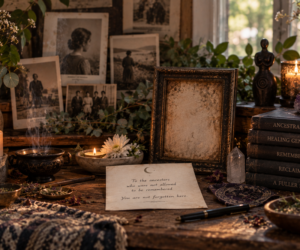
There’s something profoundly ancient about the warm, flickering glow of a tallow candle. Long before paraffin and soy became the standard, our ancestors relied on rendered animal fat to light their homes and sacred spaces. Today, tallow candles are experiencing a renaissance in spiritual practice, particularly among those drawn to the deeper, darker aspects of magical work. The Energetic Properties of Tallow Unlike plant-based candles, tallow carries a unique energetic signature rooted in transformation. It embodies the sacred cycle of life, death, and rebirth. The fat that once sustained a living creature becomes preserved through rendering, then transforms again through fire into light and heat. This triple transformation makes tallow particularly potent for shadow work and ancestral veneration. Practitioners often describe tallow’s energy as grounding and primordial. It connects us to our pre-industrial ancestors who lived closer to the cycles of nature, who understood viscerally that death feeds life. When working with tallow candles, you’re not just burning wax, you’re engaging with the energy of decay as a necessary stage of rebirth, with ancient truths that have been largely forgotten in our sanitized modern world. Making Your Own Tallow Candles Creating tallow candles is itself a meditative, transformative practice. The process requires patience and respect for the material. What You’ll Need – High-quality beef or lamb tallow (preferably from a local butcher or farm)– Cotton wicking– Candle molds or containers– A double boiler setup– Thermometer– Wooden skewers or pencils (for holding wicks in place) The Rendering Process If you’re starting with raw fat, you’ll need to render it first. Cut the fat into small pieces and heat it slowly in a pot or slow cooker on low heat for several hours. The fat will melt, and any solid bits will sink or float. Strain the liquid fat through cheesecloth into a clean container and allow it to solidify. This purification process is spiritually significant. You’re removing impurities, leaving only essence. Candle Making Steps 1. Melt your rendered tallow in a double boiler to about 170-180°F. Avoid overheating, as this can affect the quality. 2. While the tallow melts, prepare your molds or containers by securing the wick at the bottom center. You can use a bit of melted tallow as adhesive. 3. Suspend the top of the wick using a skewer or pencil laid across the container’s opening, keeping the wick centered and taut. 4. Pour the melted tallow slowly into your molds, leaving about half an inch at the top. As you pour, you might set an intention or speak words of dedication for your candle’s purpose. 5. Allow the candles to cool completely. Tallow can take several hours to fully set, and you may notice a slight depression forming around the wick as it cools. If desired, you can reheat leftover tallow and do a second pour to create a smooth top. 6. Once solid, trim the wick to about a quarter inch. Additions for Magical Work Some practitioners add herbs, essential oils, or small crystals to their tallow candles. Common additions for ancestor work include mugwort, wormwood, or rosemary. For shadow work, consider black salt, obsidian chips, or oils like patchouli or cypress. Add these when the tallow has cooled slightly but remains liquid.  Using Tallow Candles in Ritual 🪄 Ancestor Rituals Tallow candles create a powerful bridge to those who have passed. Our ancestors knew these smells, this type of light. Lighting a tallow candle on your ancestor altar creates an authentic sensory connection across time. Basic Ancestor Ritual Prepare a simple altar with photos or items belonging to your ancestors. Place offerings they would have… …

Membership Required

You must be a member to access this content.

View Membership Levels

Already a member? Log in here

Samhain: Honoring the Ancient Festival of Ancestors

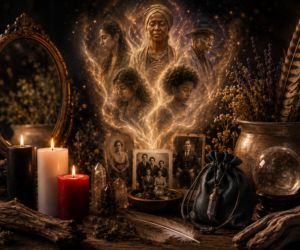
As October wanes and the veil between worlds grows thin, we approach one of the most spiritually significant times of the year: Samhain. Pronounced “SOW-in” or “SAH-win,” this ancient Celtic festival marks the transition from the lighter half of the year into the darkness of winter, a time when our ancestors believed the boundary between the physical and spiritual realms became permeable. What is Samhain? Samhain is an ancient Gaelic festival that traditionally falls on October 31st through November 1st, marking the end of the harvest season and the beginning of winter in the Celtic calendar. For the ancient Celts, this was more than just a seasonal marker. It was considered the most important of the four fire festivals, a time when the ordinary laws of time and space were temporarily suspended. The Celts believed that on Samhain night, the souls of the dead would return to visit their homes, and other spirits could cross over into our world. Rather than fearing this thinning of the veil, they embraced it as an opportunity to honor those who had passed and to seek wisdom from the otherworld. The History and Significance Historically, Samhain represented the “third harvest” – the final gathering before winter’s arrival. Livestock were brought down from summer pastures, and animals that couldn’t be sustained through the cold months were slaughtered. It was a time of both plenty and preparation, of gratitude and solemnity. Communities would extinguish their hearth fires and gather around massive sacred bonfires lit by Druids, where they would offer sacrifices of crops and animals. From these communal flames, people would relight their home fires, carrying the protective blessing back to their households. How to Honor Your Ancestors This Samhain Create a Sacred Ancestor Altar Set aside a special space in your home to honor those who came before you. This can be simple or elaborate, depending on your preference: ~ Place photographs of deceased loved ones, ancestors, or spiritual guides~ Add items that belonged to them or represent their memory~ Include offerings such as their favorite foods, drinks, or flowers~ Light candles to illuminate their way and show they’re remembered~ Add seasonal elements like autumn leaves, acorns, or pumpkins Prepare a Dumb Supper A “dumb supper” is a traditional Samhain meal eaten in silence to honor the dead. Set an extra place at your table for ancestors or departed loved ones. Serve their favorite dishes and eat mindfully, reflecting on their lives and legacies. Some traditions involve serving the spirit plate first and leaving it out overnight. Practice Divination Samhain has long been associated with divination and seeking guidance. The thinning veil makes this an ideal time for: ~ Tarot or oracle card readings~ Scrying with mirrors, water, or crystal balls~ Meditation and ancestral communication~ Journaling about messages or dreams received Light Candles and Speak Their Names One of the most powerful and simple ways to honor ancestors is to light a candle and speak their names aloud. Share stories about them, remember their wisdom, and acknowledge the gifts they’ve passed down through generations. This keeps their memory alive and strengthens the ancestral bond. Engage in Reflection and Release Samhain marks an ending and invites us to release what no longer serves us. Write down habits, relationships, or patterns you wish to let go of, and safely burn the paper in a cauldron or fireplace, releasing them into the transformative flames. Modern Samhain Practices While Samhain has evolved and blended with Halloween traditions, many modern practitioners honor it as a sacred sabbat: ~ Nature Walks: Gather fallen leaves, acorns, and other autumn treasures while reflecting… …

Membership Required

You must be a member to access this content.

View Membership Levels

Already a member? Log in here

Spirit Bears and Sacred White Animals: Messengers of the Divine in Nature

In the misty coastal rainforests of British Columbia, a creature moves through ancient cedars like a living ghost – the spirit bear. Known to the Kitasoo/Xai’xais and Gitga’at First Nations as moksgm’ol. With its cream-colored coat gleaming against the emerald backdrop of the temperate rainforest, this rare white-phase black bear has captured human imagination for millennia, becoming a powerful symbol of the sacred relationship between the physical and spiritual worlds. The spirit bear is not alone in holding this mystical significance. Across cultures and continents, rare white or unusually colored animals have been revered as messengers from the divine, bridges between worlds, and carriers of profound spiritual meaning. These creatures, whether born of genetic anomalies like leucism and albinism, or representing rare color phases, have consistently been viewed as omens, guides, and sacred beings worthy of protection and reverence. The Legend of the Spirit Bear The Kermode bear, scientifically known as Ursus americanus kermodei, is a subspecies of the American black bear found primarily in the coastal temperate rainforests of British Columbia. What makes these bears extraordinary is not just their ghostly white appearance, but the genetic rarity that creates it. The white coat results from a recessive gene.  Both parents must carry the gene for a cub to be born white, making spirit bears incredibly rare even within their own population. According to the oral traditions of the Kitasoo/Xai’xais people, Raven, the creator and trickster figure central to many Pacific Northwest cultures, wanted to remember the ice age that had recently ended. To commemorate this time when the world was white and pure, Raven touched every tenth black bear and turned it white, creating the spirit bears as living reminders of the earth’s ancient history and the connection between past and present. The spiritual significance of these bears extends far beyond their rarity. In First Nations tradition, the spirit bear represents: Peace and Harmony: The white bear is seen as a peaceful creature, embodying the harmony that should exist between humans and nature. Their presence in the forest is considered a blessing and a sign that the ecosystem is balanced and healthy. Transformation and Renewal: Like the seasons that transform the forest, the spirit bear represents the power of change and the cycles of death and rebirth that govern all life. Their white coat symbolizes purity and new beginnings. Bridge Between Worlds: Spirit bears are viewed as mediators between the physical and spiritual realms, capable of carrying messages between the world of humans and the world of spirits. Encounters with these bears are considered deeply significant spiritual events. Protection and Guardianship: These bears are seen as protectors of the ancient forests, guardians of traditional knowledge, and keepers of the sacred balance that maintains the health of their ecosystem. The Broader Phenomenon of Sacred White Animals The reverence for white or unusually colored animals extends far beyond the Pacific Northwest, appearing in cultures across the globe with remarkable consistency. This universal recognition suggests something deeper than mere coincidence. A shared human understanding that these rare creatures carry special significance. White Buffalo: Sacred to the Plains Tribes Perhaps no animal holds more spiritual significance in North American indigenous traditions than the white buffalo. To the Lakota, Dakota, and other Plains tribes, the white buffalo is one of the most sacred beings on earth, connected to the legend of White Buffalo Calf Woman, who brought the sacred pipe and taught the people how to pray. The birth of a white buffalo is considered a sign of great spiritual significance, often interpreted as a time of renewal, purification, and the need for unity… …

Membership Required

You must be a member to access this content.

View Membership Levels

Already a member? Log in here