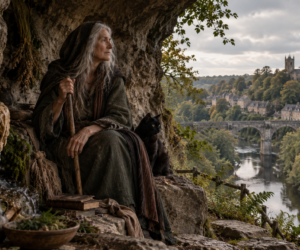
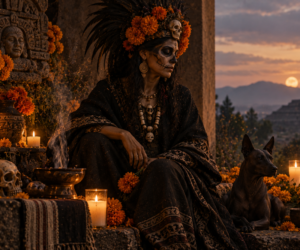
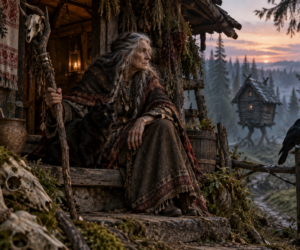
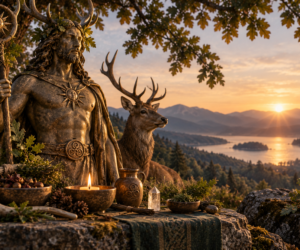
Before I begin this post, I want to mention that the image depicted here is an AI-generated representation of Mary Oneida Toups. I was unable to find a clear, freely available photograph of her. Mary was a mid-20th-century occultist known as the “Witch Queen of New Orleans,” but very few public photos exist online. Most available images are of paintings or portraits held in private collections. A painted portrait of her from the 1960s–70s, described as showing an elegant woman with dramatic brows and dark hair, survives in a private collection, but no clean photographic portraits are publicly available for reuse. I also struggled with how to categorize this post. After much consideration, I’ve placed it under “mythology”. Not because Mary wasn’t real, but because of what the word actually means. Mythology, at its core, refers to a collection of stories, beliefs, and narratives that shape how we understand a person, place, or concept. What we truly know about Mary Oneida Toups is limited to what was made public, the documented facts, the legal records, the published book. Everything else exists in the realm of story, speculation, and legend. In that sense, Mary has become mythological: a figure whose truth is inseparable from the tales told about her. Mary arrived in New Orleans with nothing but ambition and a vision. Within four years, she had chartered the first legally recognized Church of Witchcraft in Louisiana. Within seven, she’d published a book praised by Aleister Crowley’s former secretary. And then, at 53, she died under circumstances that remain disputed to this day – leaving behind no obituary, no known grave, and a legacy so shrouded in mystery that even her successors aren’t sure where fact ends and legend begins. This is the story of Mary Oneida Toups, the Witch Queen of New Orleans. And like any good witch’s tale, separating truth from myth requires some serious detective work. The Documented Facts ~ What We Actually Know Let’s start with what’s verifiable – the paper trail, the public record, the things we can prove beyond the storytelling and speculation. Born: April 25, 1928, in Meridian, Mississippi, to Arthur Hodgin and Mary Ellen Killing. Born Oneida Hodgin, she was the youngest of four children. Life Before New Orleans: Here’s where the record gets sparse but suggestive. At some point before the mid-1960s, Mary (then Oneida Hodgin) had a son named Charlie. She later met and lived with a Navy man named David Berry in New Orleans for a few years, according to a former sister-in-law interviewed by researcher Alison Fensterstock. The couple went their separate ways in the mid-1960s. So Mary wasn’t a stranger to New Orleans, she’d lived there before, as a housewife and mother, in what appears to have been a conventional life. Then she left. What happened during those years between leaving David Berry and returning in 1968 as Mary Oneida Toups? That’s one of the many mysteries. Arrived in New Orleans (permanently): 1968, at age 39-40. She came with her husband Albert “Boots” Toups, a Cajun from the Lower Ninth Ward who was a high-ranking Freemason. The couple briefly ran a bar together on Decatur Street (at 1141 Decatur, now home to Café Angeli). Opened her first occult shop: September 1, 1970. The Witch’s Workshop at 521 St. Philip Street in the French Quarter. She sold oils, floor washes, spell kits, powders, candles, and yes, dried bats’ hearts. (She insisted on selling whole bats so customers could verify authenticity, explaining that people might substitute chicken hearts otherwise.) Chartered the Religious Order of Witchcraft: February 2, 1972 (Candlemas/Imbolc), with the… …
The Woman Who Armed Hundreds with Poison Her name has echoed through history for nearly four centuries, whispered in the shadows of academia, sensationalized in true crime accounts, and recently reclaimed as a symbol of resistance. Giulia Tofana, the alleged creator of the deadly poison Aqua Tofana, is credited with enabling the deaths of over 600 men in 17th-century Italy. But was she a serial killer, a witch, an entrepreneur of death. Or something more complex? The truth, as with most historical figures shrouded in legend, is far more nuanced than any single label can capture. The Historical Record: Separating Fact from Legend Here’s what makes Giulia Tofana’s story so challenging – much of what we “know” about her is likely fiction. Modern scholarship, particularly the work of historian Craig A. Monson in his 2020 book “The Black Widows of the Eternal City,” reveals that the romantic legend of Giulia Tofana is largely an invention of 19th-century historians who conflated multiple women into one sensational figure. What We Can Verify The most reliable research indicates that a woman named Giulia Mangiardi lived in Rome in the 1620s-1650s, and the surname “Tofana” may have been a later addition. According to Monson’s archival research, Giulia was from Corleone (not Palermo), married twice, and moved to Rome in 1624. She appears to have died peacefully in her sleep in 1651, with no contemporary records connecting her to poisoning activities. The actual prosecution for the poison ring happened in 1659, eight years after this Giulia’s death. The woman at the center of that case was Girolama Spara, possibly Giulia’s stepdaughter, who along with several other women was arrested, tortured, and executed for manufacturing and selling poison. The Legend That Grew Over the following centuries, various accounts merged different women, different time periods, and sensationalized details into the figure we know as Giulia Tofana. Some versions place her in Palermo in the 1630s, others in Naples as late as 1730. The number 600, the alleged death toll, comes from confessions extracted under torture, a notoriously unreliable source of information. Yet despite these historical uncertainties, the legend persists because it speaks to something real. The desperation of women trapped in a brutal patriarchal system, and the underground networks they created to survive. The World She Lived In To understand Giulia Tofana, whether as historical figure or cultural symbol, we must understand 17th-century Italy. Women as Property In the 1600s, Italian women existed in legal and social limbo. Young girls were the property of their fathers, who arranged marriages based on political alliances and financial gain with no consideration for the bride’s wishes. Once married, a woman became her husband’s property, with no legal rights to her own body, possessions, or children. Divorce was the privilege of wealthy men alone. A woman couldn’t leave an abusive marriage, no matter how severe the violence. The Church preached submission and suffering as a wife’s sacred duty. If a husband beat, raped, or financially ruined his wife, she had no legal recourse. Widowhood, paradoxically, was often the only path to any measure of female autonomy. Widows could own property, conduct business, and make decisions about their own lives. For women in truly desperate situations, their husband’s death might be the only escape. The Poison Context Poison wasn’t unusual in Renaissance Italy. The Borgia family had made it infamous a century earlier, and arsenic was a common ingredient in cosmetics of the era, used in face creams and beauty preparations. This made arsenical poisons particularly easy to disguise. Women learned herbalism and medicine out of necessity. They were the primary healthcare… …
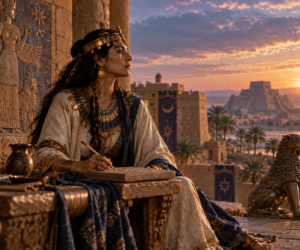
The image depicted here is an AI-generated representation of Marie Laveau. Very few verified photographs of her exist, in fact, none that we can confirm. Several 19th-century paintings of unidentified Creole women wearing tignons have been labeled as portraits of Laveau, but by the 1940s, any portrait of an unidentified woman of color in a head wrap was simply assumed to be her. The real Marie Laveau was never photographed, and likely never sat for a formal portrait. I also wrestled with how to categorize this post and ultimately placed it under “mythology.” Mythology doesn’t mean “untrue”, it refers to a body of stories and narratives that shape our understanding of a subject. What we genuinely know about Marie Laveau is limited to what appears in official records: birth certificates, marriage documents, census records, newspaper accounts. The rest – her magical abilities, her network of power, her spiritual practices – exists as story, speculation, oral history, and legend. Marie has become mythological in the truest sense: a figure whose reality is woven inextricably with mystery. She is called the Voodoo Queen of New Orleans. Her tomb is one of the most visited graves in America. People still mark three X’s on cemetery walls, begging for her intercession from beyond the grave. Songs have been written about her. She appears in novels, TV shows, horror films, and tourist ghost tours. She is worshiped and feared, romanticized and demonized, studied and sensationalized. But who was Marie Laveau, really? The answer is far more complicated, and far more interesting, than the legend suggests. The Documented Facts ~ What We Actually Know Let’s begin with what can be verified through official records – the paper trail that survives two centuries of storytelling. Born: September 10, 1801, in the French Quarter of New Orleans, Louisiana. At the time of her birth, Louisiana was still under Spanish colonial administration, though France had recently reclaimed it by treaty. Parents: Her mother was Marguerite D’Arcantel (sometimes spelled Darcantel), a free woman of color of African, European, and Native American ancestry. Her father’s identity is less certain – likely either Charles Laveau (a white Creole) or Charles Laveaux (a free man of color). The confusion stems from inconsistent spelling in surviving records and the fact that Marguerite was unmarried at the time of Marie’s birth. Family Background: Marie was the first of her maternal line to be born free. Her great-grandmother Marguerite was enslaved, likely transported from Senegal to Louisiana aboard the last French slave-trading vessel, the St. Ursin, in 1743. Her grandmother Catherine endured three owners before finally purchasing her freedom in 1795, taking the name Catherine Henry. Catherine’s daughter, Marguerite Henry (Marie’s mother), was manumitted in 1790 by Henry Roche-Belaire. First Marriage: On August 4, 1819, at age 18, Marie married Jacques Paris, a free man of color from Saint-Domingue (Haiti), who had emigrated to New Orleans following the Haitian Revolution. Their marriage certificate, preserved in St. Louis Cathedral, includes the names of both her parents. The marriage was officiated by Père Antoine (Antonio de Sedella), the beloved Spanish Capuchin friar who would remain connected to Marie throughout her life. Children with Jacques Paris: Two daughters, Félicité (born 1817, before the marriage) and Angèle (born 1822). Both are presumed to have died in childhood, as they disappear from historical records. Jacques Paris Disappears: Between 1822 and 1824, Jacques Paris vanishes from city records. He is believed to have died in Baton Rouge in 1823, though there’s no death certificate. On Félicité’s 1824 baptismal certificate, Marie is referred to as “the Widow Paris” – a designation she would… …
Her name evokes images of dark magic, seduction, and betrayal. Morgan le Fay, or Morgana, Morgaine, Morgen, stands as one of the most complex and misunderstood figures in Arthurian legend. Today she’s often portrayed as a villain, depicted as a witch or enchantress, the antagonist to King Arthur and the Knights of the Round Table. But this wasn’t always her story. The truth is far more fascinating. Morgan le Fay began her literary life as a powerful healer, a divine feminine figure, and Arthur’s protector, only to be systematically demonized by medieval male writers who couldn’t reconcile themselves to a woman wielding such extraordinary power. This is the story of how a goddess became a witch, and what was done to one of the most powerful women in Western mythology. The Ancient Roots ~ Goddess, Fairy, and Divine Healer Morgan le Fay’s origins trace back to Celtic mythology and legend, first appearing in writing in the twelfth century but likely based on much older figures from Celtic folklore and mythology. Her name itself offers clues to her divine origins. “Morgan” may derive from the Welsh “Morcant” (meaning sea-born or sea-circle) or connect to “Mor-rigan” (great queen), linking her to the Irish goddess Morrigan. A powerful deity associated with sovereignty, prophecy, war, and fate. She has also been linked with the supernatural mother Modron, derived from the continental mother goddess figure Dea Matrona and featured in medieval Welsh literature. In Welsh mythology, Modron was the divine mother, wife of the historical King Urien, and mother of the hero Owain. The parallels are striking – Morgan le Fay would later be assigned these exact same relationships in Arthurian literature. Both figures are connected to Avalon (or “Afallach,” meaning “place of apples”), the mystical otherworld island where healing, magic, and immortality reign. The connection to water runs deep through Morgan’s mythology. Her name’s possible meaning of “sea-born” links her to ancient water deities, and throughout the legends she maintains associations with mists, islands, and liminal spaces between worlds. Places where the veil between the mortal and divine grows thin. The First Appearance ~ Geoffrey of Monmouth’s Benevolent Healer Morgan le Fay’s narrative began to crystallize in 1150 when it first appeared in writing in Geoffrey of Monmouth’s Vita Merlini. This earliest written version gives us a Morgan radically different from the villainous enchantress of later tales. In Geoffrey’s telling, Morgan (called “Morgen”) is the chief of nine magical sisters who rule the mystical Isle of Avalon, also called the “Isle of Apples” or “The Fortunate Isle.” Geoffrey identifies Morgan as the magical mistress of the Island of Apples, a learned mathematician, and a skilled healer capable of restoring health to King Arthur after he was mortally wounded. Geoffrey describes her extraordinary abilities and knowledge: ~ Mastery of healing arts and herbal medicine~ Knowledge of mathematics and astronomy~ The ability to shape-shift and fly~ Beauty that surpassed all her sisters~ Wisdom and magical power Crucially, Geoffrey specifies that Morgen is beautiful, even saying that she “excels her sisters in the beauty of her person.” In medieval literature, physical beauty signified goodness and divine favor, while ugliness indicated evil or demonic contact. Morgan’s exceptional beauty in this earliest text marks her unequivocally as a benevolent force. In the Vita Merlini, when Arthur is mortally wounded at the Battle of Camlann, his companions bring him to Avalon where Morgan receives him. There is no treachery, no malice, only a powerful healer using her extraordinary abilities to save England’s greatest king. She is Arthur’s savior, not his enemy. This original Morgan embodies the divine feminine, a wise… …
In the shadowy corners of Scottish folklore lives a figure both feared and revered, Nicnevin, described as a witch or fairy queen who rides the night sky at Samhain, leading spirits, witches, and the dead in her wake. She is Scotland’s dark goddess, the hag queen, the mother of witches. Yet her story has been nearly lost to time, fragmented across centuries of poetry, witch trials, and whispered warnings. The Mystery of Her Name The origins of Nicnevin’s name remain debated, with multiple theories emerging from the linguistic fog of history. Some scholars suggest it derives from the Scottish Gaelic Neachneohain, meaning “daughter(s) of the divine” or “daughter(s) of Scathach,” while others propose NicNaoimhein, meaning “daughter of the little saint.” Another interpretation links her name to the Gaelic Nic an Neamhain, “Daughter of Frenzy”. A fitting title for a goddess associated with the liminal chaos of Samhain night. Some scholars have even connected her to the Irish war goddess Neamhain, one of the Morrigan’s triple aspects, or to water spirits like the Nixie and Nokke. The multiplicity of her names reflects the complexity of her nature. She is not one thing, but many things at once. Her Earliest Appearance The first known mention of Nicnevin appears around 1580 in a work by Alexander Montgomerie, a court poet under King James VI of Scotland. The same king who would later become infamous for his obsession with witch-hunting and authoring the Daemonologie. In Montgomerie’s “Flyting” (a ritual exchange of poetic insults), Nicnevin appears accompanied by her nymphs, described as “venerable virgines whom the world call witches.” This early text portrays her not as a demon, but as a powerful figure who commands witches and possesses knowledge of charms and cunning. After this, silence. For over two hundred years, Nicnevin disappears from the written record. The Romantic Revival She resurfaces in the early 1800s, reimagined by Romantic writers who were busy collecting and reconstructing Scotland’s fading folklore. Sir Walter Scott referred to her as “a gigantic and malignant female, the Hecate of this mythology, who rode on the storm, and marshalled the rambling host of wanderers under her grim banner.” Later sources connected her to the Gyre-Carling, an old woman or ogress figure in Scottish tradition. And described her as wearing a long gray mantle and carrying a white wand with the power to transform water into stone and sea into dry land. By the 19th century, she was called “the mother of glamour, and near-a-kin to Satan himself,” presiding over the Hallowmass Rades. The ghostly processions that rode through Scottish skies during the darkest nights of the year. The Real Woman Behind the Legend? One of the most intriguing theories is that Nicnevin wasn’t originally a goddess at all, but a real woman whose story became mythologized. In May 1569, an accused witch named Marion Nicneven (or Nikniving) was condemned to death and burned at the stake at St. Andrews, claiming that apothecaries had caused her arrest due to her superior healing powers. Was she the origin of the legend? Or was she herself named after an already-existing mythological figure? The timeline is murky, complicated by the fact that “Nicneven” may have become a nickname for multiple women accused of witchcraft. A title bestowed upon those believed to possess extraordinary power. Who Is Nicnevin? A Synthesis of Shadows Drawing from the scattered fragments, a portrait emerges: Queen of the Unseelie Court: Nicnevin rules over the darker fairies of Scotland, the Unseelie. Spirits who are neither wholly malevolent nor wholly benevolent, but dangerous, unpredictable, and powerful. Leader of the Wild Hunt: She is… …
In the liminal spaces where shadows dance and mysteries unfold, stands one of the most powerful and revered figures in witchcraft and ancient religion: Hecate (pronounced HEK-ah-tay or HEK-ah-tee). Known as the Goddess of Magic, the Guardian of Thresholds, and the Torchbearer of the Mysteries, Hecate has guided seekers, witches, and mystics for over two millennia. Origins and Ancient History Hecate’s origins trace back to ancient Anatolia (modern-day Turkey), where she was first worshipped as early as the 7th century BCE. From there, her cult spread throughout the Greek world, where she became deeply integrated into Hellenic religion and mythology. Unlike many deities who were later additions to pantheons, Hecate held a position of remarkable authority from her earliest appearances in Greek literature. The poet Hesiod, writing in the 8th century BCE, describes Hecate as having received unique honors from Zeus himself. In his Theogony, she is portrayed as a powerful titaness who retained her authority even after the Olympian gods rose to power. A testament to her ancient and formidable nature. The Triple Goddess: Her Many Faces Hecate is often depicted as a triple goddess, appearing in three forms that represent her dominion over different realms: Hecate Epipyrgidia ~ The Heavenly Hecate, associated with the moon, stars, and cosmic mysteriesHecate Kleidouchos ~ The Earthly Hecate, keeper of keys and guardian of thresholds Hecate Phosphoros ~ The Torchbearer, guide through the underworld and dark places This triple nature reflects her role as a goddess who can traverse and command all three realms: heaven, earth, and the underworld. She is one of the few deities granted such universal access and authority. Domains of Power Magic and Witchcraft Hecate is perhaps most famous as the goddess of magic itself. Ancient texts describe her as the teacher of pharmakeia (the art of herbs and potions), necromancy, and the magical arts. She was said to wander the earth at night with a pack of red-eyed hounds, teaching magic to those who sought her wisdom. Crossroads and Liminal Spaces Three-way crossroads were considered sacred to Hecate, as these intersections represent choice, transformation, and the meeting of different paths. She governs all threshold spaces – doorways, bridges, cemeteries, and the boundaries between worlds. Night, Moon, and Darkness As a goddess of the night, Hecate rules over the dark hours when the veil between worlds grows thin. She is associated with the dark moon phase, when her power is said to be strongest and most accessible to practitioners. Death and the Underworld Hecate serves as a psychopomp, guiding souls between the world of the living and the realm of the dead. She holds the keys to the mysteries of death and rebirth, making her a powerful ally for shadow work and transformation. Protection and Boundaries Ancient Greeks placed Hekataia (small shrines to Hecate) at the entrances to cities and homes, believing she would protect against malevolent spirits and negative influences. Sacred Stories and Myths The Abduction of Persephone One of Hecate’s most significant mythological appearances is in the story of Persephone’s abduction. When Hades seized Persephone and carried her to the underworld, only Hecate heard her cries. Armed with torches, Hecate helped Demeter search for her missing daughter. This myth establishes Hecate as a guide through dark times and a loyal ally to those in distress. The Titan Wars Unlike other Titans who were overthrown by the Olympian gods, Hecate maintained her power and position. Zeus honored her above all others, granting her dominion over earth, sea, and sky. A unique privilege that speaks to her immense power and importance. Teacher of Medea In later myths, Hecate… …
In the annals of New England folklore, few figures loom as large or as mysteriously as Eunice “Goody” Cole of Hampton, New Hampshire. Her story represents one of America’s most enduring tales of witchcraft accusations, community fear, and the tragic consequences of superstition in colonial society. A Life Marked by Suspicion Eunice Cole arrived in Hampton sometime in the 1640s with her husband William. From the beginning, she was viewed with suspicion by her neighbors. Perhaps it was her sharp tongue, her poverty, or simply the misfortune that seemed to follow in her wake. But Goody Cole quickly became the community scapegoat for any unexplained illness, crop failure, or maritime disaster. The accusations against her were typical of witch trials throughout New England: livestock dying mysteriously, butter failing to churn, children falling ill after encounters with the old woman. In a time when scientific explanations for natural phenomena were scarce, fear and superstition filled the void. Trial and Punishment In 1656, Goody Cole became New Hampshire’s only person to be tried and convicted of witchcraft. Unlike the more famous Salem witch trials that would follow decades later, Cole’s case resulted in imprisonment rather than execution. She spent years confined in a Boston jail, only to return to Hampton where she lived as an outcast until her death around 1680. Even in death, the community’s fear of Goody Cole persisted. Legend holds that she was buried at a crossroads with a stake driven through her heart to prevent her spirit from wandering. A practice reserved for those believed to be particularly dangerous even in death. Immortalized in Poetry The legend of Goody Cole captured the imagination of many writers, most notably John Greenleaf Whittier, who immortalized her in his poem “The Wreck of Rivermouth.” In vivid verses, Whittier painted a picture of the feared woman as sailors passed her cottage: As they rounded the point where Goody Cole Sat by her door with her wheel atwirl, A bent and blear-eyed poor old soul. “Oho!” she muttered, “ye’re brave to-day! But I hear the little waves laugh and say, The broth will be cold that waits at home; For it’s one to go, but another to come!’ “ “She’s cursed,” said the skipper; “speak her fair: I’m scary always to see her shake Her wicked head, with its wild gray hair, And nose like a hawk, and eyes like a snake.” Whittier’s portrayal captures the essence of how Goody Cole was perceived. A figure of dread whose very presence seemed to foretell doom for those who encountered her. A Legacy of Fear and Fascination The story of Goody Cole reflects the broader context of witch hysteria in colonial New England, where community tensions, religious extremism, and social anxieties manifested in accusations against vulnerable individuals. Particularly older women living on society’s margins. Modern historians view Goody Cole not as a practitioner of dark arts, but as a victim of her community’s fears and prejudices. Her sharp wit and refusal to conform to expected feminine behavior in Puritan society likely made her a target. Her poverty and outsider status made her an easy scapegoat when misfortune struck. Hampton’s Haunted Heritage Today, Hampton embraces its connection to Goody Cole as part of its historical identity. Local legends persist about her ghostly presence, and visitors often seek out locations associated with her life and death. The Tuck Museum in Hampton maintains exhibits about her story, helping separate historical fact from centuries of accumulated folklore. Her tale serves as a reminder of the dangers of mass hysteria and the importance of protecting society’s most vulnerable members. In… …
In the shadowed corners of ancient temples and the whispered traditions of modern witchcraft, few deities command as much reverence and caution as Hekate. Known as the Goddess of Witches, the Guardian of Crossroads, and the Keeper of Keys, Hekate stands as one of the most complex and powerful figures in the pantheon of ancient Greek religion and contemporary magical practice. Who is Hekate? Hekate (also spelled Hecate) is an ancient Greek goddess whose origins stretch back to Anatolia, possibly emerging from the goddess Hekataios mentioned in the works of Hesiod around the 8th century BCE. Unlike many Olympic deities who ruled from Mount Olympus, Hekate carved out her dominion in the liminal spaces, the thresholds, crossroads, and boundaries between worlds. She is traditionally depicted as a triple-form goddess, sometimes shown with three bodies or three faces, each looking in a different direction. This trinity represents her ability to see past, present, and future, as well as her dominion over the three realms: earth, sea, and sky. In her hands, she often carries torches, keys, daggers, or serpents as symbols of her roles as light-bringer, gatekeeper, protector, and wielder of ancient wisdom. What are Her Domains? Hekate’s influence spans multiple interconnected realms: Magic and Witchcraft: Perhaps her most famous association, Hekate is the patron goddess of witches, sorcerers, and those who practice the magical arts. She governs spells, divination, necromancy, and the knowledge of herbs and poisons. Crossroads and Boundaries: Every crossroads, especially three-way intersections, belongs to Hekate. She oversees transitions, decisions, and the liminal spaces between different states of being. Death and the Underworld: As a psychopomp, Hekate guides souls between the worlds of the living and the dead. She holds the keys to the underworld and can grant passage between realms. Protection and Purification: Paradoxically, this goddess of dark magic is also a fierce protector. Ancient Greeks placed her statue, called Hekataia, at their doorways to ward off evil spirits and malevolent magic. Moon and Night: Hekate is closely associated with the dark moon, the time when her power is strongest and when magical workings are most potent. Where Do We Find Her? Historically, Hekate was worshipped throughout the ancient Mediterranean world, but her cult was particularly strong in: Ancient Greece: Where she was honored with monthly Deipna offerings. Food left at three-way crossroads on the new moon. Asia Minor: Her likely place of origin, where she was worshipped as a powerful mother goddess. Rome: Where she was syncretized with Diana and Luna, maintaining her association with magic and the moon. Egypt: During the Hellenistic period, where she became associated with Isis and other goddess figures. In modern times, Hekate has experienced a remarkable revival. She appears in: ~ Contemporary Wiccan and pagan practices~ Greek polytheist reconstructionist religions~ Modern witchcraft traditions~ Feminist spirituality movements~ Urban folklore and popular culture A Word of Caution: Invoking Hekate Here lies the heart of what every practitioner must understand: be very careful invoking Hekate, you may not like what you get. Hekate is not a gentle, nurturing goddess who will coddle your feelings or grant easy wishes. She is a deity of truth, transformation, and sometimes harsh lessons. When you call upon her, you’re not just asking for magical assistance, you’re opening a door to profound change that may strip away illusions you’ve been comfortable living with. Those who work with Hekate often report experiences of:~ Intense shadow work and confrontation with hidden aspects of themselves~ Sudden life changes that, while ultimately beneficial, can be initially destabilizing~ Increased psychic sensitivity and otherworldly encounters~ A demand for authenticity and the dismantling of false… …