 Written by
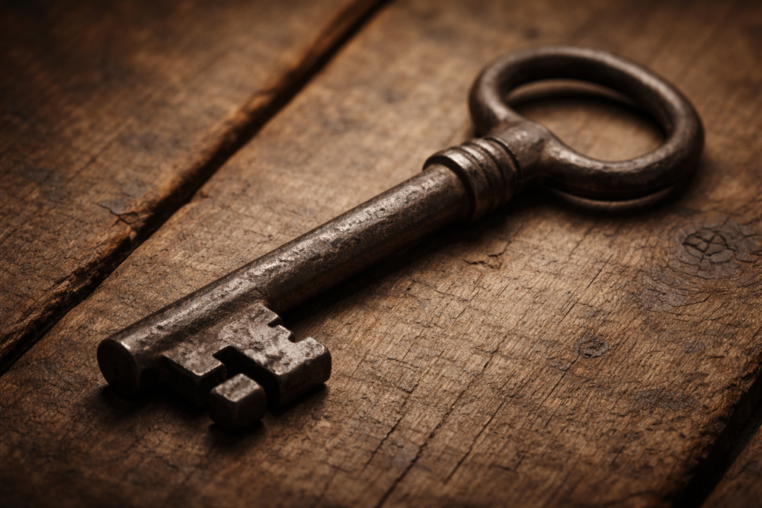
 Hold an old iron key in your hand. Feel its weight, its coldness, the way it seems to carry stories in its worn teeth and oxidized surface. A key is never just metal shaped into function. It is potential, threshold, permission, and power all forged into one. In magical practice, the iron key stands as one of the most versatile and potent tools available, a physical representation of access, boundaries, and the liminal spaces between states of being.
The Nature of Iron and Keys
To understand the iron key’s power, we must first understand its components separately.
Iron itself has been sacred to humanity since we first learned to work it. Unlike bronze or copper, iron comes from the earth in ore form, requiring fire and knowledge to transform into usable metal. This process mirrors magical transformation. Iron is protective. Faerie lore across cultures warns that fae cannot abide iron’s presence. It grounds, it wards, it draws boundaries that spiritual entities cannot easily cross. Iron is of the earth but shaped by human will and fire.
The key is symbolically dense. It grants access to what is locked away. It represents secrets, mysteries, hidden knowledge, and forbidden spaces. Keys control boundaries. They both lock and unlock, secure and reveal. A key is simultaneously barrier and passage. In mythology and folklore, keys appear repeatedly as tools of power. Keys to heaven, to the underworld, to treasure rooms and imprisoned towers. Hecate, goddess of witchcraft and crossroads, is often depicted carrying keys, emphasizing their connection to thresholds and liminal spaces.
Combine these, iron’s protective, grounding, fairy-warding properties with the key’s symbolic power over access and boundaries, and you have an object of profound magical potential.
Historical and Folkloric Uses
Keys appear throughout magical traditions worldwide.
In European folk magic, iron keys were hung over doorways or buried beneath thresholds to prevent unwanted spiritual entities from entering. A key under the pillow was said to bring prophetic dreams or prevent nightmares, depending on regional variation. Keys were carried as protective amulets, particularly keys that had opened significant doors – the key to one’s childhood home, to a church, to a place of safety.
Skeleton keys, which can open multiple locks, hold special power in magical practice. They represent the master key, universal access, the ability to open any door, literal or metaphorical. Antique skeleton keys, worn smooth by countless hands and having opened countless doors, carry accumulated energy from all those thresholds crossed.
In Hoodoo and folk magic traditions, keys appear in honey jars to “unlock” love, in mojo bags for opening the way to opportunities, and in workings designed to “unlock” someone’s generosity or favor. The key doesn’t just represent access, it actively creates it.
Choosing Your Iron Key
Not all keys carry the same energy. When selecting an iron key for magical work, consider its history and purpose.
Antique keys found in thrift stores, estate sales, or inherited from family carry the weight of history. They’ve opened real doors, crossed real thresholds. A key that once locked a home holds the energy of protection and safety. A key to a church or sacred space carries spiritual resonance. These keys come with stories, and stories are power.
Skeleton keys are particularly prized for their versatility in magic. Their ability to open multiple locks makes them ideal for spells focused on opening opportunities, removing obstacles, or gaining access to hidden knowledge.
Keys with unknown locks create interesting magical potential. A key without a lock represents unlimited possibility – it could open anything because it hasn’t yet been limited to opening one specific thing. These work well for spells about discovering new paths or accessing unknown opportunities.
Keys you’ve used personally carry your own energy and history. The key to your first apartment, to a car you loved, to a childhood diary. These hold personal power and specific memories that can be channeled in working.
To verify your key is truly iron, use a magnet, since, iron is magnetic. Many old keys are iron or iron alloys, though some may be brass or other metals. While other metals have their own properties, iron specifically is what you want for this work.
Cleansing and Consecrating Your Key
Before working with any found or purchased key, cleanse it of previous energies and consecrate it to your purpose.
Physical Cleansing
Begin with the mundane. Clean your key with soap and water, or if heavily rusted, use white vinegar to remove corrosion. Scrub it gently, removing accumulated dirt. This physical cleaning is also energetic preparation. You’re revealing the key’s true form beneath years of accumulation.
Energetic Cleansing
Pass the key through incense smoke (rosemary, sage, or frankincense work well), or bury it in salt for three days. Some practitioners hold the key under running water while visualizing any previous attachments washing away. Sound cleansing with bells or singing bowls also works effectively with iron.
Consecration
Once cleansed, consecrate the key to its magical purpose. Hold it in both hands and speak clearly about what this key represents in your practice. You might say something like: “I consecrate this key as a tool of opening, a key to hidden knowledge and new pathways. May it unlock what needs revealing and secure what requires protection.”
Anoint the key with oil corresponding to your intention. Olive oil for general blessing, protection oil for warding work, or specific condition oils for focused purposes. Some practitioners feed iron keys with whiskey or red wine, offerings that honor the metal and the tool.
The Iron Key in Protection Magic
Keys naturally protect. Their very purpose includes securing spaces against intrusion. Iron amplifies this protective quality.
Threshold Protection
Hang an iron key above your front door or bury one beneath your doorstep to prevent negative energy or unwanted spirits from entering your home. As you place it, visualize the key locking your space against harm while remaining open to positive energy and welcome guests. The key acts as both lock and filter.
Personal Protection
Carry a small iron key as a protective amulet. Keep it in your pocket, wear it on a cord around your neck, or place it in your bag. The key serves as both a ward against negative energy and a reminder that you hold the key to your own safety and boundaries.
Warding Spell
Create a protection ward by placing an iron key in the center of a circle of salt. Surround it with protective herbs, rosemary, basil, rue, or black pepper. Light a black or white candle and speak your intention for protection over your home or person. Leave the key in the circle overnight, then carry or place it where protection is needed. The key has been charged as a lock against harm.
Opening Roads and Opportunities
If keys lock, they also unlock. This makes them powerful for spells focused on opening the way to new opportunities, removing obstacles, and accessing previously blocked paths.
Road Opening Ritual
Take your iron key to a crossroads (symbolically powerful for new beginnings and choices). Stand at the center where paths meet. Hold the key in your dominant hand and turn it in the air as if unlocking an invisible door, speaking: “I unlock the way forward. Obstacles fall away, doors open before me, opportunities reveal themselves.” Turn in each direction, “unlocking” each path. Carry this key with you as opportunities begin to manifest.
Unlocking Prosperity
Place an iron key in a jar with coins, cinnamon, basil, and a lodestone or pyrite. As you seal the jar, visualize locked doors to prosperity swinging open. Shake the jar regularly while focusing on financial opportunities opening to you. The key unlocks the flow of abundance.
Removing Obstacles
Write the obstacle you face on paper. Place an iron key on top of the paper and leave it overnight. In the morning, remove the key (symbolizing unlocking) and burn the paper, destroying the obstacle. Keep the key as a reminder that you have the power to unlock yourself from limiting situations.
Keys in Shadow Work and Inner Exploration
Perhaps the most profound use of the iron key is in accessing hidden parts of ourselves, the locked rooms within our own psyche.
Shadow Work Tool
In shadow work, we explore the parts of ourselves we’ve hidden, denied, or locked away. An iron key becomes a physical anchor for this exploration. Hold your key during meditation and visualize it unlocking a door within you. What’s behind that door? What have you locked away – trauma, gifts, memories, aspects of yourself you’ve rejected?
The key reminds you that what is locked can be unlocked by the same hand that locked it. You have access to your own hidden places. The iron grounds you during this potentially destabilizing work, ensuring you remain anchored while exploring interior depths.
Past Life Work
Some practitioners use iron keys in past life regression or ancestral memory work. The key represents access to memories beyond this lifetime. Hold the key while in meditative state and visualize it turning in a lock, opening a door to other times, other lives. The iron’s grounding property keeps you safely tethered to present reality while consciousness explores.
Keys and Spirit Work
Keys naturally suit work with spirits, entities, and the divine, as they control access between worlds.
Ancestor Communication
Place an iron key on your ancestor altar as an invitation for ancestors to cross the threshold between death and life to communicate with you. The key signals that the door is open for their presence. When not actively seeking contact, turn the key to a horizontal position or remove it, symbolizing the door is closed.
Working with Hecate
Hecate, goddess of witchcraft, crossroads, and thresholds, is strongly associated with keys. Devotees often dedicate iron keys to her, placing them on her altar or leaving them at crossroads as offerings. A key dedicated to Hecate becomes a tool for her work, guiding souls, protecting boundaries, accessing hidden knowledge.
Spirit Boundaries
If dealing with unwanted spiritual attention, an iron key can help establish boundaries. The iron itself repels many entities, and the key’s symbolic function as lock creates additional barrier. Place an iron key at the four corners of your room or sacred space, each one “locking” that direction against intrusion.
Binding and Releasing with Keys
Keys can bind and release. Lock someone into or out of your life, secure intentions, or free yourself from unwanted connections.
Binding Spell
If someone is causing harm and you need to bind their ability to hurt you or others, write their name on paper with your intention (that they be bound from causing harm). Place an iron key on the paper and visualize turning it, locking them away from their harmful behavior. Wrap the paper around the key and bind it with black thread or cord. Store it in a dark place. This doesn’t harm them, it locks away their capacity to harm.
Cord Cutting
To release yourself from an unhealthy attachment or relationship, perform a cord cutting ceremony using your iron key. Visualize the energetic connection between you and the other person as a locked chain. Take your key and mime unlocking this chain, speaking words of release: “I unlock myself from this connection. I am free, they are free, we each go our own way.” The key gives you permission and power to release what no longer serves.
Keys in Petition and Candle Magic
Incorporate iron keys into other magical workings for added power and specificity.
Petition Under Key
When writing a petition to the universe, spirits, or deities, place your iron key on top of the written petition overnight before burning or burying it. The key “locks in” your intention and “unlocks” the pathway to manifestation.
Candle Magic
Place an iron key in the center of a circle of candles arranged for your working. As the candles burn, visualize the key either locking in your intention (for securing, protecting, binding) or unlocking the way (for opening, opportunity, revelation). The key serves as anchor and amplifier for the candle work.
Divination with Keys
Keys can serve as divination tools, offering yes/no answers or directional guidance.
Key Divination
Suspend an iron key on a thread or chain. Hold it still and ask your question clearly. “Should I take this job?” “Is this person trustworthy?” Watch the key’s movement. Clockwise rotation typically indicates yes or positive energy, counterclockwise suggests no or negative energy. Still means not yet or insufficient information. Forward and back swinging indicates movement or change regarding the question.
Crossroads Divination
Take your key to a crossroads. Ask your question and toss the key gently into the air, letting it land naturally. The direction it points when it lands suggests the path you should take. If doing this with a literal decision between paths (which job, which city, which option), assign each option a direction before tossing.
Respecting the Key’s Power
An iron key is not decoration or simple symbolism. It is an active magical tool that opens and closes, binds and releases, protects and grants access. Treat it accordingly.
Don’t use your magical key for mundane purposes. It should be reserved for magical work only. Store it in a sacred space, wrapped in cloth or in a special box. Some practitioners keep their working keys on their altar, others in a drawer with their tools.
Be thoughtful about what you unlock with your key work. Access to hidden things means encountering what was hidden for a reason. Protection work with keys is powerful. Don’t create barriers you don’t truly need. Binding work carries responsibility. Bind only when necessary and with clear, ethical intention.
The Key You Carry
Ultimately, the iron key in magical practice teaches us that we hold the power to open and close doors in our own lives. We can unlock ourselves from limiting beliefs, lock out harmful energies, open pathways to growth, and secure our boundaries. The key is tangible proof that access and protection are not granted by external forces but claimed by our own will and work.
When you hold your iron key, you hold potential. Every locked door can be opened if you have the right key. Every open door can be secured if you need protection. You stand at the threshold with the key in your hand, and the choice, to open or close, to enter or turn away, to lock or unlock, is entirely yours.
That is the true magic of the iron key: it reminds us that we have always held the power to move between worlds, to protect our boundaries, and to open our way forward. We need only remember to turn the key.