
The Witch’s Cupboard

There’s something deeply satisfying about opening a wooden drawer to reveal dried lavender, rose petals, or carefully labeled jars of moon water. A witch’s cupboard, often called an apothecary cabinet or herbal pantry, is more than just storage. It’s a curated collection of magical tools, a living pharmacy, and a sacred space that connects modern practitioners to centuries of herbal wisdom. The Historical Roots ~ From Apothecaries to Witches The witch’s cupboard as we know it today has its roots in a much older tradition – the apothecary cabinet. The practice of apothecary work can be traced back to at least 2600 BC in ancient Babylon, where clay tablets recorded medical symptoms, prescriptions, and compounding directions. Ancient Egypt’s Papyrus Ebers, written around 1500 BC, contains over 800 prescriptions listing more than 700 different drugs. By the Middle Ages, apothecary shops existed in Baghdad during the Islamic Golden Age around 754 AD, and were active in Al-Andalus by the 11th century. In medieval Europe, apothecaries weren’t quite doctors in the modern sense. They were herbalists, chemists, and skilled practitioners who stored and dispensed remedies. Their best weapon was a sturdy cabinet, usually made of oak and fitted with dozens of small drawers, each housing different ingredients from powdered beetle shells to dried wolfsbane to mercury. In 1353, royal statutes in Paris established that no one could practice as an apothecary without knowing how to read prescriptions, and required labeling bottles with the year and month the remedy was prepared. These early cabinets were crafted from solid timber like oak or walnut and housed everything from dried herbs and opium to ground minerals and mercury. But apothecaries weren’t the only ones maintaining these herb stores. Wise women, hedge witches, and village healers kept their own collections. Often in more humble cupboards, root cellars, or hanging bundles. These women were the true keepers of folk medicine, passing down knowledge of plants, spells, and remedies through generations, often in secret to avoid persecution. In Renaissance Italy, nuns became prominent sources for medicinal needs, using their knowledge first for religious purposes within convents, then expanding to create profit which they used for charitable goals. This created a fascinating overlap where sacred and medicinal knowledge merged. Much like modern witchcraft practices blend spirituality with herbalism. The metaphorical names many witches still use today, “eye of newt” for mustard seed, “wool of bat” for holly leaves, weren’t just poetic flourishes. These cryptic names served as a form of code, protecting herbal wisdom from those who might misuse it or persecute its holders during times when accusations of witchcraft could lead to dire consequences. Why Witches Keep Cupboards ~ The Modern Purpose Today’s witch’s cupboard serves multiple interconnected purposes that go far beyond simple storage. Practical Herbalism At its most basic level, the witch’s cupboard is an herbal pharmacy. It houses the dried plants, roots, flowers, and resins you use for teas, tinctures, salves, and remedies. Having these ingredients organized and accessible means you can respond quickly when you or someone you love needs support. Whether that’s chamomile for sleeplessness, ginger for nausea, or elderberry for immune support. Magical Working Your cupboard holds your spell components.  Herbs for money drawing, protection, love work, and banishing. Candles, oils, salts, and resins wait ready for ritual use. When inspiration strikes or urgent magical work is needed, you don’t have to run to the store, everything you need is at your fingertips. Sovereignty and Self-Reliance In times when essential supplies may run short due to pandemics and supply chain issues, having a stocked apothecary provides backup and increases your independence. There’s… …

Membership Required

You must be a member to access this content.

View Membership Levels

Already a member? Log in here

Intentions Over Tools ~ A Witch’s Truth

There’s a principle at the heart of all effective magic, yet it’s the one most often forgotten by beginners: your intention matters infinitely more than your tools. Walk into any metaphysical shop and you’ll find it packed with aspiring practitioners clutching shopping lists. The perfect athame. Genuine rose quartz. Hand-carved wands from specific trees. Authentic herb blends. They believe that magic lives in these objects, that the right collection of tools will unlock their power. This gets witchcraft fundamentally backwards. The Beginner’s Trap Every experienced practitioner has watched this unfold. The newcomer who spends hundreds on elaborate altar setups, crystals sorted by moon phase, premium incense imported from three continents, color-coded candles for every possible working. Their altar looks like it belongs in a magazine. Their spellwork produces nothing. Meanwhile, the hedge witch down the road performs powerful magic with whatever’s growing in her garden, a kitchen knife, and sheer focused will. The difference isn’t the tools. It’s the intention behind them. What the Tools Actually Do Here’s what experienced witches understand – tools are focal points for your intention. They give your will something to flow through, something to anchor to, something to direct it. But they don’t create that will. They don’t generate the power. You do. A wand doesn’t make you magical. Your focused intention channeled through that wand creates the magic. Remove the intention and you’re just waving a stick. Remove the wand and a true practitioner can still work with their finger, their breath, their words alone. This is why folk magic traditions around the world have thrived for millennia with whatever people had on hand. Kitchen witchery. Crossroads dirt. Knot magic with whatever cord was available. The intention was clear, the need was real, and the magic worked. The Power of Clear Intent Strong magical intention has three qualities: clarity, purpose, and will. Clarity means you know exactly what you’re calling for. Not vague wishes but specific outcomes. “I need protection during my commute” beats “general good vibes” every time. Purpose means you understand why this matters. Magic fueled by genuine need moves differently than magic done because a book said to do it on a Tuesday. Will means you’re committed to the work. You’re not testing whether magic is real or hedging your bets. You’re directing energy with the full force of your being. When these three align, the specific tools become almost irrelevant. You could work with elaborate ceremonial implements or a gas station candle, and the magic would flow. When Tools Actually Matter This isn’t an argument against tools. Tools matter. But they matter for specific reasons that beginners often miss. Some tools are force multipliers. A well-made blade that feels right in your hand focuses energy more efficiently than one that doesn’t. Herbs chosen for their actual correspondences amplify specific intentions better than random plants. Tools you’ve worked with for years become extensions of your will in ways new tools aren’t. Some tools are necessary for the tradition you practice. Ceremonial magic requires specific implements not because magic won’t work without them, but because the tradition itself creates power through precise symbolism and structure. The tools are part of the language. Some tools create the right headspace. Ritual robes signal to your psyche that you’re entering sacred space. Lighting specific incense triggers the mental state where magic flows easily. The tool isn’t doing the magic, but it’s helping you access the state where you can. Notice what’s consistent here! The tool serves your intention. Your intention doesn’t serve the tool. The Crystal Trap Let’s talk about crystals, because they’re where… …

Membership Required

You must be a member to access this content.

View Membership Levels

Already a member? Log in here

Candle Colors ~ Meanings and How to Use Them in Your Practice

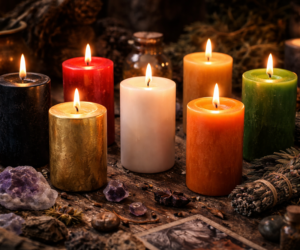
Fire has always been sacred. It transforms, illuminates, consumes, and purifies. When you light a candle with intention, you’re working with one of humanity’s oldest tools for magic and prayer. The flame becomes a focal point for your will, carrying your intention into the universe as it burns. But color matters. Each hue carries its own vibration, its own energy, its own particular way of working. Choosing the right candle color for your intention isn’t about rigid rules. It’s about understanding the language of color and speaking it fluently in your practice. Here’s your guide to candle colors, what they mean, and how to work with them effectively. White ~ Purity, Truth, and the Universal Substitute Energy: Cleansing, purification, truth, protection, peace, spirituality, healing, new beginnings Best Used For:~ Cleansing and purifying spaces or yourself~ Truth-seeking and clarity work~ Protection rituals~ Meditation and spiritual connection~ Healing of any kind~ Peace and tranquility spells~ Baby blessings or new beginnings How to Use: White candles are the universal substitute in candle magic. If you don’t have the “right” color, white works for any intention because it contains all colors within it. Light a white candle when you need a clean slate, when you’re seeking truth in a murky situation, or when you want to establish peace. White candles are excellent for full moon rituals, cleansing your space before other workings, or simply creating sacred atmosphere. Practical Tip: Keep white candles on hand always. They’re your foundation, your go-to, your “I need to do magic right now but don’t have a specific colored candle” solution. Black ~ Protection, Banishing, and Shadow Work Energy: Protection, banishing negativity, breaking hexes, shadow work, absorbing negative energy, endings, mystery, the void Best Used For:~ Banishing unwanted energy, people, or situations~ Breaking curses or hexes~ Protection from psychic attack~ Shadow work and confronting your darkness~ Ending toxic patterns or relationships~ Absorbing negativity from a space~ Dark moon rituals How to Use: Black candles get a bad reputation, but they’re incredibly protective and useful. Light a black candle when you need to banish something from your life. Whether that’s a bad habit, negative energy, or unwelcome attention. Black absorbs, so it pulls negativity away from you. Use black candles during the dark moon, when you’re doing deep shadow work, or when you need serious psychic protection. Practical Tip: Carve what you’re banishing into the candle, then burn it completely. As the wax melts and the words disappear, visualize the thing leaving your life. Bury the remains away from your home or dispose of them at a crossroads. Red ~ Passion, Power, and Vitality Energy: Passion, love (particularly sexual love), courage, strength, willpower, vitality, energy, survival, action Best Used For:~ Sexual attraction and passionate love~ Courage and bravery spells~ Physical strength and vitality~ Survival and root chakra work~ Taking action on delayed projects~ Overcoming fear~ Blood magic (symbolically) How to Use: Red is the color of life force itself, blood, fire, the beating heart. Light red candles when you need to tap into primal power, when you want to attract passionate love (not gentle romance, use pink for that), or when you need the courage to do something that terrifies you. Red candles are excellent for motivation, for lighting a fire under yourself, for calling in desire and manifestation through sheer force of will. Practical Tip: Red candles burn hot, metaphorically and literally. Use them for short, intense workings rather than prolonged meditation. Anoint red candles with cinnamon oil for extra heat and attraction power. Pink ~ Love, Friendship, and Emotional Healing Energy: Romantic love, self-love, friendship, emotional healing, compassion,… …

Membership Required

You must be a member to access this content.

View Membership Levels

Already a member? Log in here

12 Days of Yule ~ Journal Prompts for Reflection and Magic

Use these journal prompts to deepen your Yule experience and create a record of your spiritual journey through the darkest days and into the returning light. Tips for Journaling Through Yule Create sacred space: Light a candle, burn incense, or play soft music before you begin writing. Be honest: Your journal is for you alone. Write without censoring or judging yourself. Don’t overthink: If a prompt doesn’t resonate, skip it or modify it. Trust your intuition. Return and reflect: Consider revisiting these entries throughout the year to see how you’ve grown. Make it magical: You can write with intention, charge your journal with crystals, or seal pages with wax and sigils. Combine with ritual: Journal before or after your daily Yule activities to deepen the experience. May your words be spells, your reflections be revelations, and your Yule journey be transformative. Blessed writing.   Download the full 12 Days here ✍️ Day 1: Mother’s Night (December 20/21) Honoring the Divine Feminine and Ancestral Mothers 1. Who are the maternal figures (biological, chosen, or spiritual) who have shaped who you are today? What gifts did each one give you? 2. Reflect on the divine feminine energy in your life. How do you embody qualities like nurturing, intuition, creativity, or protection? 3. Write a letter to an ancestor or maternal figure (living or deceased) expressing gratitude for their influence on your path. 4. What wisdom have the women in your lineage passed down to you? What wisdom do you want to pass forward? 5. If you could ask your ancestors one question about navigating life’s challenges, what would it be? Sit quietly and write whatever answer comes to you. ✍️ Day 2: Winter Solstice (December 21/22) Death, Rebirth, and the Return of the Sun 1. What needs to die in your life so that something new can be born? What are you ready to release as the old sun sets? 2. Describe a time when you experienced a personal “dark night of the soul.” How did you find your way back to the light? 3. The sun is reborn today after the longest night. What part of yourself is ready to be reborn? What does this renewed version of you look like? 4. What darkness (literally or metaphorically) are you grateful for? What has it taught you? 5. Write about the balance between light and dark in your life. How do you honor both? ✍️ Day 3: Family and Feasting Day (December 22) Community, Gratitude, and Togetherness 1. List ten things you’re grateful for in your relationships (family, friends, chosen family, community, coven). 2. What does “family” mean to you beyond blood relations? Who are your people? 3. Reflect on a cherished memory of gathering with loved ones. What made it special? How can you create more moments like this? 4. Is there a relationship that needs mending or attention? What small step could you take toward healing or connection? 5. How do you nourish others? How do you allow others to nourish you? ✍️ Day 4: The Wild Hunt (December 23) Honoring Spirits, Ancestors, and the Otherworld 1. What messages have you received from dreams, signs, or intuition lately? What might your ancestors or guides be trying to tell you? 2. Describe your relationship with the spirit world. Are you comfortable with it, afraid of it, curious about it? 3. What shadows are you ready to confront? What have you been avoiding that prowls at the edges of your consciousness? 4. Write about a time when you felt the presence of something beyond the physical world. How did it affect you?… …

Membership Required

You must be a member to access this content.

View Membership Levels

Already a member? Log in here

Meanings & Symbolism ~ Reclaiming the Language of Power

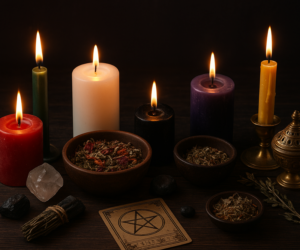
The word “witch” carries weight. Say it aloud and watch how the air changes. For centuries, it’s been used as an accusation, a threat, a death sentence. But before that, and increasingly now, it meant something else entirely. A person who walks between worlds, who knows the language of herbs and stars, who refuses to be limited by what others say is possible. The symbols associated with witchcraft tell stories too. Some are ancient, rooted in pre-Christian traditions. Others emerged during the witch trials, assigned to witches by those who feared them. And some have been reclaimed in recent decades by those who wear the title proudly. Let’s explore what these symbols mean, where they come from, and what they represent to those who practice the craft today. The Witch Herself ~ What Does It Mean? Before diving into symbols, we need to understand what “witch” actually signifies. Etymology: The word likely derives from Old English “wicce” (feminine) and “wicca” (masculine), possibly related to “wiccian” meaning “to practice sorcery” or “witan” meaning “to know.” A witch is, fundamentally, one who knows. Particularly knowledge that exists outside acceptable channels. Historical Meaning: Throughout history, witches were healers, midwives, herbalists, and wise women who served their communities. They knew which plants stopped bleeding, eased childbirth, prevented pregnancy, or caused visions. This knowledge made them essential, and dangerous to those in power. Modern Meaning: Today, witch encompasses many practices, Wicca, traditional witchcraft, folk magic, chaos magic, eclectic practices, and more. What unites them is working with energy, intention, and the natural world to create change. To call yourself a witch is to claim agency, to say you won’t wait for permission or divine intervention. You’ll work the magic yourself. The Pentacle/Pentagram ~ Protection and the Elements The Symbol: A five-pointed star, often enclosed in a circle. When the point faces up, it’s generally considered protective. Point down has been associated (often incorrectly) with dark magic, though some traditions use it deliberately to represent different aspects of the craft. Meaning: Each point represents one of the five elements.~ Earth (lower left): grounding, stability, the physical body~ Air (lower right): intellect, communication, breath~ Fire (upper right): passion, transformation, will~ Water (upper left): emotion, intuition, the subconscious~ Spirit (top point): the divine, consciousness, what connects all things The circle around it represents unity, protection, and the infinite nature of energy. History: The pentagram is ancient, appearing in Mesopotamian and Greek contexts long before Christianity. Pythagoras used it as a symbol of mathematical perfection. Early Christians associated it with the five wounds of Christ. It wasn’t until much later that it became exclusively linked with witchcraft and paganism. Often through the very trials that sought to destroy these practices. Modern Use: Witches wear pentacles for protection, to signify their path, and to remind themselves of the elemental balance they work to maintain. The Cauldron ~ Transformation and the Womb of Creation The Symbol: A large pot, usually cast iron, often depicted bubbling with mysterious contents. Meaning: The cauldron represents transformation, the place where raw ingredients become something new. It’s the womb, the grave, the place of death and rebirth. What goes into the cauldron emerges changed. History: Cauldrons appear in Celtic mythology as vessels of plenty and rebirth. The Dagda’s cauldron never ran empty. Cerridwen’s cauldron brewed inspiration and knowledge. In practical terms, cauldrons were essential tools for cooking, brewing medicine, and yes, creating herbal preparations that looked suspiciously like “potions” to the uninformed. Modern Use: Witches use cauldrons (or any fireproof bowl) for burning herbs, mixing ingredients, scrying, or as a symbolic representation of the Goddess. The… …

Membership Required

You must be a member to access this content.

View Membership Levels

Already a member? Log in here

The Mortar & Pestle ~ A Witch’s Tool of Transformation & Breaking

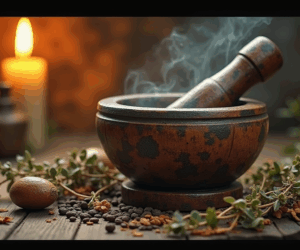
In the world of witchcraft, few tools are as iconic or as deeply symbolic as the mortar and pestle. This ancient instrument has graced the altars and workspaces of healers, herbalists, and witches for thousands of years. But it’s more than just a practical tool for grinding herbs. It’s a powerful symbol of transformation, a vessel of alchemy, and an instrument through which destruction becomes creation. The Ancient History of the Mortar & Pestle The mortar and pestle is one of humanity’s oldest tools, dating back over 35,000 years. Archaeological evidence shows that ancient civilizations across the globe, from Egypt to China, from South America to Europe, used mortars and pestles to prepare medicines, grind grains, and create pigments and dyes. In magical traditions, the mortar and pestle has always held a place of reverence. Ancient Greek witches used them to prepare pharmakeia (the root word for both “pharmacy” and “sorcery”). Medieval herbalists and wise women relied on them to create healing salves and magical preparations. In many cultures, the mortar and pestle was passed down through generations of healers, accumulating wisdom and power with each use. The Symbolism ~ Breaking Down to Build Up At its core, the mortar and pestle embodies one of the most fundamental principles of magic and alchemy: transformation through destruction. The Act of Breaking When you grind herbs, seeds, or resins in a mortar, you’re not simply crushing them, you’re breaking down their physical structure to release what’s hidden within. This mirrors the magical process of breaking down old patterns, beliefs, and energies to access the raw power beneath. In witchcraft, we often need to destroy before we can create. Relationships must end before new ones can begin. Old versions of ourselves must die for new ones to emerge. Limiting beliefs must be shattered before we can step into our power. The mortar and pestle teaches us that breaking isn’t always violent or tragic – sometimes, it’s sacred. The Transformation Process As you work your pestle in circular motions, grinding and mixing, you’re participating in an alchemical process. Separate ingredients become unified. Hard becomes powder. Individual plants become a singular magical blend. This is transformation magic in its purest form. The circular motion itself is significant. It represents the cycles of life, death, and rebirth. The wheel of the year. The phases of the moon. The eternal return. As you grind, you’re moving energy in a spiral, raising power and infusing your ingredients with intention. Union of Masculine and Feminine The mortar and pestle also represents the sacred union of masculine and feminine energies. The pestle (traditionally masculine) enters the mortar (traditionally feminine), and through their interaction, creation occurs. This symbolism is found in many spiritual traditions and represents the balance of opposing forces necessary for manifestation. The Mortar & Pestle as a Magical Tool Charging Your Tool Before using your mortar and pestle for magical work, it should be cleansed and consecrated. Here’s how: Physical Cleansing: Wash it thoroughly with salt water or moon waterSmoke Cleansing: Pass it through incense or sacred smoke (rosemary, frankincense, or sage work well)Dedication: Hold it in your hands and state your intention: “I dedicate this tool to the art of transformation. May it serve my magical work with power and precision.” First Grinding: Some witches grind salt mixed with protective herbs as the first thing prepared in a new mortar and pestle, then discard it as an offering Magical Uses Spell Ingredient Preparation: Grinding herbs, resins, and other ingredients while focusing your intention charges them with your magical energy. The physical act of preparation is part of… …

Membership Required

You must be a member to access this content.

View Membership Levels

Already a member? Log in here

Black Kyanite: The Ultimate Stone for Grounding and Energy Cleansing

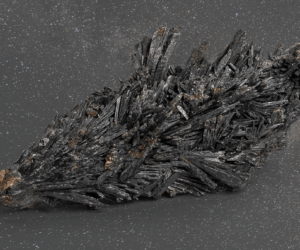
Black Kyanite is a powerful crystal that has become increasingly popular among energy workers, healers, and crystal enthusiasts. With its distinctive fan-like blade formations and deep charcoal color, this aluminum silicate mineral is not only visually striking but also renowned for its remarkable metaphysical properties. What is Black Kyanite? Black Kyanite is a variety of the mineral kyanite, which typically forms in blade-like crystal structures. Unlike its blue cousin, Black Kyanite contains traces of iron and other minerals that give it its dark coloration. It’s primarily found in Brazil, though deposits also exist in other parts of South America and Africa. The stone’s unique structure features radiating blades that emanate from a central point, creating a fan or starburst pattern. This physical formation is believed to mirror its energetic properties. Radiating protective energy outward while simultaneously drawing in and grounding excess energy. What Does Black Kyanite Do? Energy Cleansing and Clearing Black Kyanite is considered one of the most powerful stones for energetic cleansing. It’s believed to cut through negative energy, psychic debris, and energetic attachments like a blade through fog. Many practitioners use it to cleanse their aura, clear their space, or remove stagnant energy from other crystals. Unlike many other stones, Black Kyanite is said to be self-cleansing and never holds onto negative energy, making it a low-maintenance addition to any crystal collection. Grounding and Root Chakra Activation As a black stone, Black Kyanite has strong grounding properties. It’s associated with the root chakra, helping to anchor your energy to the Earth and create a sense of stability and security. This makes it particularly useful for those who feel spacey, ungrounded, or disconnected from their physical body. Protection and Shielding The stone is often used for energetic protection, creating a shield against negative influences, electromagnetic frequencies (EMFs), and unwanted energies. Many people keep Black Kyanite near their workspace, bed, or entryways to maintain a protected energetic boundary. Cord Cutting and Attachment Release One of Black Kyanite’s most celebrated uses is for energetic cord cutting. In energy work, cords represent energetic connections to people, situations, or past experiences. Black Kyanite is believed to help sever unhealthy attachments while preserving beneficial connections, making it ideal for those working through difficult relationships or past traumas. Meditation and Spiritual Work Despite its grounding nature, Black Kyanite also supports spiritual exploration by creating a safe, protected space for meditation and inner work. It helps maintain the connection between the physical and spiritual realms, allowing you to journey deeply while remaining anchored. How Does Black Kyanite Work? The Metaphysical Perspective From an energy healing perspective, Black Kyanite works by: Transmuting Energy: Rather than absorbing negative energy like many stones, Black Kyanite is thought to transmute it, transforming lower vibrations into neutral or positive ones. This is why it doesn’t require cleansing. Creating Energetic Boundaries: The blade-like structure is believed to cut through energetic interference and establish clear boundaries between your energy field and external influences. Balancing the Chakras: While primarily associated with the root chakra, Black Kyanite is said to align all chakras simultaneously, creating a smooth flow of energy throughout the body’s energy system. Activating Energy Pathways: The radiating blade formation is thought to activate and clear energy meridians, similar to acupuncture points in Traditional Chinese Medicine. Working with Black Kyanite’s Physical Structure The stone’s unique fan-like structure also plays a role in how practitioners use it. The blades can be gently swept through the aura (the energy field surrounding the body) in a combing motion, with the intention of clearing away energetic debris. Some energy workers use it like a energetic “broom,”… …

Membership Required

You must be a member to access this content.

View Membership Levels

Already a member? Log in here

The Sacred Messengers: Spiritual Meanings of Bugs and Insects

In our modern world, we often overlook the tiny creatures that share our space, dismissing them as pests or nuisances. Yet across cultures and throughout history, insects have been revered as powerful spiritual messengers, symbols of transformation, and guides on our life journey. When we pause to notice these miniature beings, we open ourselves to profound wisdom carried on delicate wings and industrious legs. Why Insects Hold Spiritual Significance Insects have inhabited Earth for over 400 million years, far longer than humans. They are masters of adaptation, transformation, and survival. Their life cycles, from egg to larva to pupa to adult, mirror our own spiritual evolution. Ancient cultures understood this, weaving insect symbolism into their mythology, art, and spiritual practices. When an insect appears repeatedly in your life, crosses your path at meaningful moments, or captures your attention in unusual ways, it may be carrying a message meant specifically for you. The Spiritual Meanings of Common Insects Butterflies: Transformation and Rebirth Perhaps the most universally recognized symbol of transformation, butterflies represent the soul’s journey through profound change. Their metamorphosis from caterpillar to winged beauty reminds us that periods of darkness and isolation (the cocoon) are necessary for our most magnificent evolution. Message You are ready for transformation. Trust the process, even when you can’t see the outcome. Colors Matter ~ White butterflies: spiritual growth, purity, angels nearby~ Yellow butterflies: joy, creativity, new opportunities~ Orange butterflies: passion, encouragement from the universe~ Blue butterflies: wish fulfillment, good fortune~ Black butterflies: endings leading to new beginnings, ancestral messages – – – Dragonflies: Illusion and Self-Realization With their iridescent wings and ability to move in all directions, dragonflies symbolize seeing through illusions and connecting to deeper truth. They remind us that what we see on the surface is not all that exists. Message Look beyond appearances. Trust your intuition to reveal what’s hidden. Embrace adaptability and lightness of being. – – – Ladybugs: Luck and Protection These beloved beetles have long been considered harbingers of good fortune and divine protection. Their bright colors warn predators, teaching us about healthy boundaries. Message Good luck is coming your way. You are protected. Release your worries to the universe. – – – Bees: Community and Divine Feminine Sacred to many goddess traditions, bees represent productivity, community, and the sweetness born from hard work. They remind us of our interconnection and the importance of working for the greater good. Message Focus on your goals with dedication. Collaborate with others. Celebrate the sweetness of life. Trust in abundance. – – – Spiders: Creativity and Fate Though technically arachnids, spiders deserve mention for their powerful symbolism. Master weavers, they represent creative power, patience, and the web of fate we weave with our choices. Message You are the creator of your reality. Be patient and strategic. Trust your ability to craft your destiny. – – – Moths: Intuition and Hidden Knowledge Night fliers drawn to light, moths symbolize faith, vulnerability, and the search for truth in darkness. They remind us to trust our inner light and intuition. Message Follow your inner guidance, even when the path is unclear. Embrace your sensitive nature. Seek the light within. – – – Ants: Diligence and Community Ants are master architects and tireless workers, teaching us about patience, planning, and the power of small consistent actions over time. Message Trust the process. Small steps lead to big achievements. Work collaboratively. Plan for the future. – – – Crickets: Intuition and Good Fortune The cricket’s song has long been associated with good luck and intuitive knowing. In many Asian cultures, crickets are kept as protective guardians… …

Membership Required

You must be a member to access this content.

View Membership Levels

Already a member? Log in here

Cloves: The Fiery Guardian of Threshold and Dreams

There’s something ancient about cloves. These small, nail-shaped buds carry within them a warmth that goes far beyond their culinary uses. In witchcraft and folk magic traditions, cloves have long been revered as powerful allies for protection, banishment, and crossing between worlds. What Are Cloves? Cloves are the dried flower buds of the clove tree (Syzygium aromaticum), native to the Maluku Islands of Indonesia. Their name comes from the Latin word clavus, meaning “nail,” which perfectly describes their distinctive shape. But don’t let their small size fool you. These aromatic buds pack an intense, warming energy that has made them invaluable in magical practice for centuries. In the witch’s apothecary, cloves represent the element of fire. They carry yang energy – active, protective, and purifying. Their correspondences include Mars and Jupiter, making them excellent for workings involving strength, courage, prosperity, and spiritual protection. Traditional Magical Uses Cloves are remarkably versatile in magical practice: Protection and Banishment Their fierce, warming nature makes cloves exceptional for protective magic. They don’t just shield, they actively repel negative energies and unwanted influences. Purification Burning cloves cleanses spaces of stagnant or harmful energies, much like how their antiseptic properties cleanse physical spaces. Attraction and Prosperity Despite their protective nature, cloves also draw in wealth, success, and positive opportunities. Mental Clarity The sharp, piercing scent of cloves cuts through mental fog and enhances focus during divination or meditation. Fire and Protection: The Clove Shield Cloves embody protective fire. Not the wild, destructive flames, but the hearth fire that guards the home and the sacred flame that wards off malevolent forces. Their heat is focused and intentional. To create a simple protection charm, take nine whole cloves and wrap them in red cloth, binding it with black thread while speaking your intention for protection. Carry this in your pocket or place it above your doorway. The number nine amplifies their protective qualities, representing completion and the sacred triad repeated three times. For more immediate protection, you can burn whole cloves on charcoal during challenging situations or when you feel spiritually vulnerable. The smoke creates an energetic barrier that’s difficult for negative influences to penetrate. Some practitioners add cloves to protection oil blends, steeping them in carrier oil beneath a full moon for extra potency. A traditional floor wash for protection involves simmering cloves with salt and rosemary, then using the strained water to wash doorways and windowsills. This creates an invisible boundary that guards your space. At the Threshold: Doorway Magic The threshold, that liminal space between inside and outside, between mundane and sacred, is where cloves truly shine. Doorways are inherently magical spaces, neither here nor there, and they require special attention in protective practice. Scatter whole cloves across your doorstep to prevent harmful energies or ill-intentioned people from entering. Some traditions suggest placing a clove in each corner of the doorframe, creating a square of protection. When visitors leave, sweep the cloves away, believing they’ve captured any negative energy the visitor may have brought. For a more permanent threshold guardian, create a protection bottle to bury near your front entrance. Fill a small jar with cloves, salt, iron nails, and broken glass or thorns. Seal it with black wax and bury it on the left side of your doorway (as you face outward). This creates a fierce guardian that will protect your home for years. You can also dress your doorframe with clove oil, anointing the top and sides while visualizing a barrier of protective fire sealing your home. Refresh this during the dark moon for continued protection. Dream Rituals: The Night Watchman While cloves… …

Membership Required

You must be a member to access this content.

View Membership Levels

Already a member? Log in here

The Sacred Waters: A Guide to Water Types in Witchcraft

Water has long been revered as one of the most powerful elements in magical practice. From ancient civilizations to modern witchcraft, water serves as a conduit for cleansing, blessing, divination, and transformation. But not all water is created equal in the craft. Each type carries its own unique energetic signature and magical properties. Moon Water Perhaps the most popular in contemporary witchcraft, moon water is created by leaving water under the light of the moon, typically during a full moon. This charged water absorbs lunar energy and is particularly potent for: Intuition and psychic work – The moon governs our subconscious mind Emotional healing – Drawing on the moon’s connection to our feelings Manifestation rituals – Especially when made during the new moon Cleansing tools and crystals – Gentle yet powerful energetic reset Different moon phases create different energies: new moon water for beginnings, full moon water for culmination and power, waning moon water for banishing. Storm Water Collected during thunderstorms, storm water carries raw, dynamic energy. This is aggressive, transformative water that should be handled with respect. Use storm water for: Protection spells – Channeling the storm’s fierce defensive energy Breaking hexes or negative patterns – Its chaotic energy disrupts stagnant situations Courage and strength workings – Tapping into nature’s power Rapid transformation – When you need dramatic change Always collect storm water safely, and never use water contaminated by pollutants. River or Stream Water Flowing water represents movement, progress, and the passage of time. River water is ideal for: Removing obstacles – Let the current carry away what holds you back Travel magic – Water that moves mirrors your journey Communication spells – Rivers connect places, just as words connect people Letting go rituals – Release what no longer serves you The direction of flow matters: upstream water can reverse situations, while downstream water aids in releasing and moving forward. Ocean Water Saltwater from the sea carries immense cleansing and purifying properties. The ocean is associated with: Deep emotional healing – The ocean holds our collective unconscious Banishment and purification – Salt naturally cleanses and protects Abundance magic – The ocean’s vastness represents limitless possibility Goddess and feminine energy work – Many water deities are connected to the sea If you can’t access ocean water, you can create artificial seawater by adding sea salt to spring water. Spring Water Natural spring water emerges from the earth, making it a bridge between the water and earth elements. Spring water is perfect for: Healing work – Historically, natural springs were pilgrimage sites for healing Fertility and growth magic – Fresh water from the source of life Renewal spells – New beginnings and fresh starts Offering to spirits and deities – Pure, natural water shows respect Well Water Water drawn from wells carries grounding, earthy energy with a touch of mystery. Wells have long been seen as liminal spaces and are used for: Ancestral work – Wells connect us to those who came before Wisdom and knowledge spells – “Wisdom from the depths” Grounding rituals – Earth-filtered water anchors energy Wish magic – The ancient tradition of tossing coins in wells Snow and Ice Frozen water holds potential energy in suspension, perfect for preservation and patience magic: Binding spells – Freeze situations or people in place Preserving relationships or situations – Keep things as they are Slowing down chaos – Pause overwhelming circumstances Patience work – Good things come to those who wait Melt snow gradually for slow-release magic, or use ice in spells that need to “thaw” over time. Dew Morning dew, especially collected at dawn, carries the magic of… …

Membership Required

You must be a member to access this content.

View Membership Levels

Already a member? Log in here