 Written by
 Throughout human history, people have turned to symbols and amulets for protection, comfort, and spiritual guidance. These powerful emblems, worn as jewelry or carried as talismans, serve as personal guardians that connect us to ancient wisdom and cultural traditions. Whether you’re drawn to their historical significance, spiritual meaning, or simply their aesthetic appeal, protective symbols offer a sense of security and connection to something greater than ourselves.
Understanding Amulets vs. Talismans
Before exploring specific symbols, it’s important to understand the distinction between amulets and talismans. Amulets refer to any object which has the power to avert evil influences or ill luck, while a talisman provides good fortune. A concept that brings us great peace, a bubble of protection. In contrast, a talisman is believed to give the wearer more power. Many symbols can function as both, depending on the wearer’s intention and cultural context.
The Evil Eye: Ancient Protection Against Envy
Origin and Meaning
The “evil eye” is a belief found in many cultures that someone can cause you harm, like bad luck, illness, or other misfortune, just by looking at you with jealousy or ill will. This concept is said to have originated in ancient Mesopotamia some 5000 years ago, where it was used as a way to ward off evil spirits.
How It Works
The evil eye symbol, typically depicted as a blue eye, acts as a protective shield. The belief is that when someone with malicious intent looks at the wearer, the evil eye symbol will deflect that negative energy back to its source, protecting the wearer from harm.
Modern Use
Evil eye jewelry has gained tremendous popularity in recent years, with celebrities and everyday people alike wearing these protective talismans. The symbol is commonly found on necklaces, bracelets, rings, and earrings, often crafted in blue and white enamel or featuring blue gemstones like turquoise or lapis lazuli.
The Hamsa Hand: Universal Symbol of Protection
Cultural Significance
Fatima’s hand – a palm-shaped amulet popular throughout North Africa and in the Middle East and commonly used in jewelry and wall hangings. Also known as the Hand of Fatima in Islamic tradition or the Hand of Miriam in Jewish culture, this symbol transcends religious boundaries.
Protective Properties
This hamsa symbol deflects harmful intentions and symbolizes protection, blessings, power, and spiritual strength. The hand acts as a stop sign to all negative energies. Often the evil eye symbol is located in the palm of the hamsa for double protection.
Wearing the Hamsa
The hamsa can be worn facing up or down, each orientation carrying different meanings. Facing up, it’s said to provide protection against negative energies, while facing down, it’s believed to bring blessings and good fortune.
The Ankh: Egyptian Key of Life
Ancient Egyptian Origins
The Ankh is an ancient Egyptian symbol that represents life and immortality. It resembles a cross with a loop at the top and is often depicted in the hands of gods and goddesses. The Ankh represented eternal life. It signified wisdom and insight on the highest level and it was also a fertility symbol.
Spiritual Meaning
From the spiritual point of view the ankh represented the key to all hidden knowledge. The loop symbolized the eternal soul. The Ankh is believed to bring protection, fertility, and good fortune to its wearer.
Contemporary Appeal
Today, the ankh remains a popular symbol in jewelry, representing not only protection but also a connection to ancient wisdom and the eternal nature of the soul. It’s particularly meaningful for those drawn to Egyptian spirituality or seeking symbols of life and regeneration.
The Cross: Universal Symbol of Faith and Protection
Christian Symbolism
The cross is perhaps the most widely recognized protective symbol in the Western world. For Christians, it represents the ultimate sacrifice and triumph over evil, serving as a powerful reminder of divine protection and salvation.
Variations and Meanings
Different types of crosses carry unique meanings – from the simple Latin cross to the Celtic cross with its intricate knotwork representing the eternal cycle of life, death, and rebirth. Each variation offers its own form of spiritual protection and connection to the divine.
Wearing the Cross
Cross necklaces, rings, and bracelets serve as both personal statements of faith and protective talismans. Many people find comfort in touching or holding their cross during challenging times.
The Pentagram: Balance and Elemental Protection
Esoteric Traditions
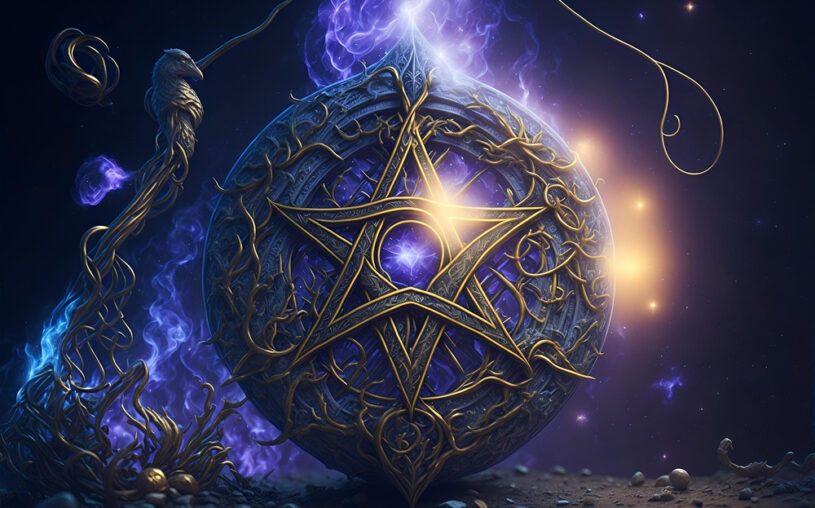
In many esoteric traditions, this is a symbol of protection, balance among the elements, and harmony between body and spirit. The five-pointed star represents the five elements: earth, air, fire, water, and spirit.
Protective Power
When enclosed in a circle (creating a pentacle), the pentagram is believed to create a protective barrier around the wearer. Each point of the star represents different protective qualities and elemental energies.
Modern Interpretations
While sometimes misunderstood due to popular culture, the pentagram has been used as a protective symbol for thousands of years across various spiritual traditions, from ancient Greek philosophy to modern Wiccan practices.
The Om Symbol: Sacred Sound and Protection
Hindu and Buddhist Origins
The Om symbol is believed to have protective properties against evil and negative energies. It is often worn as a pendant or incorporated into jewelry, allowing individuals to carry the symbol’s protective energy with them at all times.
Vibrational Protection
Representing the sacred sound of the universe, the Om symbol is believed to create protective vibrations around the wearer. Chanting the Om mantra is also considered a powerful protective practice.
Contemporary Use
Om jewelry has become increasingly popular among those seeking spiritual protection and connection to Eastern philosophies, often worn by practitioners of yoga and meditation.
Choosing Your Protective Symbol
Personal Connection
The most important factor in choosing a protective symbol is your personal connection to it. Whether drawn by cultural heritage, spiritual beliefs, or simply aesthetic appeal, the symbol should resonate with you on a personal level.
Quality and Materials
An amulet is an object that is generally worn for protection and made from a durable material (metal or hard-stone). Consider investing in quality pieces made from materials like sterling silver, gold, or genuine gemstones for longevity and energy retention.
Intention Setting
Many people find it helpful to set an intention when first wearing their protective symbol. This can be done through meditation, prayer, or simply holding the piece while focusing on your desire for protection and positive energy.
Caring for Your Protective Jewelry
Cleansing and Charging
Many traditions suggest regularly cleansing protective symbols to maintain their effectiveness. This can be done through various methods such as moonlight, sage smoke, or visualization techniques.
Respectful Wear
Treat your protective symbols with respect and mindfulness. Some people prefer to wear them daily, while others reserve them for times when they feel they need extra protection or spiritual support.
The Science and Psychology of Protection
Placebo Effect and Confidence
While the protective power of symbols may be rooted in belief rather than measurable forces, the psychological benefits are real. Wearing a protective symbol can increase confidence, reduce anxiety, and provide a sense of security that has tangible effects on well-being.
Cultural and Historical Significance
These symbols carry the weight of thousands of years of human belief and cultural significance. When we wear them, we connect not only to their protective properties but also to the countless generations who have found comfort and strength in these same symbols.
~~~
Protective symbols offer us a tangible connection to ancient wisdom and spiritual protection in our modern world. Whether you choose the evil eye for its power against envy, the hamsa for universal protection, the ankh for eternal life, or any other meaningful symbol, these talismans serve as reminders of our connection to something greater than ourselves.
Each talisman tells a story. They are your companions through life’s adventures, and chosen allies in your narrative. By wearing these symbols with intention and respect, we carry forward traditions that have provided comfort and protection for millennia, finding strength in the collective belief of human cultures across time and space.
Remember, the true power of any protective symbol lies not just in the object itself, but in the faith, intention, and positive energy you bring to it. Choose symbols that speak to your heart, wear them with respect, and allow them to serve as daily reminders of your inner strength and connection to protective forces, whatever form they may take in your personal belief system.