Magic is not random. Beneath the mystery, beneath the wonder, beneath the shiver of power that runs through a working that has truly taken hold – there is structure. There are principles. There are laws, as certain as gravity, as elegant as mathematics, as old as the stars.
 Written by Keeper
No one can give you a magical practice. They can share tools and traditions, teach techniques and philosophies, point to the stars and name them. But the living practice – the one that is truly and deeply yours – must be grown from within.
The Myth of the Perfect Practice
Before anything else, let’s dissolve a myth that stops many practitioners before they’ve truly begun: the idea that there is a correct way to practice magic, and that until you find it (or deserve it), you are doing it wrong.
Written by Keeper
Power without wisdom is a fire without a hearth. Capable of warming everything, capable of burning it all down. The ethical practitioner understands that the same hands that cast a spell must also bear accountability for its consequences.
Why Ethics Matter in Magical Practice
Magic works. Not always as expected, not always in the timeframe we imagine, not always through the channel we anticipate, but it works. And anything that genuinely creates change in the world carries with it the weight of responsibility.
This is why the question of magical ethics is not a peripheral concern, not a beginner’s topic to be graduated from as one advances. It is a living, ongoing inquiry that deepens the longer one practices. The witch who has worked magic for thirty years does not find ethical questions easier than the one who has just begun. They simply carry more experience, more nuance, and more hard-won wisdom to bring to them.
Ethics in magical practice asks us to move consciously. To think before we act. To consider not just what we want, but what we are willing to become in the getting of it.
 Written by Keeper
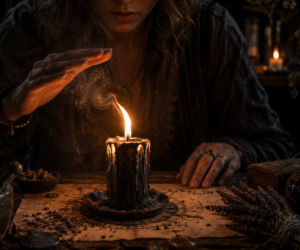
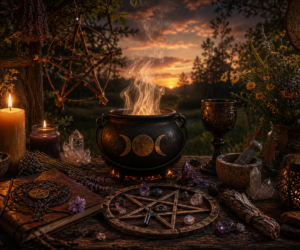
You lean in to extinguish it. You try again. The flame dips, recovers, steadies itself. You try a third time – and still it burns. There is a particular quality of uncanniness to this moment, something that makes even the most practically-minded person pause. It doesn’t feel like a malfunctioning candle. It feels like an answer. Across traditions – folk magic, conjure, ceremonial practice, and popular superstition – a flame that resists being put out is one of the most widely recognized candle omens. It is not a bad sign. In most readings, it is quite the opposite. But what it means depends on context: what you were doing when you lit the candle, why you are trying to extinguish it now, and what you were asking for. First, the Practical Question This is worth asking, and asking honestly, before reaching for a spiritual interpretation. Does the candle have an unusually long wick? Is it a particularly dense wax? Is there a draft in the room creating air currents that keep feeding the flame even as you try to smother it? Candle reading traditions – from Hoodoo to folk witchcraft to European ceremonial magic – all acknowledge the physical reality of candles. A skilled reader holds the mundane and the meaningful in tension, neither dismissing physical causes nor using them to reflexively explain away everything unusual. If you have ruled out the obvious, or if the phenomenon feels distinctly odd even with a normal wick and no draft, then you are in the territory of interpretation. The Core Meaning ~ The Work Is Not Finished The most widespread interpretation, consistent across multiple folk magic traditions, is this: the candle is telling you that the work is not complete. Something is still in motion. Something still needs to burn. In Hoodoo and conjure, candles are understood as living participants in a working. Not passive tools but active agents that communicate through their behavior. A flame that refuses to go out is typically read as a signal that the energy set in motion has not yet resolved. The fire has more to do. Extinguishing it prematurely would interrupt something that is still in process. The implication varies by intention: ~ If you lit the candle for healing or blessing, a flame that won’t die down often signals that the healing energy is still actively working. That something in you or in the situation is still receiving what was called in. The candle is finishing what you began. ~ If you lit it for manifestation or to draw something toward you, the persistence of the flame can indicate strong momentum. The spell or prayer is moving, and the fire is an expression of that movement. Let it complete if it is safe to do so. ~ If you lit it to release or resolve something, to end a situation, cut a cord, bring closure, a flame that refuses to die is more complicated. It can mean that the thing you are trying to release is not yet ready to go. There is still attachment, unresolved feeling, or energy keeping it alive. The candle knows before you do. The Flame as Spirit Presence A separate but related interpretation comes from traditions in which candle flames are understood as sites of spiritual presence. In some folk magic lineages, a flame that won’t go out is not simply a sign about your spell’s momentum. It is a sign that someone else is present with the flame, and that presence is not yet done. This could be an ancestor, a spirit ally, a guide, or simply the … Continue reading “When the Candle Won’t Go Out”
 Written by Keeper
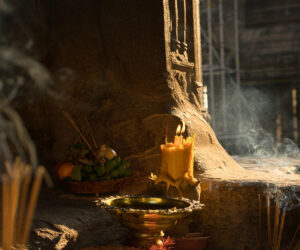
Every July 21st, a quieter holiday shows up on witchy calendars alongside the bigger Wheel of the Year festivals: Witch’s Day. It doesn’t have the ancient pedigree of Samhain or the astronomical precision of a solstice ~ and that’s actually part of what makes it worth talking about.
What Is Witch’s Day, Exactly?
Unlike Sabbats tied to the sun’s position or Esbats tied to the Moon, Witch’s Day is a modern observance. Its exact origin is genuinely unclear ~ it shows up on pagan and Wiccan calendars as a day for celebrating the Craft as life, practice, and religion, but there’s no single founding story or tradition behind the date. If you’ve never heard of it, you’re not missing a secret ~ plenty of longtime practitioners have the same question about where it came from.
That ambiguity is worth sitting with rather than smoothing over. It’s not International Witches’ Day (that one lands November 16th, closer to Samhain and Hecate’s Night). It’s simply a day that’s been claimed, informally and collectively, by people who wanted a moment to say: this practice matters, and so do the people who keep it alive.
In that sense, Witch’s Day is less about a specific deity, tool, or ritual and more about recognition ~ for a path that spans everything from generational family traditions to solitary practices built from scratch, from ceremonial magic to kitchen witchery to nothing more formal than paying attention to the moon.
Why This Year’s Date Carries Extra Weight
 Written by Keeper
Most witches spend the majority of their energy on the beginning of a spell. The intention. The tools. The activation. The moment of casting feels like the whole thing. And then the spell just… trails off. The candle burns down, the mood dissolves, and the practitioner wanders off to make tea with the working half-open behind them.
This is one of the most common reasons spells do not land the way they should.
Sealing a spell is not a formality. It is the act that completes the circuit. Without it, the energy you raised does not fully release into its work. It lingers in the space around you, or it leaks back into your field, or it simply dissipates without direction. The seal is what tells the magic: this is done. Go do what you were sent to do.
If you have read our How to build a real spell, you already know that closing is the final step in the structure. This post goes deeper. Into the different ways to seal, what each method does, and how to choose the right one for the work at hand.
What Sealing Actually Does
 Written by Keeper
“It’s just your imagination.”
How many times have we heard this dismissal? As children, when we spoke of our visions or invisible friends. As adults, when we described the power of visualization or the tangible shifts that follow magical work. “Just” imagination! As if imagination were some lesser faculty, a trick of the mind, something to outgrow.
But what if imagination isn’t the opposite of reality? What if it’s the blueprint?
The Rehabilitation of Visualization
For decades, if you told someone you were using visualization techniques, you’d be met with eye rolls and accusations of magical thinking. Visualization was relegated to the realm of New Age nonsense, something serious people didn’t waste time on.
Then athletes started doing it. Olympic competitors visualized their performances in minute detail, the feel of the track beneath their feet, the trajectory of the javelin, the sound of the crowd. And they won medals. Studies showed that mental rehearsal activated the same neural pathways as physical practice. Suddenly, visualization wasn’t woo-woo anymore. It was “mental training.”
 Written by Keeper
You have already done candle magic.
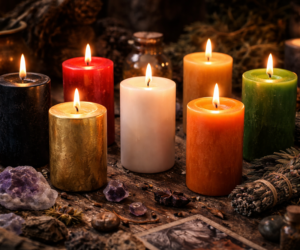
Every birthday cake you ever stood before, eyes closed, holding a wish in your chest before you blew out the candles – that was candle magic. The flame, the intention, the breath that carries the wish outward into the world. The structure is identical. The only difference between that and what we are going to discuss in this post is the degree of consciousness you bring to it.
Candle magic is the most accessible form of working magic that exists. It requires no special lineage, no expensive tools, no years of training before you are permitted to begin. It asks for a flame, an intention, and your full attention. Most people already own everything they need.
This will help you understand what transforms a lit candle from a simple mood-setter into a conscious act of intention. So that you know what you are doing and why, and what you do carries real weight.
What Candle Magic Actually Is
Candle magic is a form of sympathetic and elemental magic. It works on two levels simultaneously.
 Written by Keeper
An altar is not a decoration.
It is not a collection of pretty things arranged on a shelf. It is not proof that you are a real witch or a serious practitioner. It does not need to be large, or expensive, or Instagrammable. It does not need to look like anyone else’s.
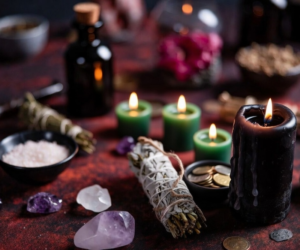
An altar is a point of focus. A place where your intention gathers, where you return again and again to do the quiet work of aligning your inner life with what you are calling into your outer one. It is a conversation you are having with the forces of abundance, conducted in the language of objects, light, and attention.
An abundance altar, specifically, is a place you build to anchor the energy of prosperity, growth, and more-than-enough in your physical space. It works because you return to it. Because you tend it. Because over time it becomes charged with the accumulated weight of your intention, your gratitude, your willingness to receive.
This guide will walk you through building one from scratch. From choosing the space through the gathering of the objects, the first incantation, and the journal work that makes the altar a living practice rather than a static object.
Before You Build ~ The Inner Work First
 Written by Keeper
Draw a circle. Just a simple circle. Now look at it. In that curved line returning to its starting point, you’ve created something that means simultaneously wholeness, eternity, cycles, protection, the sun, the moon, the wheel of the year, unity, completion, and infinite possibility. You’ve drawn a single line, yet encoded layers upon layers of meaning. This is the power of symbols. They compress vast concepts into simple forms, they speak to consciousness below language, and they carry energy independent of the person who created them.
Symbols are magic’s alphabet. They’re the shorthand of the universe, the concentrated essence of ideas made visible. A word requires you to know the language; a symbol speaks directly to something deeper. The cross means something to billions of people regardless of what language they speak. The pentacle carries power whether drawn in New York, Tokyo, or Cairo. An eye symbol has protected against evil for thousands of years across dozens of cultures that never met each other. This is because symbols don’t just represent power – they contain it, transmit it, and activate it.