Blood in the Snow ~ The Glencoe Massacre and the Legend of Corrag the Witch

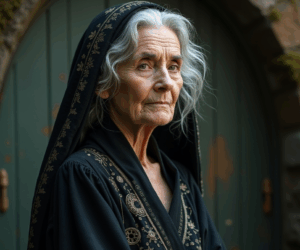
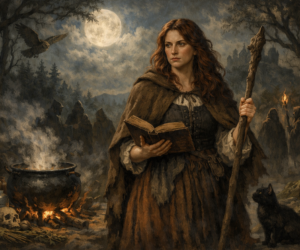
The mountains of Glencoe are not quiet. Even on a still day, when the sky sits low and grey above the valley floor and the River Coe moves in silence, there is something restless in the air. Locals will tell you it is the land remembering. And the land, in Glencoe, has much to remember.

Two stories haunt this valley above all others. One a historical atrocity etched into the Scottish national conscience, the other a legend woven from folklore, fire, and the untameable spirit of a young woman who chose the mountains over the world of men. Together, they paint a portrait of a place where history and myth are almost impossible to separate.

The Massacre of Glencoe ~ February 13, 1692
The Background: Oaths and Politics
To understand the massacre, you must first understand the fractured politics of late seventeenth-century Scotland. When William III, William of Orange, took the British throne in 1689 following the Glorious Revolution, the Highland clans were required to swear an oath of allegiance to him by January 1, 1692. Failure to do so would bring consequences.

Membership Required

You must be a member to access this content.

View Membership Levels

Already a member? Log in here

Mary Oneida Toups ~ The Witch Queen Who Made History (And Mystery)

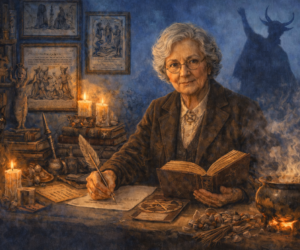
Mary arrived in New Orleans with nothing but ambition and a vision. Within four years, she had chartered the first legally recognized Church of Witchcraft in Louisiana. Within seven, she’d published a book praised by Aleister Crowley’s former secretary. And then, at 53, she died under circumstances that remain disputed to this day – leaving behind no obituary, no known grave, and a legacy so shrouded in mystery that even her successors aren’t sure where fact ends and legend begins.

This is the story of Mary Oneida Toups, the Witch Queen of New Orleans. And like any good witch’s tale, separating truth from myth requires some serious detective work.

The Documented Facts ~ What We Actually Know
Let’s start with what’s verifiable – the paper trail, the public record, the things we can prove beyond the storytelling and speculation.

Membership Required

You must be a member to access this content.

View Membership Levels

Already a member? Log in here

Giulia Tofana ~ Witch, Villain, or Liberator?

The Woman Who Armed Hundreds with Poison
Her name has echoed through history for nearly four centuries, whispered in the shadows of academia, sensationalized in true crime accounts, and recently reclaimed as a symbol of resistance. Giulia Tofana, the alleged creator of the deadly poison Aqua Tofana, is credited with enabling the deaths of over 600 men in 17th-century Italy. But was she a serial killer, a witch, an entrepreneur of death. Or something more complex?

The truth, as with most historical figures shrouded in legend, is far more nuanced than any single label can capture.

The Historical Record: Separating Fact from Legend
Here’s what makes Giulia Tofana’s story so challenging – much of what we “know” about her is likely fiction. Modern scholarship, particularly the work of historian Craig A. Monson in his 2020 book “The Black Widows of the Eternal City,” reveals that the romantic legend of Giulia Tofana is largely an invention of 19th-century historians who conflated multiple women into one sensational figure.

What We Can Verify

Membership Required

You must be a member to access this content.

View Membership Levels

Already a member? Log in here

Marie Laveau ~ Where History Meets Mythology in the Voodoo Queen of New Orleans

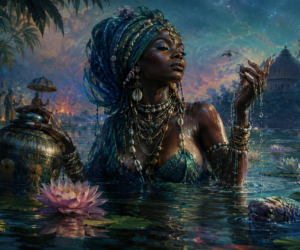
She is called the Voodoo Queen of New Orleans. Her tomb is one of the most visited graves in America. People still mark three X’s on cemetery walls, begging for her intercession from beyond the grave. Songs have been written about her. She appears in novels, TV shows, horror films, and tourist ghost tours. She is worshiped and feared, romanticized and demonized, studied and sensationalized.

But who was Marie Laveau, really?
The answer is far more complicated, and far more interesting, than the legend suggests.

The Documented Facts ~ What We Actually Know
Let’s begin with what can be verified through official records – the paper trail that survives two centuries of storytelling.

Born: September 10, 1801, in the French Quarter of New Orleans, Louisiana. At the time of her birth, Louisiana was still under Spanish colonial administration, though France had recently reclaimed it by treaty.

Parents: Her mother was Marguerite D’Arcantel (sometimes spelled Darcantel), a free woman of color of African, European, and Native American ancestry. Her father’s identity is less certain – likely either Charles Laveau (a white Creole) or Charles Laveaux (a free man of color). The confusion stems from inconsistent spelling in surviving records and the fact that Marguerite was unmarried at the time of Marie’s birth.

Membership Required

You must be a member to access this content.

View Membership Levels

Already a member? Log in here

Morgan le Fay ~ The Transformation of a Healer into a Witch

Her name evokes images of dark magic, seduction, and betrayal. Morgan le Fay, or Morgana, Morgaine, Morgen, stands as one of the most complex and misunderstood figures in Arthurian legend. Today she’s often portrayed as a villain, depicted as a witch or enchantress, the antagonist to King Arthur and the Knights of the Round Table. But this wasn’t always her story. The truth is far more fascinating. Morgan le Fay began her literary life as a powerful healer, a divine feminine figure, and Arthur’s protector, only to be systematically demonized by medieval male writers who couldn’t reconcile themselves to a woman wielding such extraordinary power.

This is the story of how a goddess became a witch, and what was done to one of the most powerful women in Western mythology.

The Ancient Roots ~ Goddess, Fairy, and Divine Healer
Morgan le Fay’s origins trace back to Celtic mythology and legend, first appearing in writing in the twelfth century but likely based on much older figures from Celtic folklore and mythology.

Her name itself offers clues to her divine origins. “Morgan” may derive from the Welsh “Morcant” (meaning sea-born or sea-circle) or connect to “Mor-rigan” (great queen), linking her to the Irish goddess Morrigan. A powerful deity associated with sovereignty, prophecy, war, and fate. She has also been linked with the supernatural mother Modron, derived from the continental mother goddess figure Dea Matrona and featured in medieval Welsh literature.

Membership Required

You must be a member to access this content.

View Membership Levels

Already a member? Log in here

Nicnevin ~ Scotland’s Forgotten Witch Goddess

In the shadowy corners of Scottish folklore lives a figure both feared and revered, Nicnevin, described as a witch or fairy queen who rides the night sky at Samhain, leading spirits, witches, and the dead in her wake. She is Scotland’s dark goddess, the hag queen, the mother of witches. Yet her story has been nearly lost to time, fragmented across centuries of poetry, witch trials, and whispered warnings.

The Mystery of Her Name
The origins of Nicnevin’s name remain debated, with multiple theories emerging from the linguistic fog of history. Some scholars suggest it derives from the Scottish Gaelic Neachneohain, meaning “daughter(s) of the divine” or “daughter(s) of Scathach,” while others propose NicNaoimhein, meaning “daughter of the little saint.”

Another interpretation links her name to the Gaelic Nic an Neamhain, “Daughter of Frenzy”. A fitting title for a goddess associated with the liminal chaos of Samhain night. Some scholars have even connected her to the Irish war goddess Neamhain, one of the Morrigan’s triple aspects, or to water spirits like the Nixie and Nokke.

The multiplicity of her names reflects the complexity of her nature. She is not one thing, but many things at once.

Membership Required

You must be a member to access this content.

View Membership Levels

Already a member? Log in here

Hecate: The Ancient Goddess of Magic, Crossroads, and the Night

In the liminal spaces where shadows dance and mysteries unfold, stands one of the most powerful and revered figures in witchcraft and ancient religion: Hecate (pronounced HEK-ah-tay or HEK-ah-tee). Known as the Goddess of Magic, the Guardian of Thresholds, and the Torchbearer of the Mysteries, Hecate has guided seekers, witches, and mystics for over two millennia.

Origins and Ancient History
Hecate’s origins trace back to ancient Anatolia (modern-day Turkey), where she was first worshipped as early as the 7th century BCE. From there, her cult spread throughout the Greek world, where she became deeply integrated into Hellenic religion and mythology. Unlike many deities who were later additions to pantheons, Hecate held a position of remarkable authority from her earliest appearances in Greek literature.

The poet Hesiod, writing in the 8th century BCE, describes Hecate as having received unique honors from Zeus himself. In his Theogony, she is portrayed as a powerful titaness who retained her authority even after the Olympian gods rose to power. A testament to her ancient and formidable nature.

The Triple Goddess: Her Many Faces

Membership Required

You must be a member to access this content.

View Membership Levels

Already a member? Log in here

The Legend of Goody Cole: New Hampshire’s Most Famous Witch

In the annals of New England folklore, few figures loom as large or as mysteriously as Eunice “Goody” Cole of Hampton, New Hampshire. Her story represents one of America’s most enduring tales of witchcraft accusations, community fear, and the tragic consequences of superstition in colonial society.

A Life Marked by Suspicion
Eunice Cole arrived in Hampton sometime in the 1640s with her husband William. From the beginning, she was viewed with suspicion by her neighbors. Perhaps it was her sharp tongue, her poverty, or simply the misfortune that seemed to follow in her wake. But Goody Cole quickly became the community scapegoat for any unexplained illness, crop failure, or maritime disaster.

The accusations against her were typical of witch trials throughout New England: livestock dying mysteriously, butter failing to churn, children falling ill after encounters with the old woman. In a time when scientific explanations for natural phenomena were scarce, fear and superstition filled the void.

Trial and Punishment

Membership Required

You must be a member to access this content.

View Membership Levels

Already a member? Log in here

Hekate ~ The Goddess of Witches ~ A Guide to the Ancient Keeper of Keys

In the shadowed corners of ancient temples and the whispered traditions of modern witchcraft, few deities command as much reverence and caution as Hekate. Known as the Goddess of Witches, the Guardian of Crossroads, and the Keeper of Keys, Hekate stands as one of the most complex and powerful figures in the pantheon of ancient Greek religion and contemporary magical practice.

Who is Hekate?
Hekate (also spelled Hecate) is an ancient Greek goddess whose origins stretch back to Anatolia, possibly emerging from the goddess Hekataios mentioned in the works of Hesiod around the 8th century BCE. Unlike many Olympic deities who ruled from Mount Olympus, Hekate carved out her dominion in the liminal spaces, the thresholds, crossroads, and boundaries between worlds.

She is traditionally depicted as a triple-form goddess, sometimes shown with three bodies or three faces, each looking in a different direction. This trinity represents her ability to see past, present, and future, as well as her dominion over the three realms: earth, sea, and sky. In her hands, she often carries torches, keys, daggers, or serpents as symbols of her roles as light-bringer, gatekeeper, protector, and wielder of ancient wisdom.

What are Her Domains?

Membership Required

You must be a member to access this content.

View Membership Levels

Already a member? Log in here