
The Law of Access: Opening and Closing Magical Doors

Every witch eventually learns a crucial truth: not all doors should be opened, and once opened, some doors are harder to close than others. The Law of Access governs what you can reach in the magical realms, what can reach you, and the consequences of creating pathways between worlds. What Is the Law of Access? The Law of Access states that magical work creates pathways. Channels of connection between you and whatever forces, entities, or energies you’re working with. These pathways grant access in both directions. When you open a door to call something in, you’re also creating a door through which things can reach you. Think of it like your home’s front door. You can open it to invite friends in, but while it’s open, anything else can potentially enter too. And some doors, once opened, require conscious effort to close and lock again. Understanding access means understanding:~ What you’re granting entry to~ How to control what comes through~ How to close and seal pathways when needed~ The difference between temporary and permanent access How Access Works Creating Access You create magical access through: Invocation and Evocation: Directly calling entities or energies creates a strong access point. You’re essentially saying “you can reach me now.” Divination Tools: Tarot, pendulums, scrying mirrors, and spirit boards open channels for communication and spiritual contact. Rituals and Spells: Many workings create temporary access to specific energies or forces you’re drawing upon. Psychic Opening: Meditation, trance work, and psychic development make you more permeable to spiritual energies – for better or worse. Physical Objects: Bringing certain items into your space (cursed objects, grave dirt, haunted items) can carry existing access points with them. Locations: Some places have inherent access to spiritual realms – crossroads, graveyards, ancient sites, thin places where the veil is naturally weak. The Direction of Access Access isn’t one-way. When you reach out to something, you create a pathway it can use to reach back. ~ Call a deity, and they can contact you outside ritual~ Open yourself to spirit communication, and spirits will attempt contact~ Work with darker forces, and they may test your boundaries~ Invite an entity into your home, and it can return~ Connect deeply with another person magically, and you remain linked This isn’t inherently negative, many profound magical relationships require ongoing access. But it needs to be conscious and controlled. Types of Access Temporary Access This is the most common and manageable form. You open a channel for a specific working, then close it when done. ~ Casting a circle and dismissing quarters~ Calling on an entity for one ritual, then formally releasing them~ Using a divination tool and then putting it away with intention~ Opening psychic awareness for a reading, then grounding and closing Temporary access is like answering your phone, you have a conversation, then hang up. The connection ends. Ongoing Access Some magical relationships involve sustained access. ~ Devotional relationships with deities who remain present in your life~ Spirit guides and allies who have permission to contact you~ Familiar spirits bound to you~ Magical partnerships with other practitioners~ Ancestral connections This is like giving someone a key to your house, they can visit whenever needed. It requires trust and clear boundaries. Uncontrolled Access This is where problems arise. Uncontrolled access happens when: ~ You open pathways without knowing how to close them~ You invite forces without setting boundaries~ You dabble with dangerous entities carelessly~ You leave spiritual “doors” open unintentionally~ You work while emotionally compromised or under the influence Uncontrolled access is like leaving your front door wide open in a storm. Anything… …

Membership Required

You must be a member to access this content.

View Membership Levels

Already a member? Log in here

The Law of Spiritual Debt: Understanding the Price of Magic

Every spell you cast, every entity you call upon, every force you harness – all of it comes with a cost. Not always immediately visible, not always obvious, but always present. The Law of Spiritual Debt teaches us that magic operates on a system of energetic exchange, and understanding this debt is crucial for sustainable, ethical practice. What Is the Law of Spiritual Debt? The Law of Spiritual Debt states that magical work creates obligations, energetic, spiritual, or karmic debts that must eventually be balanced. When you draw upon power beyond your own, petition spirits or deities, manipulate energy to your will, or shortcut natural processes through magic, you incur debt. This isn’t about punishment or cosmic bookkeeping for its own sake. It’s about maintaining balance in the energetic ecosystem. Think of spiritual debt like borrowing money: it’s not inherently bad, but you need to understand the terms and be prepared to pay it back. Types of Spiritual Debt Debt to Entities When you ask a deity, spirit, ancestor, or other entity for help, you create debt. They’ve expended energy on your behalf, answered your call, or intervened in your situation. This debt is typically repaid through: ~ Offerings and devotion~ Acts of service aligned with their nature~ Honoring agreements made during the working~ Spreading their worship or teachings~ Living according to their principles Ignoring this debt can lead to strained relationships, withdrawn support, or in extreme cases, active opposition from the entities you’ve disrespected. Debt to the Universe Some magic draws on universal energy, the elements, or natural forces without invoking specific entities. This still creates debt that you’ve borrowed from the cosmic bank. Repayment might look like: ~ Grounding excess energy back into the earth~ Acts of service to your community~ Balancing magic by helping others~ Living with integrity and consciousness~ Stewarding the natural world Karmic Debt Certain types of magic, especially manipulative spells, hexes, or work that infringes on free will, create karmic debt. This is the debt referenced by the Threefold Law: what you send out comes back. But beyond the returning energy, there’s also the spiritual weight of having violated natural law or ethical principles. Personal Energy Debt Sometimes the debt is to yourself. Magic that drains your personal energy reserves without proper recovery creates a deficit. Keep withdrawing from your energetic bank account without making deposits, and you’ll find yourself depleted, burned out, or physically ill. Debt Through Shortcuts Magic that shortcuts natural processes often carries higher debt. Want to manifest something overnight that would naturally take months? You’re borrowing from future energy, compressing time, and forcing outcomes. The universe will eventually balance this, often by requiring you to slow down elsewhere or face unexpected obstacles. Why Spiritual Debt Matters Unpaid spiritual debt doesn’t just disappear. It accumulates, creating: Energetic blockages: Your magic becomes less effective as debt builds up. It’s like trying to run with ankle weights – possible, but exhausting. Relationship breakdown: Entities and spirits stop responding to your calls if you consistently fail to honor agreements or offer reciprocity. Physical and mental toll: Energetic debt often manifests as exhaustion, illness, anxiety, or a general sense that things are “off.” Karmic consequences: For serious ethical violations, the debt can follow you across lifetimes, creating patterns that need to be worked through. Spiritual stagnation: You can’t grow in your practice while carrying heavy debt. It keeps you stuck at your current level. Recognizing When You’re in Debt Signs of accumulated spiritual debt include: ~ Spells that consistently fail or backfire~ Feeling energetically drained despite rest~ A sense of heaviness or “stickiness” in your… …

Membership Required

You must be a member to access this content.

View Membership Levels

Already a member? Log in here

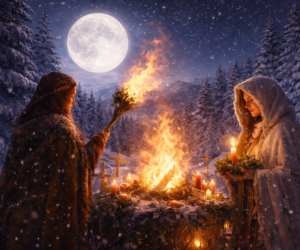
The Night of Hekate: A Modern Celebration on November 16th

Every November 16th, practitioners of modern witchcraft and paganism gather to honor Hekate, the ancient Greek goddess of crossroads, magic, and the liminal spaces between worlds. But while Hekate herself is an ancient deity with roots stretching back thousands of years, the celebration of her “night” on this specific date is actually a contemporary innovation. One that beautifully demonstrates how spiritual traditions evolve and adapt over time. Understanding the Ancient Roots: Hekate’s Deipnon To understand the modern Night of Hekate, we must first look to its ancient inspiration: Hekate’s Deipnon (meaning “supper” in Greek). This was a monthly observance held by the ancient Greeks on the dark moon, the darkest night of the lunar cycle when the moon was entirely invisible in the sky. During the Deipnon, devotees would prepare special meals and leave them at crossroads as offerings to Hekate. These offerings typically included eggs, garlic, leeks, fish, bread, honey, mushrooms, and wine. The practice served multiple purposes – honoring the goddess, appeasing the restless spirits of the dead who were believed to roam with Hekate during this liminal time, and ritually purifying the home for the month ahead. The dark moon was considered a threshold moment. A time between times when the veil between worlds grew thin. It was a period for release, renewal, and transformation, all domains over which Hekate held dominion. The Modern Innovation: November 16th Here’s where things get interesting. November 16th as “Hekate’s Night” appears to be a modern creation, likely dating back only a few decades within contemporary pagan and witchcraft communities. No ancient Greek calendars or historical records identify November 16th as a special festival day for Hekate. So where did this date come from? The most plausible theory suggests that at some point, a practitioner celebrated the monthly Deipnon on a dark moon that happened to fall on November 16th. Over time, through word-of-mouth, online sharing, and the desire for a fixed annual celebration, that particular date became separated from its lunar origins and transformed into a yearly observance in its own right. Some sources also note that mid-November traditionally marked the closing of the veil between worlds (following the thinning that occurred at Samhain/Halloween), making it a spiritually significant time that aligned well with Hekate’s role as guardian of thresholds. The timing also coincides with the Leonid meteor showers, adding a celestial dimension to the celebration. Why This Matters (And Why It’s Okay) Understanding that the Night of Hekate is a modern tradition doesn’t diminish its significance or validity. In fact, it highlights something beautiful about living spiritual traditions – they grow, adapt, and respond to the needs of their practitioners. For many modern witches and pagans who observe the monthly Deipnon on each dark moon, November 16th has become something extra. A day to honor Hekate specifically as the Queen of Witchcraft, to gather with community (whether in person or in spirit), and to deepen their relationship with this complex and powerful deity. The fixed date also serves practical purposes. Unlike the shifting lunar calendar, it’s easy to remember and allows practitioners scattered across the globe to feel connected in their simultaneous observance. In a world where modern paganism is often a solitary practice, having these shared markers in time creates a sense of community and continuity. How the Night is Celebrated Today Modern practitioners celebrate the Night of Hekate in ways that honor both the ancient Deipnon traditions and contemporary spiritual needs: Offerings at the Threshold Many leave food offerings at their doorstep or at actual crossroads. The doorway represents a symbolic crossroads – the boundary between private… …

Membership Required

You must be a member to access this content.

View Membership Levels

Already a member? Log in here

The Law of Timing: Dancing with the Rhythms of Magic

There’s a reason farmers don’t plant seeds in winter, why we feel more energized at certain times of day, and why some spells seem to effortlessly manifest while others fizzle despite our best efforts. The Law of Timing teaches us that magic, like all of nature, flows in cycles. And working with these rhythms rather than against them amplifies our power exponentially. What Is the Law of Timing? The Law of Timing states that there are optimal moments for magical work, and that aligning your spells and rituals with natural cycles enhances their effectiveness. Just as a surfer rides a wave rather than fighting against it, a skilled practitioner works with the tides of energy that flow through time. This doesn’t mean magic only works at specific times – urgency sometimes demands immediate action regardless of the moon phase or planetary hour. But when you have the luxury of choice, timing your magic strategically can be the difference between a spell that limps along and one that soars. The Cycles of Magical Timing Lunar Phases The moon is perhaps the most influential timer for magical work: New Moon: Beginnings, new projects, setting intentions, planting seeds (literal and metaphorical). The dark moon just before the new moon is powerful for banishing and shadow work. Waxing Moon: Growth, building, attracting, increasing. As the moon grows fuller, work magic for things you want to expand in your life. Full Moon: Peak power, manifestation, completion, divination, charging tools. This is when energy is most abundant and potent. Waning Moon: Release, banishing, breaking habits, decreasing, letting go. As the moon shrinks, work magic for things you want to diminish. Solar Cycles Time of Day: Dawn for new beginnings, noon for power and strength, dusk for transitions and balance, midnight for deep magic and shadow work. Days of the Week: Each day carries planetary energy: ~ Monday (Moon): Intuition, emotions, dreams, psychic work~ Tuesday (Mars): Courage, conflict, passion, protection~ Wednesday (Mercury): Communication, travel, learning, business~ Thursday (Jupiter): Abundance, expansion, luck, legal matters~ Friday (Venus): Love, beauty, pleasure, relationships, art~ Saturday (Saturn): Banishing, binding, discipline, endings~ Sunday (Sun): Success, healing, vitality, leadership Solar Sabbats: The Wheel of the Year marks eight points where the veil between worlds thins and specific energies peak. Samhain for ancestor work, Beltane for fertility magic, Yule for rebirth, and so on. Planetary Hours For precision timing, planetary hours divide each day into segments ruled by different planets. These can be calculated based on sunrise and sunset, and offer focused windows for specific magical work aligned with planetary energies. Personal Cycles Don’t overlook your own rhythms: ~ Your menstrual cycle (if applicable) has its own magical phases~ Your energy levels throughout the day~ Your birth chart’s transits and returns~ Anniversaries and personally significant dates~ Times when you feel naturally more open or powerful Seasonal Energies The seasons themselves carry distinct magical qualities: ~ Spring: Growth, fertility, renewal, new beginnings~ Summer: Abundance, strength, passion, peak energy~ Autumn: Harvest, gratitude, release, preparation~ Winter: Rest, reflection, introspection, death and rebirth Why Timing Matters Think of magical timing like gardening. You could throw seeds on frozen ground in January, but they won’t grow. Wait until spring when the earth is warm and receptive, and those same seeds flourish. The seeds haven’t changed, the conditions have. Similarly, a love spell during a waning moon fights against the tide of decreasing energy. The same spell during a waxing moon or on a Friday flows with supportive currents. Your intention and skill matter, but timing provides the energetic framework that supports or hinders your work. Timing also connects you to… …

Membership Required

You must be a member to access this content.

View Membership Levels

Already a member? Log in here

The Law of Resonance: Tuning Into Magic’s Frequency

Have you ever walked into a room and immediately felt its energy? Or picked up a crystal that seemed to hum in your hand while others left you cold? That’s the Law of Resonance at work. One of the most fundamental principles in magical practice, yet often one of the least understood. What Is the Law of Resonance? The Law of Resonance states that like attracts like, and that energy resonates with energy of a similar frequency or vibration. In magical terms, this means you attract and manifest experiences, energies, and outcomes that match your own energetic vibration. Think of it like a tuning fork. Strike one tuning fork at a specific frequency, and another tuning fork of the same frequency nearby will begin to vibrate in response. They resonate together. Your energy works the same way. It naturally attracts and amplifies energies that vibrate at similar frequencies. This is why manifestation work emphasizes “being” the energy you want to attract. You can’t vibrate at the frequency of scarcity and lack while trying to manifest abundance. You can’t embody chaos and anxiety while trying to draw in peace. The energy you put out is the energy you’ll resonate with. How Resonance Works in Magic Personal Vibration Everything has a vibration or frequency – your thoughts, emotions, physical body, and spirit all emit energy. When you’re joyful, you vibrate at a different frequency than when you’re grieving. When you’re confident, your energy signature differs from when you’re fearful. Your overall energetic frequency is influenced by:– Your emotional state– Your thoughts and beliefs– Your physical health– Your spiritual practices– Your environment– The company you keep Magical Correspondences This is why correspondences matter in spellwork. When you use rose quartz for love magic, you’re not just using a pretty pink stone, you’re working with something that vibrates at the frequency of love, compassion, and gentle emotion. It resonates with the energy you’re trying to manifest. Similarly:– Green candles resonate with prosperity and growth– Lavender resonates with peace and healing– The full moon resonates with fullness, completion, and illumination– Thursday resonates with Jupiter’s expansive, abundant energy When your tools, timing, and ingredients all resonate with your intention, they amplify each other like multiple tuning forks vibrating in harmony. Attracting What You Are Here’s where the Law of Resonance gets profound: you don’t attract what you want, you attract what you are. If you’re constantly dwelling in victimhood, you’ll attract situations that reinforce that identity. If you cultivate gratitude and abundance consciousness, you’ll notice more opportunities for prosperity. If you carry deep unworthiness, your spells for love may falter because you’re not resonating with the frequency of being loved. This isn’t victim-blaming or toxic positivity. It’s recognizing that your internal state shapes your external reality. Shifting Your Resonance The beautiful thing about the Law of Resonance is that you can consciously shift your frequency. This is the real work of magic. Shadow Work You can’t resonate at a frequency you’re actively resisting. If you’re trying to manifest confidence while suppressing deep shame, those energies clash. Shadow work helps you integrate and transform lower-frequency energies rather than fighting against them. Energy Hygiene Regular practices that clear and raise your vibration:– Meditation and grounding– Salt baths or smoke cleansing– Spending time in nature– Sound healing (singing bowls, drums, chanting)– Movement and breathwork– Surrounding yourself with high-vibe people and environments Embodiment Practices This is where “fake it till you make it” actually has magical validity. When you embody the energy you want to attract, maybe dressing the part, acting as if, speaking affirmations, you begin to shift your… …

Membership Required

You must be a member to access this content.

View Membership Levels

Already a member? Log in here

The Law of Reciprocity: The Sacred Exchange in Magic

In witchcraft, we work with energies, spirits, elements, and forces both seen and unseen. The Law of Reciprocity teaches us that these relationships thrive on balance and exchange. Nothing in the magical universe exists in isolation, because, everything flows in cycles of give and take. What Is the Law of Reciprocity? The Law of Reciprocity states that magical work operates on exchange. When you receive, you must also give. When you take energy, you must return energy. This isn’t a transactional business deal, it’s the natural rhythm of how energy flows through the cosmos. Think of it like breathing: you inhale and exhale, take in oxygen and release carbon dioxide. Neither action is complete without the other. Magic works the same way. When you draw on the earth’s energy for grounding, you might offer gratitude, tending to the land, or pouring out water as a blessing. When a deity assists with your spellwork, you honor them with offerings and devotion. Why Reciprocity Matters Without reciprocity, magical relationships become parasitic rather than symbiotic. Imagine constantly asking a friend for favors but never offering help in return. Eventually, that friendship deteriorates. The same principle applies to your relationship with spirits, deities, the land, and even the elements themselves. Reciprocity maintains energetic balance. It shows respect and acknowledges that you’re part of an interconnected web, not separate from it. It also keeps your own energy flowing rather than stagnant. When you only take without giving, you create energetic blockages that can manifest as burnout, ineffective magic, or feeling disconnected from your practice. Forms of Reciprocity in Practice Offerings to Spirits and Deities When you work with specific entities, offerings are the most direct form of reciprocity. These might include: ~ Food and drink (wine, honey, bread, fruits)~ Incense and fragrant herbs~ Candles and light~ Flowers or plants~ Coins or shiny objects~ Art, poetry, or songs created in their honor~ Acts of service aligned with their domain The key is thoughtfulness. Research what your deity or spirit appreciates, and offer with genuine gratitude rather than obligation. Giving Back to the Earth If you gather herbs, stones, or other natural materials for your craft, reciprocity means giving back: ~ Leave offerings of water, honey, or cornmeal where you harvest~ Practice sustainable harvesting – never take more than you need~ Plant seeds or tend to the land~ Pick up litter in natural spaces you visit~ Advocate for environmental protection Energy Exchange in Spellwork When you draw on universal energy or the elements for magic, consider what you’re returning: ~ Ground excess energy back into the earth after ritual~ Express gratitude to the elements you’ve called~ Practice energy hygiene so you’re not depleting yourself or your space~ Balance taking with giving in your daily life Reciprocity with Your Community Magic doesn’t exist in a vacuum. Many of us have learned from teachers, books, online communities, and fellow practitioners. Reciprocity asks: ~ Share your knowledge with those still learning~ Support other practitioners and magical businesses~ Credit sources when you share correspondences or techniques~ Offer help to your magical community when you’re able Reciprocity vs. Payment Some practitioners confuse reciprocity with transactional payment, but they’re subtly different. Payment implies a fixed exchange: “I give you this, you give me that, and we’re done.” Reciprocity is about maintaining an ongoing relationship and honoring the flow of energy. That said, when you receive professional magical services (readings, healings, spell casting), paying the practitioner fairly is a form of reciprocity. Their time, energy, and skill have value, and compensation honors that. When Reciprocity Feels Difficult Sometimes we struggle with reciprocity because we… …

Membership Required

You must be a member to access this content.

View Membership Levels

Already a member? Log in here

Nicnevin ~ Scotland’s Forgotten Witch Goddess

In the shadowy corners of Scottish folklore lives a figure both feared and revered, Nicnevin, described as a witch or fairy queen who rides the night sky at Samhain, leading spirits, witches, and the dead in her wake. She is Scotland’s dark goddess, the hag queen, the mother of witches. Yet her story has been nearly lost to time, fragmented across centuries of poetry, witch trials, and whispered warnings. The Mystery of Her Name The origins of Nicnevin’s name remain debated, with multiple theories emerging from the linguistic fog of history. Some scholars suggest it derives from the Scottish Gaelic Neachneohain, meaning “daughter(s) of the divine” or “daughter(s) of Scathach,” while others propose NicNaoimhein, meaning “daughter of the little saint.” Another interpretation links her name to the Gaelic Nic an Neamhain, “Daughter of Frenzy”. A fitting title for a goddess associated with the liminal chaos of Samhain night. Some scholars have even connected her to the Irish war goddess Neamhain, one of the Morrigan’s triple aspects, or to water spirits like the Nixie and Nokke. The multiplicity of her names reflects the complexity of her nature. She is not one thing, but many things at once. Her Earliest Appearance The first known mention of Nicnevin appears around 1580 in a work by Alexander Montgomerie, a court poet under King James VI of Scotland. The same king who would later become infamous for his obsession with witch-hunting and authoring the Daemonologie. In Montgomerie’s “Flyting” (a ritual exchange of poetic insults), Nicnevin appears accompanied by her nymphs, described as “venerable virgines whom the world call witches.” This early text portrays her not as a demon, but as a powerful figure who commands witches and possesses knowledge of charms and cunning. After this, silence. For over two hundred years, Nicnevin disappears from the written record. The Romantic Revival She resurfaces in the early 1800s, reimagined by Romantic writers who were busy collecting and reconstructing Scotland’s fading folklore. Sir Walter Scott referred to her as “a gigantic and malignant female, the Hecate of this mythology, who rode on the storm, and marshalled the rambling host of wanderers under her grim banner.” Later sources connected her to the Gyre-Carling, an old woman or ogress figure in Scottish tradition. And described her as wearing a long gray mantle and carrying a white wand with the power to transform water into stone and sea into dry land. By the 19th century, she was called “the mother of glamour, and near-a-kin to Satan himself,” presiding over the Hallowmass Rades. The ghostly processions that rode through Scottish skies during the darkest nights of the year. The Real Woman Behind the Legend? One of the most intriguing theories is that Nicnevin wasn’t originally a goddess at all, but a real woman whose story became mythologized. In May 1569, an accused witch named Marion Nicneven (or Nikniving) was condemned to death and burned at the stake at St. Andrews, claiming that apothecaries had caused her arrest due to her superior healing powers. Was she the origin of the legend? Or was she herself named after an already-existing mythological figure? The timeline is murky, complicated by the fact that “Nicneven” may have become a nickname for multiple women accused of witchcraft. A title bestowed upon those believed to possess extraordinary power. Who Is Nicnevin? A Synthesis of Shadows Drawing from the scattered fragments, a portrait emerges: Queen of the Unseelie Court: Nicnevin rules over the darker fairies of Scotland, the Unseelie. Spirits who are neither wholly malevolent nor wholly benevolent, but dangerous, unpredictable, and powerful. Leader of the Wild Hunt: She is… …

Membership Required

You must be a member to access this content.

View Membership Levels

Already a member? Log in here

The Law of Authority: Claiming Your Magical Power

In the realm of witchcraft and magical practice, few principles are as fundamental, or as frequently misunderstood, as the Law of Authority. This universal law speaks to the very heart of effective spellwork: the power you wield comes from the power you claim. What Is the Law of Authority? The Law of Authority states that your magical effectiveness is directly proportional to the authority you claim over your own practice and energy. Simply put, magic works best when you believe in your right and ability to make it work. This isn’t about arrogance or ego. It’s about recognizing yourself as a sovereign being capable of directing energy and manifesting change. Think of it this way: when you cast a spell while questioning whether you have the “right” to do so, or doubting your own power, you’re essentially undermining your own work. You’re sending mixed signals to the universe, to the spirits, and to your own subconscious mind. The Inner and Outer Dimensions Authority in witchcraft operates on two levels: Inner Authority is about your relationship with yourself. It’s the confidence that comes from knowing your craft, trusting your intuition, and accepting your role as a magical practitioner. This authority develops through study, practice, and honest self-reflection. Outer Authority relates to how you interact with external forces, spirits, deities, elements, and energies. When you work with these forces from a place of authority, you’re not begging or pleading. You’re negotiating, commanding (when appropriate), or collaborating as an equal partner. Cultivating Your Magical Authority Know Your Craft Authority grows from knowledge. Study correspondences, planetary hours, moon phases, and the properties of herbs and crystals. Understand why you’re doing what you’re doing. This foundation gives you confidence in your choices. Trust Your Intuition Book knowledge is essential, but so is listening to your inner knowing. Sometimes the “wrong” herb will call to you for a spell, and it turns out to be exactly right. Authority means trusting these moments. Establish Your Practice Consistency builds authority. Even simple daily practices, lighting a candle, drawing a card, or grounding meditation, reinforce your identity as a practitioner and strengthen your magical muscles. Set Clear Boundaries Part of claiming authority is knowing when to say no. You don’t owe anyone your magical services. You don’t have to work with deities or spirits that don’t resonate with you. Your practice, your rules. Authority vs. Arrogance Here’s where many practitioners stumble: they confuse authority with arrogance or fear coming across as ego-driven. But true magical authority is grounded and balanced. It’s not about believing you’re better than others, it’s about believing in your own capability. Arrogance demands without reciprocity and assumes power over all things. Authority recognizes your own power while respecting the power of others, including the spirits and forces you work with. Speaking with Authority The words you use in spellwork matter. Notice the difference: ~ “I hope this works…” vs. “This spell is cast, so mote it be.”~ “Please, if it’s okay…” vs. “I call upon the elements to witness my work.”~ “I’m not sure but…” vs. “By my will and the power within me…” This doesn’t mean you can’t be respectful or humble in your approach to spirits and deities. It means you speak as a fellow being of power, not a powerless supplicant. When Authority Feels Difficult If claiming your authority feels uncomfortable, you’re not alone. Many of us carry conditioning that taught us to diminish ourselves, to question our own knowing, or to seek permission for our existence. Working through these blocks is itself a powerful form of magic. Consider shadow work around… …

Membership Required

You must be a member to access this content.

View Membership Levels

Already a member? Log in here

The Complete Guide to Deep Cleansing Your Space: Physical and Energetic Purification

After completing spiritual work, rituals, or simply when you feel the need for a fresh start, a thorough cleansing of your space is essential. This practice goes beyond regular tidying. It’s about removing both physical remnants and energetic residue to create a clean slate for new intentions and positive energy. Why Deep Cleansing Matters Every ritual, spell, or spiritual working leaves behind traces. Not just physical items, but also energetic imprints. These lingering energies can: ~ Interfere with new workings or intentions~ Keep you tethered to the past~ Create energetic congestion in your space~ Attract unwanted influences~ Prevent fresh energy from flowing A thorough cleansing ensures you’re not carrying forward energies that no longer serve you, allowing your space to become a true sanctuary once again. Part One: Physical Deep Cleaning Remove All Ritual Objects Begin by gathering and removing everything associated with your working: Dispose of or Store ~ Candle remnants (wax, stubs, or holders used in the working)~ Burned herbs, incense ash, or botanical materials~ Ritual tools used specifically for this working~ Written intentions, petitions, or sigil papers~ String, cord, or fabric used in the ceremony~ Crystals that need cleansing or should be returned to nature~ Any photos, personal items, or symbolic objects Disposal Methods ~ Bury in earth: For biodegradable materials and things you want to release back to nature~ Burn safely: For paper, natural fibers, and dried herbs (in a fireproof container)~ Return to water: For certain workings (only biodegradable, non-toxic materials)~ Trash disposal: For items that cannot be returned to nature~ Store away: For reusable tools that need cleansing and storage Never leave ritual remnants lingering in your space. Each item holds energetic memory of the working. Deep Clean Every Surface Now address the physical space itself. Declutter First Move furniture, remove items from shelves, and clear surfaces completely. Clutter holds stagnant energy and makes thorough cleaning impossible. Clean from Top to Bottom 1. Ceiling and corners: Remove cobwebs and dust2. Walls: Wipe down or spot clean as needed3. Windows: Clean glass thoroughly (windows are energetic portals)4. Surfaces: Clean all shelves, tables, and countertops5. Floors: Vacuum, sweep, and mop every inch Pay Special Attention to: ~ The area where you performed the working~ Thresholds and doorways (energy transition points)~ Mirrors (which can hold and reflect energy)~ Corners where energy stagnates~ Under furniture and in hidden spaces Add Cleansing Elements to Your Cleaning Enhance your physical cleaning with energetically purifying ingredients. Cleansing Floor Wash Recipe: ~ Warm water~ 1 cup white vinegar or lemon juice~ 1/4 cup salt (sea salt or kosher salt)~ 10-15 drops essential oils (lemon, eucalyptus, rosemary, or peppermint)~ Optional: A handful of fresh herbs steeped in hot water Mop or wipe surfaces with intention, moving in counterclockwise circles (for banishing) or sweeping energy toward exits. Part Two: Energetic Cleansing Once your space is physically clean, address the energetic layer. Open All Windows and Doors Fresh air is one of the most powerful cleansers. Open windows and doors to create cross-ventilation, allowing stagnant energy to escape and fresh energy to enter. Do this for at least 15-30 minutes. Smoke Cleansing Use sacred smoke to purify the energetic atmosphere. Materials~ White sage, palo santo, cedar, rosemary, or mugwort~ Abalone shell, fireproof bowl, or censer~ Feather or fan (optional) Process1. Light your chosen herb and let it smolder2. Start at the entrance and move counterclockwise through your space3. Pay attention to corners, doorways, windows, and closets4. Waft smoke into each area with intention5. Visualize negative or stagnant energy dissipating6. Open windows to let the smoke (and old energy) escape Alternative Methods for Smoke-Sensitive Spaces ~… …

Membership Required

You must be a member to access this content.

View Membership Levels

Already a member? Log in here

The Sacred Messengers: Spiritual Meanings of Bugs and Insects

In our modern world, we often overlook the tiny creatures that share our space, dismissing them as pests or nuisances. Yet across cultures and throughout history, insects have been revered as powerful spiritual messengers, symbols of transformation, and guides on our life journey. When we pause to notice these miniature beings, we open ourselves to profound wisdom carried on delicate wings and industrious legs. Why Insects Hold Spiritual Significance Insects have inhabited Earth for over 400 million years, far longer than humans. They are masters of adaptation, transformation, and survival. Their life cycles, from egg to larva to pupa to adult, mirror our own spiritual evolution. Ancient cultures understood this, weaving insect symbolism into their mythology, art, and spiritual practices. When an insect appears repeatedly in your life, crosses your path at meaningful moments, or captures your attention in unusual ways, it may be carrying a message meant specifically for you. The Spiritual Meanings of Common Insects Butterflies: Transformation and Rebirth Perhaps the most universally recognized symbol of transformation, butterflies represent the soul’s journey through profound change. Their metamorphosis from caterpillar to winged beauty reminds us that periods of darkness and isolation (the cocoon) are necessary for our most magnificent evolution. Message You are ready for transformation. Trust the process, even when you can’t see the outcome. Colors Matter ~ White butterflies: spiritual growth, purity, angels nearby~ Yellow butterflies: joy, creativity, new opportunities~ Orange butterflies: passion, encouragement from the universe~ Blue butterflies: wish fulfillment, good fortune~ Black butterflies: endings leading to new beginnings, ancestral messages – – – Dragonflies: Illusion and Self-Realization With their iridescent wings and ability to move in all directions, dragonflies symbolize seeing through illusions and connecting to deeper truth. They remind us that what we see on the surface is not all that exists. Message Look beyond appearances. Trust your intuition to reveal what’s hidden. Embrace adaptability and lightness of being. – – – Ladybugs: Luck and Protection These beloved beetles have long been considered harbingers of good fortune and divine protection. Their bright colors warn predators, teaching us about healthy boundaries. Message Good luck is coming your way. You are protected. Release your worries to the universe. – – – Bees: Community and Divine Feminine Sacred to many goddess traditions, bees represent productivity, community, and the sweetness born from hard work. They remind us of our interconnection and the importance of working for the greater good. Message Focus on your goals with dedication. Collaborate with others. Celebrate the sweetness of life. Trust in abundance. – – – Spiders: Creativity and Fate Though technically arachnids, spiders deserve mention for their powerful symbolism. Master weavers, they represent creative power, patience, and the web of fate we weave with our choices. Message You are the creator of your reality. Be patient and strategic. Trust your ability to craft your destiny. – – – Moths: Intuition and Hidden Knowledge Night fliers drawn to light, moths symbolize faith, vulnerability, and the search for truth in darkness. They remind us to trust our inner light and intuition. Message Follow your inner guidance, even when the path is unclear. Embrace your sensitive nature. Seek the light within. – – – Ants: Diligence and Community Ants are master architects and tireless workers, teaching us about patience, planning, and the power of small consistent actions over time. Message Trust the process. Small steps lead to big achievements. Work collaboratively. Plan for the future. – – – Crickets: Intuition and Good Fortune The cricket’s song has long been associated with good luck and intuitive knowing. In many Asian cultures, crickets are kept as protective guardians… …

Membership Required

You must be a member to access this content.

View Membership Levels

Already a member? Log in here