
 Written by
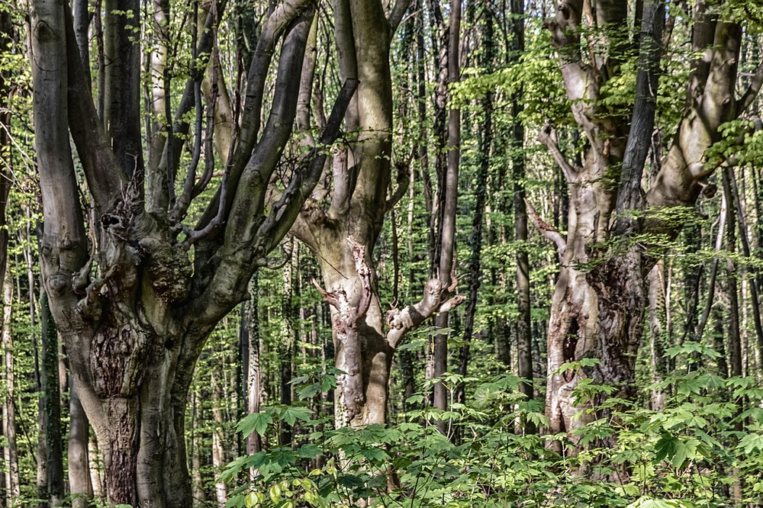
 Stand beneath a beech tree and you’ll understand immediately why our ancestors revered it. The smooth, silvery bark seems to glow with its own light, even on cloudy days. The canopy spreads wide and generous, creating cathedral-like spaces beneath its branches. In autumn, copper leaves drift down like pages from ancient books. The beech has been called the tree of wisdom, the keeper of knowledge, the library of the forest. And for good reason.
The Nature and Spirit of Beech
The beech tree (Fagus) carries an energy distinct from other trees. Where oak is strength and willow is emotion, beech is intellect, memory, and the preservation of knowledge. This isn’t abstract. It’s rooted in the tree’s very nature and its relationship with humanity across millennia.
Beech bark is uniquely smooth and pale, making it ideal for carving. For thousands of years, humans have carved messages, symbols, and records into beech bark and wood. The word “book” itself may derive from the Old English “bōc,” which also meant beech tree. Some scholars believe this connection arose because early Germanic peoples carved runes onto beech tablets. The tree literally became synonymous with the written word, with recorded knowledge, with learning preserved across time.
Beech forests create a special environment. Their dense canopy allows little undergrowth, resulting in clean, open spaces beneath, natural halls perfect for study, contemplation, and teaching. The beech mast (nuts) that fall in autumn provided sustenance for both people and animals, linking the tree to abundance and provision as well as wisdom.
Energetically, beech is cool, calm, and clarifying. It doesn’t have the fiery passion of rowan or the deep emotion of willow. Instead, beech offers mental clarity, enhanced memory, access to stored knowledge, and the patience required for true learning. It teaches that wisdom accumulates slowly, like rings in wood, and that knowledge preserved serves future generations.
Beech in Mythology and Tradition
Throughout European tradition, beech has been associated with learning, writing, and the preservation of knowledge.
In Celtic tree lore, beech represents old knowledge, not the hidden mysteries of yew or the intuitive wisdom of willow, but accumulated learning, the kind found in libraries and passed through teaching. It’s the tree of scholars, scribes, and historians.
The ogham symbol for beech is Phagos, though beech’s association with ogham is somewhat contested by scholars. Regardless of its technical placement in the ogham alphabet, folk tradition has long linked beech with written knowledge and the recording of information.
Germanic peoples held beech sacred, using its wood for rune staves and magical inscriptions. The smooth bark and fine-grained wood made it ideal for carving symbols meant to last. When you wanted knowledge preserved, you carved it into beech.
In later European tradition, beech groves were seen as natural schools. Places where children could be taught letters and numbers, where scholars could contemplate, where knowledge could be shared in the tree’s peaceful presence.
Properties and Correspondences
Element: Air (though some traditions assign it to Earth)
Planet: Saturn or Mercury, depending on tradition
Gender: Feminine
Deities: Odin (for runes and knowledge), Ogma (Celtic god of eloquence and writing), any deity associated with wisdom and learning
Magical Properties: Wisdom, learning, memory enhancement, knowledge retention, literary pursuits, past-life recall, ancestor wisdom, patience, manifestation of wishes written on beech wood
Season: Late summer into autumn
Chakra: Third eye, for enhanced mental clarity and access to inner wisdom
Harvesting Beech Respectfully
When working with beech, approach with the respect you’d show a teacher or librarian. This tree guards knowledge, and accessing its gifts requires courtesy.
Identification
American beech (Fagus grandifolia) and European beech (Fagus sylvatica) are the primary species used in magical work. Identifying features include smooth gray bark, oval leaves with prominent parallel veins and slightly serrated edges, and triangular beechnuts enclosed in spiky husks.
Asking Permission
Never take from beech without permission. Approach the tree, place your hand on its bark, and explain your intention. Wait for a sense of acceptance – a feeling of peace, a rustling of leaves despite still air, or simply an intuitive knowing. If you sense resistance, thank the tree and move on. Not every tree wishes to share its gifts at every time.
What to Harvest
Fallen branches and twigs are easiest and most respectful to collect, especially after storms. These carry full magical potency while requiring no harm to the tree.
Bark should only be taken from fallen branches or dead trees, never stripped from living beech. The smooth bark is precious both aesthetically and magically, but taking it from living trees can damage them severely.
Leaves can be gathered in late spring through autumn. Take only what you need, never stripping a branch bare. Fresh green leaves carry different energy than the copper autumn leaves – choose according to your purpose.
Beechnuts can be collected from the ground in autumn. These small triangular nuts are rich in oil and carry the tree’s energy of wisdom combined with nourishment and abundance.
Wood for wands, runes, or other tools should come from fallen branches, storm-damaged trees, or ethically harvested lumber. Never cut living beech without absolute necessity and permission.
Offering
Leave an offering when you take from beech. Water at the roots, especially during dry seasons, is always welcome. Biodegradable offerings like milk, honey, or wine poured at the base honor the tree’s spirit. Some practitioners leave small crystals or written thank-you notes buried near the roots. Speak your gratitude aloud. Words matter to the tree of language and learning.
Working with Beech Wood
Beech wood is fine-grained, hard, and takes carving beautifully. This makes it ideal for tools requiring precision and permanence.
Wands
A beech wand is perfect for intellectual magic, study enhancement, memory work, and any spellwork requiring clear thinking and precise intention. When crafting a beech wand, take your time. Sand it smooth, the wood should feel good in your hand, almost silky. You might carve symbols of knowledge along its length runes, ogham, sigils for wisdom, or even words that represent what you seek to learn or remember.
Consecrate your beech wand by anointing it with oil blended for mental clarity (rosemary, peppermint, lemon) and speaking your intention “I consecrate this wand of beech, wood of wisdom, for clarity of thought, retention of knowledge, and the pursuit of learning.”
Rune Sets
Beech is traditional for rune carving. Cut a fallen branch into thin discs or rectangles, sand them smooth, and burn or carve the runes into each piece. The combination of beech (preservation of knowledge) with runes (ancient alphabet of divination and magic) creates a powerful tool for accessing wisdom. As you carve each rune, speak its name and contemplate its meaning. This process of creation becomes a meditation on the runes themselves.
Ogham Staves
Similarly, beech works beautifully for ogham staves. Its smooth surface allows clear carving of the linear ogham script. Create a set of staves for divination or a single stave inscribed with a specific ogham for focused magical work.
Wish Wood
One of beech’s traditional uses is as “wish wood.” Carve your wish, desire, or intention into a small piece of beech wood. Be specific. Write clearly what you seek to manifest. Carry this piece with you, or bury it at the base of a beech tree while visualizing your wish coming to fruition. The permanence of carving into wood signals to the universe the seriousness and clarity of your intention.
Study Tablets
Create your own “book” in the ancient style. Cut thin, smooth pieces of beech and carve or write important knowledge, spells, or wisdom you wish to preserve. These become your personal grimoire pages, written on the wood of wisdom itself.
Beech for Learning and Memory
The primary magical use of beech is enhancing learning, memory, and mental clarity.
Study Enhancement
Keep a piece of beech wood on your desk while studying. Hold it in your non-dominant hand as you read or review material. The contact with beech helps information sink deeper into memory. Some students carve key concepts or formulas into beech wood, the act of carving reinforcing learning while the wood itself holds the information.
Memory Tea
While beech nuts are edible and were historically important food (properly prepared, raw nuts can cause stomach upset), a simpler preparation for magical purposes is beech leaf tea. Harvest young beech leaves in spring, dry them thoroughly, and steep in hot water. Drink this tea before studying or when you need enhanced recall. The tea carries beech’s energy of clarity and retention.
Academic Success Sachet
Create a mojo bag for academic success a small piece of beech wood, rosemary (for memory), bay leaf (for achievement), a piece of citrine (mental clarity), and a written petition of your academic goal. Carry this during exams or challenging learning periods. Refresh it each semester or academic cycle.
Clarity Meditation
Hold a piece of beech wood or sit beneath a beech tree. Close your eyes and visualize your mind as a library – vast, organized, full of knowledge waiting to be accessed. The beech helps you find the right “books,” the right information stored within your own consciousness. This is particularly useful before tests, presentations, or any time you need to recall learned information.
Beech in Divination and Wisdom Work
Beech facilitates access to knowledge. Including hidden or forgotten knowledge.
Past Life Exploration
Beech’s connection to ancient knowledge and memory makes it valuable for past-life work. Hold beech wood during meditation focused on accessing past-life memories. The wood acts as a key to your soul’s library, helping you access chapters from previous incarnations. The grounding nature of wood keeps you stable during this potentially disorienting work.
Ancestor Wisdom
Place beech wood or leaves on your ancestor altar when seeking guidance from those who came before. Beech represents accumulated generational knowledge, your ancestors’ wisdom stored and available for access. Light a candle, hold the beech, and ask your ancestors to share their knowledge with you. Listen for insights, memories, or guidance that arises.
Divination Enhancement
Keep beech present during any divination practice, tarot reading, scrying, pendulum work, rune casting. The wood’s energy enhances clarity of interpretation and helps you access the intuitive knowledge needed to read symbols accurately. A beech surface makes an excellent reading cloth alternative. Lay out your cards or runes on a smooth piece of beech wood.
Beech for Recording and Preservation
Use beech when you want to preserve something important or make your intention permanent.
Spell Recording
Rather than writing spells only in a paper book, consider carving key spells or magical knowledge into beech wood. This mirrors ancient practice and creates a grimoire that will last far longer than paper. The act of carving also focuses intention, you won’t carve carelessly what you’d dash off quickly in writing.
Name Magic
In some traditions, carving a name into beech wood creates a powerful magical link to that person. This can be used for healing (carving the name and surrounding it with protective symbols), for connection (joining two names with symbols of love or friendship), or for memory (ensuring a person is never forgotten). This is serious work, permanent carving into the wood of memory creates lasting magical ties.
Oath Keeping
When making a serious magical oath or commitment, carve it into beech wood. The permanence of the medium underscores the seriousness of your pledge. Keep this wood on your altar or in a sacred space as a physical reminder of your commitment.
Beech in Patience and Long-term Goals
Beech grows slowly and lives long. It teaches the magic of patience and persistent effort.
Long-term Intention Setting
For goals requiring months or years to manifest, use beech to anchor your intention. Carve your goal clearly into beech wood. Bury this at the base of a beech tree (or in your garden), then tend it. Literally watering the area, metaphorically continuing to work toward your goal. As the wood slowly breaks down and feeds the earth, your intention grows roots and branches in the world.
Patience Talisman
When you’re struggling with impatience, waiting for test results, job offers, relationship development, project completion, carry beech wood as a reminder that worthwhile things develop in their own time. Carve a simple symbol of patience (a spiral, a labyrinth, or simply the word “patience”) into the wood and hold it when frustration arises.
Beech in Communication and Writing
Given beech’s connection to books and written knowledge, it naturally supports communication magic.
Writer’s Block Cure
If struggling with writing projects, work with beech. Keep beech wood on your writing desk. Before writing sessions, hold the wood and visualize the smooth bark, how easily symbols can be carved into it. Ask beech to help your words flow as smoothly. Some writers carve a small piece of beech with symbols representing their current project, carrying it as a talisman until the work is complete.
Speaking Your Truth
When you need to communicate clearly and be truly heard, difficult conversations, presentations, teaching, carry beech wood. Its energy supports clear, articulate communication. Before speaking, hold the wood and visualize your words as carvings, permanent, clear, impossible to misunderstand.
Literary Success Spell
For writers seeking publication or readers, create a spell using beech. Write your book’s title (or “My Book” if unpublished) on beech wood. Surround it with symbols of success and surround those with bay leaves (achievement). Place this on your altar with a lit candle, visualizing your words reaching readers, your knowledge spreading like beech’s branches. Leave the beech on your altar until manifestation.
Combining Beech with Other Materials
Beech works synergistically with materials that support its intellectual, knowledge-focused energy.
Beech and Rosemary
Combine for powerful memory magic. Place beech wood and rosemary together in a study space, or create sachets containing both for exams and learning.
Beech and Clear Quartz
Clear quartz amplifies intention and enhances clarity. Place a clear quartz point on a piece of beech wood when setting study intentions or seeking clarity on complex topics.
Beech and Mercury
In astrological timing, work with beech on Mercury days or hours for enhanced communication and learning magic. Wednesday is Mercury’s day.
Beech and Lavender
For learning complicated by anxiety, combine beech’s clarity with lavender’s calming properties. The result is focused, peaceful study and retention without mental clutter or stress.
Best Practices and Cautions
Respect the permanence
Beech magic often involves carving or writing, permanent acts. Think carefully before committing something to beech wood. This isn’t the magic of quick changes but of lasting intention.
Quality over quantity
Beech teaches that true learning takes time. Don’t expect instant results from beech magic. It works slowly, thoroughly, like the growth of the tree itself.
Maintenance
Beech wood pieces used regularly should be cared for. Occasionally clean them, re-oil them if they become dry (use a neutral oil like jojoba), and recharge them under moonlight or with focused intention.
Ethical harvesting
Always, always take only from fallen wood unless you have explicit permission and good reason to take from living trees. Beech bark especially is precious, the tree cannot easily regenerate damaged bark.
Beechnut caution
While beechnuts are edible when properly prepared, raw consumption can cause digestive upset. If using them magically rather than consuming them, this isn’t a concern. If making food offerings or consuming them yourself, research proper preparation.
The Wisdom Beech Offers
Ultimately, working with beech teaches us that knowledge is not merely acquired but preserved, that wisdom accumulates across time, and that what we learn and record serves not only ourselves but future generations. The tree that inspired the word “book” reminds us that humans have always been recorders, teachers, students, and keepers of knowledge.
When you carve into beech, you participate in a tradition thousands of years old. When you sit beneath its branches to study or contemplate, you occupy the same space countless scholars have occupied before you. When you use beech wood in magic, you access not just the tree’s energy but the accumulated human association between beech and wisdom stretching back through millennia.
Beech doesn’t promise shortcuts to knowledge. It offers instead what any good teacher offers clarity, patience, a conducive environment for learning, and faith that diligent effort yields lasting wisdom. In a world of quick fixes and instant information, beech magic reminds us that true learning – the kind that changes you, that lasts, that becomes wisdom rather than mere data, requires time, attention, and the willingness to carve understanding deep enough that it cannot be erased.
Stand beneath a beech tree. Touch its smooth bark. Feel its patient, clarifying presence. Then take what it offers. Not just wood, but an invitation to become a student again, to approach knowledge with reverence, to remember that wisdom is always worth the effort of learning.