
 Written by
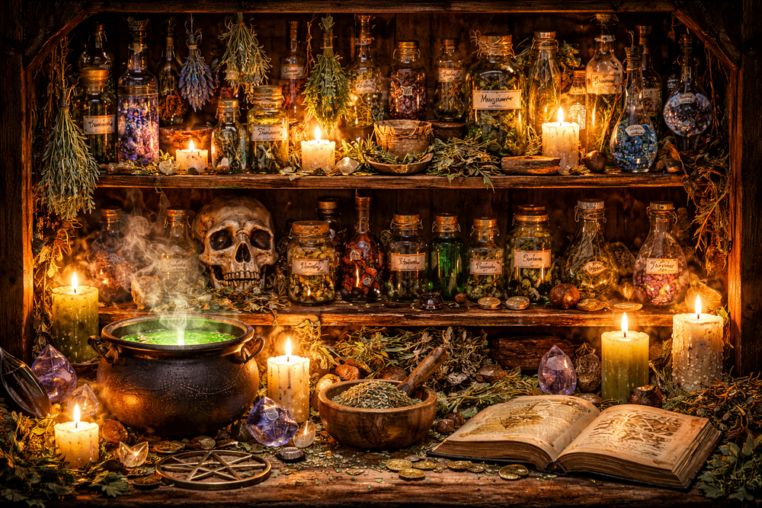
 There’s something deeply satisfying about opening a wooden drawer to reveal dried lavender, rose petals, or carefully labeled jars of moon water. A witch’s cupboard, often called an apothecary cabinet or herbal pantry, is more than just storage. It’s a curated collection of magical tools, a living pharmacy, and a sacred space that connects modern practitioners to centuries of herbal wisdom.
The Historical Roots ~ From Apothecaries to Witches
The witch’s cupboard as we know it today has its roots in a much older tradition – the apothecary cabinet. The practice of apothecary work can be traced back to at least 2600 BC in ancient Babylon, where clay tablets recorded medical symptoms, prescriptions, and compounding directions. Ancient Egypt’s Papyrus Ebers, written around 1500 BC, contains over 800 prescriptions listing more than 700 different drugs.
By the Middle Ages, apothecary shops existed in Baghdad during the Islamic Golden Age around 754 AD, and were active in Al-Andalus by the 11th century. In medieval Europe, apothecaries weren’t quite doctors in the modern sense. They were herbalists, chemists, and skilled practitioners who stored and dispensed remedies. Their best weapon was a sturdy cabinet, usually made of oak and fitted with dozens of small drawers, each housing different ingredients from powdered beetle shells to dried wolfsbane to mercury.
In 1353, royal statutes in Paris established that no one could practice as an apothecary without knowing how to read prescriptions, and required labeling bottles with the year and month the remedy was prepared. These early cabinets were crafted from solid timber like oak or walnut and housed everything from dried herbs and opium to ground minerals and mercury.
But apothecaries weren’t the only ones maintaining these herb stores. Wise women, hedge witches, and village healers kept their own collections. Often in more humble cupboards, root cellars, or hanging bundles. These women were the true keepers of folk medicine, passing down knowledge of plants, spells, and remedies through generations, often in secret to avoid persecution.
In Renaissance Italy, nuns became prominent sources for medicinal needs, using their knowledge first for religious purposes within convents, then expanding to create profit which they used for charitable goals. This created a fascinating overlap where sacred and medicinal knowledge merged. Much like modern witchcraft practices blend spirituality with herbalism.
The metaphorical names many witches still use today, “eye of newt” for mustard seed, “wool of bat” for holly leaves, weren’t just poetic flourishes. These cryptic names served as a form of code, protecting herbal wisdom from those who might misuse it or persecute its holders during times when accusations of witchcraft could lead to dire consequences.
Why Witches Keep Cupboards ~ The Modern Purpose
Today’s witch’s cupboard serves multiple interconnected purposes that go far beyond simple storage.
Practical Herbalism
At its most basic level, the witch’s cupboard is an herbal pharmacy. It houses the dried plants, roots, flowers, and resins you use for teas, tinctures, salves, and remedies. Having these ingredients organized and accessible means you can respond quickly when you or someone you love needs support. Whether that’s chamomile for sleeplessness, ginger for nausea, or elderberry for immune support.
Magical Working
Your cupboard holds your spell components. Herbs for money drawing, protection, love work, and banishing. Candles, oils, salts, and resins wait ready for ritual use. When inspiration strikes or urgent magical work is needed, you don’t have to run to the store, everything you need is at your fingertips.
Sovereignty and Self-Reliance
In times when essential supplies may run short due to pandemics and supply chain issues, having a stocked apothecary provides backup and increases your independence. There’s deep satisfaction in knowing you can care for yourself and your household with the plants you’ve gathered, grown, or purchased mindfully.
Connection to Cycles and Seasons
A well-maintained cupboard reflects the wheel of the year. You gather rose petals in June, harvest mugwort in August, collect pine resin in winter. This practice keeps you attuned to seasonal rhythms and the natural world’s offerings.
Sacred Space
For many witches, the cupboard itself becomes sacred, a focal point of the craft. Opening those drawers, inhaling the mingled scents of dried herbs, running your fingers over labeled jars, these small acts ground you in your practice and remind you of your connection to earth’s healing power.
Living Knowledge
Unlike a static bookshelf, your cupboard is alive. As you use it, you learn. You discover which herbs you reach for most often, which combinations work best, which plants call to you. This hands-on education is irreplaceable.
What Goes in a Witch’s Cupboard
The contents of every witch’s cupboard will be unique, reflecting their specific practice, location, and needs. However, most include some combination of these categories:
Culinary and Medicinal Herbs
Chamomile, lavender, peppermint, rosemary, thyme, basil, sage, calendula, rose petals, lemon balm, nettle, red raspberry leaf, ginger, turmeric, cinnamon, elderflower, elderberry
Magical Resins and Incenses
Frankincense, myrrh, copal, dragon’s blood resin, palo santo, white sage, mugwort, dried rose petals, dried lavender
Roots and Barks
Valerian root, dandelion root, burdock root, ginger root, licorice root, marshmallow root, willow bark, cinnamon bark
Salts and Minerals
Sea salt, black salt (for protection and banishing), Himalayan pink salt, Epsom salt
Oils
Essential oils for anointing and spellwork. Lavender, rosemary, peppermint, frankincense, myrrh, cinnamon, rose
Carrier oils: sweet almond, jojoba, olive oil, coconut oil
Candles
White (all-purpose), black (banishing, protection), red (passion, courage), green (money, abundance), pink (love, friendship), blue (healing, peace), purple (psychic work, power)
Jars and Containers
Empty glass jars for spell jars, moon water, herb blends
Small bottles for oils and tinctures
Tools
Mortar and pestle for grinding herbs
Measuring spoons
Small bowls for mixing
Strainers and cheesecloth
Labels and markers
Crystals and Stones
Whatever stones align with your practice, stored safely away from direct sunlight
Miscellaneous Magical Supplies
Twine and string for binding spells
Parchment or paper for petition magic
Matches or a lighter
Small sachets or fabric bags
Best Practices for Your Witch’s Cupboard
Storage Fundamentals
Store herbs in a cool, dry place out of direct sunlight inside airtight glass jars. Light, heat, moisture, and air are the enemies of dried herbs. UV light breaks down the active compounds that make herbs medicinally and magically potent. Glass is preferable to plastic for long-term storage, as herbs can potentially absorb chemicals from plastic over time.
Dark amber or cobalt blue glass jars offer extra protection from light. If you’re using clear glass jars, store them in a closed cupboard or cabinet rather than on open shelving. Mason jars work perfectly and are affordable and widely available.
Organization Systems
Choose an organization method that makes sense for your brain. Some options:
~ Alphabetical by common name
~ Grouped by use (medicinal, culinary, magical, toxic/handle with care)
~ Grouped by planetary correspondence (Moon herbs, Mars herbs, Venus herbs, etc.)
~ Grouped by magical intention (protection, love, prosperity, banishing)
~ Organized by how frequently you use them (most-used items at eye level and in front)
Label everything clearly. Include the herb’s common name, Latin name if you know it, date of harvest or purchase, and any relevant warnings (toxic, use with caution, etc.). You think you’ll remember what’s in each jar, but six months from now when you have twenty similar-looking dried plants, you’ll be grateful for labels.
Shelf Life and Freshness
Dried herbs don’t last forever. Generally:
~ Dried leaves and flowers: 1-2 years
~ Dried roots and barks: 2-3 years
~ Seeds: 2-3 years
~ Ground herbs and powders: 6 months to 1 year (they lose potency faster once ground)
Check your herbs regularly. They should still have color and scent. If an herb has lost all color, smells musty or like nothing at all, or shows signs of mold, it’s time to compost it and restock. Date your jars when you fill them so you can track age.
Safety First
Keep toxic or potentially harmful herbs clearly marked and stored separately, ideally on a higher shelf or in a locked cabinet if you have children or pets. This includes herbs like foxglove, belladonna, datura, henbane, and any others that are toxic if ingested.
Research everything before you use it. Just because something is “natural” doesn’t mean it’s safe. Know which herbs are contraindicated during pregnancy, which interact with medications, and which can cause skin irritation or allergic reactions.
Sourcing Your Supplies
Wildcrafting: Gathering herbs from nature is deeply satisfying and free, but do it responsibly. Only harvest from areas you’re certain haven’t been sprayed with pesticides. Never take more than one-third of any plant population. Positively identify plants before harvesting as many plants have toxic look-alikes. Learn proper harvesting times and techniques for each species.
Growing Your Own: Even a small garden, patio pots, or a sunny windowsill can produce useful herbs. Start with easy-to-grow options like basil, mint, rosemary, lavender, and calendula.
Purchasing: Buy from reputable herb suppliers, health food stores, or online retailers. Look for organic when possible. Support small herbalists and local herb farms when you can.
Ethical Considerations: Some plants like white sage and palo santo are overharvested due to increased demand. Consider alternatives (garden sage, rosemary, cedar, mugwort) or purchase only from suppliers who source ethically and sustainably.
Maintenance Rituals
Make cupboard maintenance part of your practice rather than a chore. Set aside time quarterly, perhaps at each solstice and equinox, to:
~ Check herbs for freshness and discard anything past its prime
~ Reorganize and clean jars and shelves
~ Take inventory of what you’re running low on
~ Cleanse the space energetically with smoke, sound, or intention
~ Thank your herbs and tools for their service
This regular tending keeps your cupboard functional and honors the relationship between you and your plant allies.
The Cupboard as Altar
Many witches treat their cupboards as altars. Sacred spaces deserving of beauty and intention.
Consider:
~ Adding small crystals or talismans to shelves
~ Placing a candle nearby that you light when working with herbs
~ Hanging dried herb bundles or garlands as decoration
~ Including small representations of deities, ancestors, or spirits you work with
~ Keeping a small journal or grimoire next to your cupboard to record what you create, what works, and what you learn
Different Styles of Witch’s Cupboards
The Minimalist Approach
You don’t need dozens of herbs to have an effective practice. Some witches keep just ten to fifteen versatile herbs they use constantly, stored simply in a small cabinet or shelf. Quality over quantity.
The Maximalist Collection
Other witches enjoy having extensive collections, fifty, seventy, even a hundred different herbs, all meticulously organized and labeled. If this brings you joy and you actually use your collection, embrace it.
The Kitchen Witch Integration
Some practitioners integrate their magical and culinary herbs completely, storing everything in the kitchen where it’s readily accessible for cooking and spellwork alike. Apothecary cabinets are especially useful in kitchens for storing tea bags, herbs and spices, aromatics like ginger and garlic, and small kitchen tools.
The Formal Apothecary
If you have space and budget, a dedicated piece of furniture, an antique apothecary cabinet, a repurposed dresser, or a custom-built cupboard, can become the centerpiece of your practice space.
The Mobile Kit
For witches who travel frequently or live in small spaces, a portable version works beautifully. A small wooden box or basket containing essential herbs, a few small jars, and basic tools that go wherever you do.
Building Your Cupboard Over Time
Don’t feel pressure to acquire everything at once. A witch’s cupboard should grow organically as you grow in your practice. Start with five to ten herbs you know you’ll use. Perhaps lavender for peace, rosemary for protection, chamomile for calm, mint for prosperity, and rose for love.
As you work with these, you’ll discover what calls to you next. Maybe you’ll feel drawn to lunar herbs like mugwort and jasmine. Perhaps you’ll want to expand your protection herbs to include rue and angelica. Let your interests and needs guide your acquisitions.
Pay attention to which herbs you actually reach for versus which sit unused. It’s better to have a small collection of herbs you know intimately than a large collection gathering dust.
The Relationship Between Witch and Cupboard
Your cupboard will teach you if you let it. As you work with plants over time, you’ll develop relationships with them. You’ll learn that chamomile feels gentle and nurturing, that rosemary has a sharp, protective energy, that rose opens the heart even as you simply hold the dried petals.
You’ll discover which herbs work reliably for you and which don’t live up to their reputations in your hands. You’ll start creating your own blends and formulas based on intuition and experience rather than only following recipes from books.
This is the real magic of the witch’s cupboard. Not just having the supplies on hand, but the deepening knowledge and connection that comes from regular, intentional work with plants.
The witch’s cupboard stands at the intersection of practical herbalism and magical practice, connecting us to ancient traditions while serving thoroughly modern needs.
Whether yours is a modest shelf of mason jars or an elaborate antique cabinet with dozens of drawers, whether you stock it with locally wildcrafted herbs or order supplies online, what matters is that it reflects your practice and serves your needs.
An apothecary provides comfort, healing, and increased independence. A steady hand to look to with chamomile tea for sleepless nights, calendula for inflammation, and mint for energy.
Start where you are. Begin with what you have. Build slowly and mindfully. Let your cupboard grow as you grow, and tend it with the same care and attention you bring to your magical practice.
The plants are waiting to work with you. All you have to do is give them a home.