 Written by
 In the shadowy realm where folklore meets practical magic, few tools are as steeped in history and mystery as the hag torch. These ancient flame-bearers have illuminated sacred ceremonies, funeral processions, and witches’ gatherings for thousands of years. Far more than simple light sources, hag torches represent a direct connection to our ancestral past and the enduring power of plant-based magic.
What is a Hag Torch?
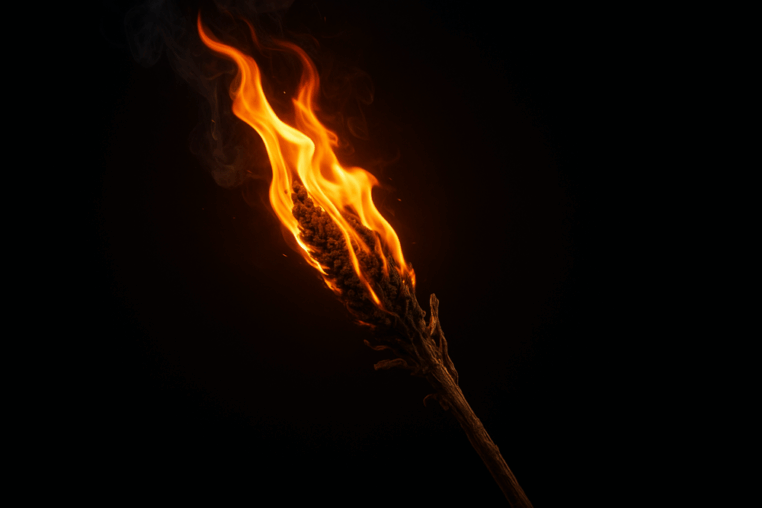
A hag torch is made from dried mullein stalks that are traditionally dipped in tallow or other fats, a practice dating back to Roman times. These torches served not only as a light source but were also believed to ward off evil spirits and provide protection during ceremonies and spiritual practices. Known by various names, including Mullein Torch, Hag’s Taper, Witch’s Candle, and other regional variations, these natural torches bridge the gap between the practical and the magical.
The term “hag” in this context doesn’t carry the negative connotations often associated with the word. Instead, it references the wise woman archetype – the crone who holds ancient knowledge and serves as a bridge between worlds. Over time, the name evolved to “Hag Taper,” reflecting its use by witches in their spells and rituals.
The Plant Behind the Magic: Mullein
The foundation of every hag torch is the mullein plant (Verbascum thapsus), a remarkable herb that grows wild across much of North America and Europe. The plant likes to grow in disturbed ground so they will often be found near roadways and train tracks. Mullein is easily recognizable by its tall flower spikes that can reach 6-8 feet in height, with fuzzy, silvery-green leaves that spiral around the stem.
What makes mullein perfect for torch-making is its fibrous stalk structure. When dried, the pith inside becomes incredibly absorbent, making it ideal for holding wax or tallow. The outer fibers burn slowly and steadily, creating a torch that provides sustained light without the safety concerns of loose materials.
Historical and Cultural Significance
These mullein torches span back to at least ancient Roman times, when the ancient Romans would dip Mullein stalks in tallow (rendered beef or mutton fat) and burn them. The dried flower stalks were dipped in tallow, and the torches carried during funeral processions. This association with death rites and liminal spaces established mullein torches as tools for navigating between worlds. A quality that made them invaluable to practitioners of the magical arts.
From ancient to medieval times, the end of the “Mullein” (Verbascum Thapsus) plant stalks were used to light gatherings, funerals and ceremonies. For those working in the dark including mining prospectors, it provided light in caverns and tunnels. Witches and healers used Mullein as medicine and as a spiritual tool for connecting with otherworldly realms.
The practical applications were equally important. Before readily available candles and electric lighting, hag torches provided a portable, weather-resistant light source that could burn for extended periods. Miners, night workers, and those conducting outdoor ceremonies relied on their steady flame.
Magical Properties and Uses
In witchcraft and folk magic traditions, hag torches carry multiple layers of significance:
Protection and Banishing: The bright flame is believed to ward off negative entities and cleanse spaces of unwanted energies. The smoke from burning mullein has purification properties that help clear stagnant or harmful influences.
Ancestral Connection: They are often used as ritual tools for protection, purification of sacred spaces, connecting with ancestral spirits and during celebrations such as Samhain and the Solstice. The historical connection to funeral rites makes them powerful tools for honoring the deceased and communicating with ancestral spirits.
Seasonal Magic: Since they are made from dried mullein stalks in the autumn, they are perfectly suited to be used to celebrate the harvest at the autumn equinox (Mabon), and the thinning of the veil during Samhain or Halloween. They have long been associated with Samhain and this time of year for the simple fact that this is when the Mullein stalks are ready for harvesting.
Liminal Work: As tools used to navigate between worlds, hag torches are excellent for hedge-riding, spirit work, and any magic that involves crossing thresholds or working with the unseen.
Illumination Magic: Beyond physical light, these torches symbolize the illumination of hidden knowledge and inner wisdom. They’re perfect for spells involving clarity, revelation, and uncovering truth.
How to Make Hag Torches
Creating your own hag torches connects you directly to this ancient tradition. Here’s the traditional method:
Materials Needed
~ Dried mullein stalks (harvested in late autumn after the plant has gone to seed)
~ Beeswax or tallow (traditional animal fat)
~ Double boiler or melting pot
~ Protective gloves
~ Newspaper or drop cloth
Step-by-Step Process
1. Harvest the Stalks
Collect mullein stalks in late autumn after the first frost. Look for stalks that are fully dried but still intact. To make Hag’s Tapers you must seek out old Mullein stalks. Cut them at the base, leaving 12-18 inches of stalk below the seed head.
2. Prepare the Stalks
Remove any remaining seeds and loose material from the flower head area. The fuzzy top portion should be preserved as this is what will hold the wax. Some practitioners leave a few inches of stalk below the seed head for a handle.
3. Melt the Wax
Heat your beeswax or tallow in a double boiler until fully liquid. Beeswax creates cleaner-burning torches, while tallow is more traditional but produces more smoke.
4. Dip or Pour Method
Hag’s torches were originally made by dipping the tops in several layers, but I’ve learned that that takes a really long time. Even cooling quickly in the fridge between dips, I had to do it eight times to get a nice, thick layer. I’ve found that the faster way is to pour the wax onto it.
Traditional Dipping: Dip the mullein head into the melted wax, allow to cool, and repeat 6-10 times until you have a substantial coating.
Pouring Method: Hold the stalk over a protected surface and slowly pour the melted wax over the mullein head, allowing it to penetrate the fibers.
5. Final Preparation
Allow the torches to cool completely. Trim any excess wax drips, and your hag torches are ready for use.
Using Hag Torches in Practice
Safety Considerations
~ Always use hag torches outdoors or in well-ventilated spaces
~ Keep water or sand nearby for extinguishing
~ Never leave burning torches unattended
~ Be mindful of wind conditions and flammable materials
Ritual Applications
Samhain Ceremonies: Light hag torches at sunset to honor ancestors and guide spirits. The flame serves as a beacon for benevolent spirits while keeping harmful entities at bay.
Protection Rituals: Walk the perimeter of your property with a lit hag torch to create protective boundaries. The light and smoke cleanse the space while establishing energetic barriers.
Divination Work: Use the flickering flame for scrying or as a focus point for meditation. The natural, irregular flame pattern can reveal insights and messages.
Seasonal Celebrations: Incorporate hag torches into autumn equinox celebrations, winter solstice ceremonies, or any ritual honoring the darker half of the year.
Ancestral Honoring: Light hag torches during ancestor veneration practices. Place them on ancestor altars or carry them during cemetery visits.
Modern Adaptations and Considerations
While traditional hag torches used animal tallow, modern practitioners often prefer beeswax for its cleaner burn and more pleasant aroma. Some also incorporate essential oils or herbs into the wax for additional magical properties:
~ Rosemary for remembrance and protection
~ Sage for cleansing and wisdom
~ Cedar for purification and blessing
~ Mugwort for psychic enhancement and dream work
For those unable to harvest mullein or make their own torches, many spiritual suppliers offer ready-made versions. However, the act of creating your own connects you more deeply to the tradition and allows you to infuse your personal energy into the tool.
Storage and Care
Properly made hag torches can last for years when stored correctly.
~ Keep in a cool, dry place away from direct sunlight
~ Wrap individually in paper or cloth to prevent wax transfer
~ Check periodically for signs of insect damage or deterioration
~ Store upright to maintain the shape of the wax coating
The Deeper Magic
Beyond their practical applications, hag torches represent something profound about our relationship with the natural world and our ancestral practices. In an age of electric lights and synthetic materials, the simple act of lighting a plant-based torch connects us to thousands of years of human spiritual practice.
These torches embody the witch’s path. Taking humble, overlooked plants and transforming them into tools of power and illumination. They remind us that magic often lies not in exotic ingredients or complicated rituals, but in recognizing the sacred within the ordinary.
The flame of a hag torch carries the memory of ancient ceremonies, the wisdom of plant spirits, and the intention of every hand that crafted it. When you light one, you’re not just creating illumination – you’re participating in an unbroken chain of magical practice that stretches back through the mists of time.
Whether used for protection, divination, ancestral work, or simple communion with the old ways, hag torches offer modern practitioners a tangible link to our magical heritage. In their flickering light, we glimpse not only the world around us but the enduring power of traditions that refuse to be extinguished by the march of time.
The hag torch stands as a testament to the ingenuity and spiritual insight of our ancestors. These simple yet powerful tools demonstrate that effective magic doesn’t require elaborate tools or expensive materials – sometimes the most potent practices emerge from our relationship with the land and the wisdom it holds.
As you work with hag torches in your own practice, remember that you’re carrying forward an ancient tradition. Each flame lit is a bridge between past and present, a connection to the wise women and cunning folk who came before us, and a beacon lighting the way for those who will follow.
In the end, the true magic of the hag torch lies not just in its flame, but in its ability to connect us to something larger than ourselves. The eternal cycle of growth, death, and renewal that governs both the natural world and our spiritual evolution.