 Written by
 The Ten Commandments stand as one of humanity’s most enduring moral frameworks, transcending their biblical origins to influence spiritual traditions, magical practices, and ethical systems across cultures and millennia. While traditionally viewed through Judeo-Christian lenses, these ancient principles contain layers of esoteric wisdom that have captivated mystics, witches, and spiritual seekers far beyond conventional religious boundaries.
Ancient Origins: More Than Meets the Eye
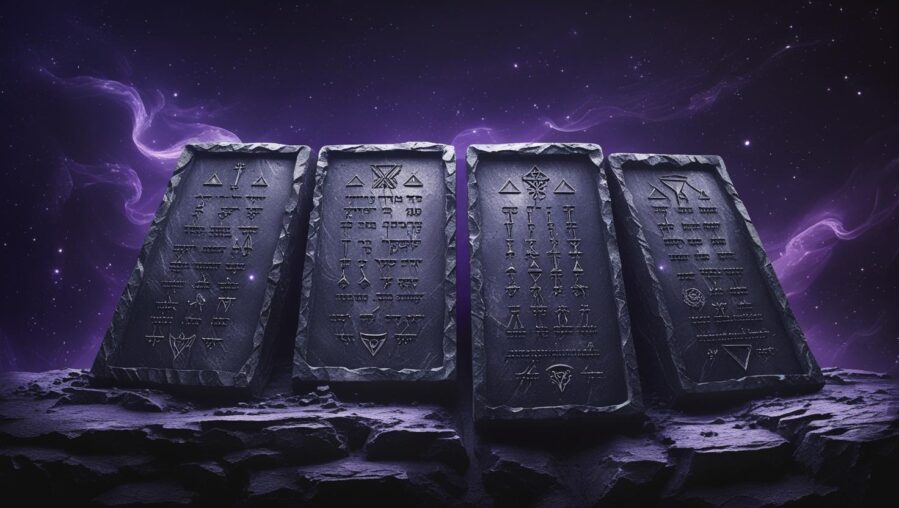
According to biblical tradition, the Ten Commandments were first received by Moses on Mount Sinai, carved into stone tablets by divine hand. However, archaeological and historical evidence suggests a more complex origin story that reveals fascinating connections to ancient Near Eastern legal and spiritual traditions.
The commandments appear in two slightly different versions within biblical texts, Exodus 20:1-17 and Deuteronomy 5:4-21, suggesting an evolution in their understanding and application. More intriguingly, similar moral and legal principles appear in earlier Mesopotamian codes, such as the Code of Hammurabi (c. 1750 BCE) and various Egyptian moral teachings, indicating that these ethical principles may have emerged from a broader ancient wisdom tradition.
Archaeological discoveries at sites like Khirbet Qeiyafa have revealed Hebrew inscriptions containing moral injunctions that predate traditional biblical chronology, suggesting these principles were part of a living oral tradition long before they were codified in scripture. The famous silver amulets found at Ketef Hinnom, dating to the 7th century BCE, contain biblical verses that demonstrate how these teachings were used as protective talismans. A practice that bridges conventional religion and magical application.
The physical creation of the tablets themselves carries profound symbolic significance. Stone, in ancient traditions, represented permanence, connection to earth energy, and the ability to hold and transmit spiritual power across time. The act of divine inscription suggests these weren’t merely legal codes but energetic transmissions, living principles that could influence both individual consciousness and collective reality.
Esoteric Interpretations: Hidden Layers of Meaning
Beyond their surface moral teachings, the Ten Commandments contain multiple layers of esoteric wisdom that have fascinated mystics and occultists for centuries. Each commandment can be understood as both practical guidance and spiritual technology for consciousness transformation.
The First Commandment (“You shall have no other gods before Me”) speaks to the principle of focused intention and unified consciousness. In magical practice, this translates to the importance of clear will and undivided attention when working with spiritual forces. Scattered energy yields scattered results, while concentrated divine focus creates manifestation power.
The Second Commandment (against idolatry) warns against mistaking symbols for reality – a crucial principle in witchcraft and magical practice. While images and representations can be powerful tools for focusing intention, the practitioner must never lose sight of the living forces behind the forms. This commandment teaches discernment between authentic spiritual connection and mere psychological projection.
The Third Commandment (not taking the divine name in vain) reveals ancient understanding of the creative power of speech and names. In magical traditions, names carry vibrational essence. To speak divine names carelessly is to waste sacred energy and potentially invite unwanted consequences. This principle appears in virtually every magical tradition as the importance of respectful invocation and proper magical speech.
The Fourth Commandment (observing the Sabbath) encodes profound wisdom about natural rhythms, energy cycles, and the necessity of regularly stepping outside ordinary consciousness. Many witches and pagans recognize this as guidance for honoring lunar cycles, seasonal transitions, and the importance of creating sacred time for spiritual renewal and magical working.
The remaining commandments, honoring parents, prohibitions against murder, adultery, theft, false witness, and coveting, can be understood as energetic principles governing how personal power moves through relationships and community. Each violation creates energetic disturbance that affects not only individuals but the collective field in which magical and spiritual work occurs.
Numerological and Symbolic Significance
The number ten itself carries profound esoteric significance across spiritual traditions. In Pythagorean numerology, ten represents completion and return to unity (1+0=1). The Kabbalistic Tree of Life contains ten sephiroth, representing the complete structure of divine emanation. In many magical traditions, ten symbolizes the perfected human being. One who has integrated all aspects of existence.
The two tablets traditionally represent the dual nature of spiritual law: divine-human relationship (first tablet) and human-human relationship (second tablet). This duality appears throughout esoteric traditions as the principle of “as above, so below”, the hermetic understanding that spiritual principles must be embodied in practical reality to achieve their full power.
Ancient gematria (Hebrew numerology) reveals additional layers of meaning. The Hebrew phrase for “Ten Commandments” (Aseret HaDibrot) equals 1,485 in numerical value, which reduces to 18 (1+4+8+5=18), and 18 reduces to 9. A number associated with spiritual completion and wisdom in numerous traditions.
Connection to Ancient Mystery Schools
The commandments show remarkable parallels to initiation principles from various ancient mystery schools. Egyptian mystery traditions emphasized similar ethical requirements for spiritual advancement: respect for divine authority, truthfulness, sexual purity, honesty in dealings, and control of desires. These weren’t merely moral suggestions but practical requirements for developing the consciousness necessary for magical and mystical work.
Greek mystery cults, particularly those of Demeter and Dionysus, required initiates to demonstrate ethical purity before receiving sacred teachings. The famous Delphic maxims, “Know thyself,” “Nothing in excess,” “Certainty brings insanity”, echo themes found within the commandments while revealing their function as consciousness-development tools rather than mere behavioral restrictions.
The Eleusinian Mysteries required participants to undergo purification rituals that addressed many of the same ethical areas covered by the commandments. This suggests these principles may represent universal requirements for advanced spiritual development rather than culture-specific religious rules.
Modern Magical and Witchcraft Applications
Contemporary witches and magical practitioners have found numerous ways to work with the energy and wisdom of the Ten Commandments while adapting them to non-biblical spiritual frameworks. Many recognize these principles as fundamental energetic laws that govern how consciousness interacts with reality.
Altar and Ritual Work
Some practitioners create altar arrangements incorporating ten elements representing each commandment’s spiritual principle. Crystals, herbs, colors, and symbols can represent different aspects of the teachings. Creating visual and energetic reminders of these consciousness-structuring principles.
Meditation and Contemplation
Each commandment can serve as a focus for meditation practice, exploring how its principle manifests in personal life and magical work. This doesn’t require biblical belief, but simply recognition that these principles describe effective ways of organizing consciousness for spiritual development.
Ethical Magic
Many practitioners use the commandments as guidelines for ethical magical practice. The principle behind “thou shalt not steal,” for instance, translates into magical ethics about consent, energy exchange, and respecting others’ free will in spellwork.
Protection Work
Following ancient traditions of using biblical verses as protective amulets, some modern practitioners incorporate commandment energy into protection spells and wards. The historical power these principles have accumulated through centuries of reverence creates significant protective potential.
Shadow Work
The prohibitive nature of many commandments makes them excellent tools for shadow work. Exploring what we’re drawn to transgress and what these impulses reveal about unconscious desires and unhealed aspects of self.
Cross-Cultural Spiritual Principles
The ethical principles embodied in the Ten Commandments appear across diverse spiritual traditions, suggesting they may represent universal human discoveries about consciousness and spiritual development rather than culture-specific revelations.
Buddhist Precepts
The Five Precepts of Buddhism, avoiding harm to living beings, not taking what isn’t given, avoiding sexual misconduct, speaking truthfully, and avoiding intoxicants, closely parallel several commandments while focusing on their function as spiritual training rather than divine commands.
Hindu Dharma
The concept of dharma includes principles remarkably similar to the commandments: devotion to ultimate reality, truthfulness, sexual ethics, non-violence, and contentment. These are understood as natural laws governing spiritual evolution rather than external impositions.
Indigenous Wisdom
Many indigenous traditions include similar ethical principles as requirements for spiritual power and community harmony. The Lakota concept of living in right relationship, the African Ubuntu philosophy, and numerous other indigenous ethical systems demonstrate these principles’ universal relevance.
Hermetic Philosophy
The Hermetic tradition’s emphasis on divine will, truthfulness, sexual polarity, and mental discipline reflects commandment principles while viewing them as practical requirements for magical effectiveness rather than moral obligations.
Integration in Modern Spiritual Practice
Contemporary spiritual seekers, regardless of their specific path, can benefit from understanding the Ten Commandments as time-tested principles for consciousness development and spiritual empowerment. This doesn’t require adopting biblical theology, but simply recognizing that these principles describe effective ways of organizing personal energy for spiritual work.
Daily Practice
Incorporating reflection on these principles into daily spiritual routine can help maintain clarity about values and intentions. This might involve journaling about how each principle applies to current life circumstances or using them as prompts for self-examination.
Magical Ethics
Using these principles as foundations for magical ethics helps ensure that spiritual practices remain aligned with wisdom rather than ego-driven desires for power or control.
Community Building
These principles offer guidance for creating spiritual communities based on mutual respect, honesty, and shared commitment to growth rather than hierarchy or dogma.
Personal Transformation
Approaching the commandments as tools for personal transformation rather than external restrictions allows practitioners to discover their practical wisdom while maintaining spiritual autonomy.
The Living Legacy
The enduring power of the Ten Commandments lies not in their authority as religious doctrine but in their effectiveness as spiritual technology. Practical principles that support consciousness development and ethical magical practice. Their appearance across cultures and their adoption by diverse spiritual traditions testifies to their universal relevance.
Modern practitioners who approach these principles with respect while maintaining spiritual independence often discover their profound practical wisdom. They represent not restrictions on freedom but guidelines for using freedom wisely. Creating the stable foundation necessary for advanced spiritual work and authentic magical practice.
Whether carved in ancient stone or written in the heart of contemporary seekers, these ten principles continue offering guidance for those who would walk the path of conscious spiritual development. Their wisdom transcends religious boundaries while honoring the accumulated power of centuries of human reverence and practical application.
In recognizing the Ten Commandments as universal spiritual principles rather than sectarian religious rules, modern practitioners can access their transformative power while maintaining the spiritual autonomy essential for authentic magical and mystical work. This integration of ancient wisdom with contemporary understanding creates possibilities for spiritual development that honor both tradition and innovation.