 Written by
 As October wanes and the veil between worlds grows thin, we approach one of the most spiritually significant times of the year: Samhain. Pronounced “SOW-in” or “SAH-win,” this ancient Celtic festival marks the transition from the lighter half of the year into the darkness of winter, a time when our ancestors believed the boundary between the physical and spiritual realms became permeable.
What is Samhain?
Samhain is an ancient Gaelic festival that traditionally falls on October 31st through November 1st, marking the end of the harvest season and the beginning of winter in the Celtic calendar. For the ancient Celts, this was more than just a seasonal marker. It was considered the most important of the four fire festivals, a time when the ordinary laws of time and space were temporarily suspended.
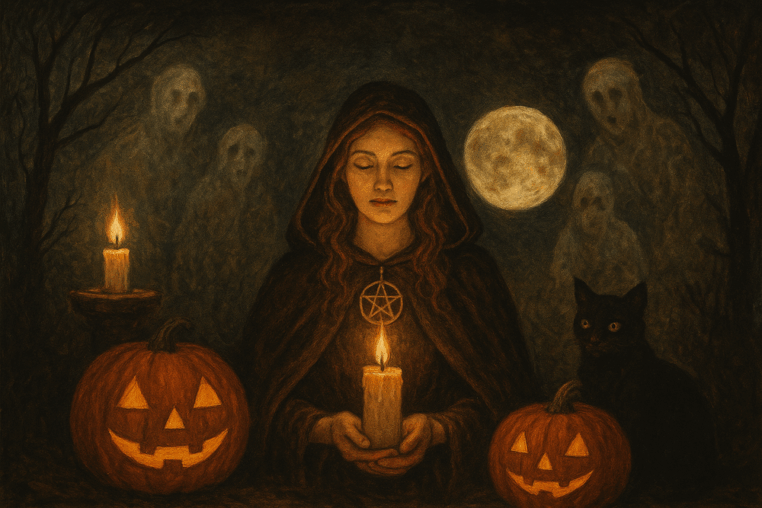
The Celts believed that on Samhain night, the souls of the dead would return to visit their homes, and other spirits could cross over into our world. Rather than fearing this thinning of the veil, they embraced it as an opportunity to honor those who had passed and to seek wisdom from the otherworld.
The History and Significance
Historically, Samhain represented the “third harvest” – the final gathering before winter’s arrival. Livestock were brought down from summer pastures, and animals that couldn’t be sustained through the cold months were slaughtered. It was a time of both plenty and preparation, of gratitude and solemnity.
Communities would extinguish their hearth fires and gather around massive sacred bonfires lit by Druids, where they would offer sacrifices of crops and animals. From these communal flames, people would relight their home fires, carrying the protective blessing back to their households.
How to Honor Your Ancestors This Samhain
Create a Sacred Ancestor Altar
Set aside a special space in your home to honor those who came before you. This can be simple or elaborate, depending on your preference:
~ Place photographs of deceased loved ones, ancestors, or spiritual guides
~ Add items that belonged to them or represent their memory
~ Include offerings such as their favorite foods, drinks, or flowers
~ Light candles to illuminate their way and show they’re remembered
~ Add seasonal elements like autumn leaves, acorns, or pumpkins
Prepare a Dumb Supper
A “dumb supper” is a traditional Samhain meal eaten in silence to honor the dead. Set an extra place at your table for ancestors or departed loved ones. Serve their favorite dishes and eat mindfully, reflecting on their lives and legacies. Some traditions involve serving the spirit plate first and leaving it out overnight.
Practice Divination
Samhain has long been associated with divination and seeking guidance. The thinning veil makes this an ideal time for:
~ Tarot or oracle card readings
~ Scrying with mirrors, water, or crystal balls
~ Meditation and ancestral communication
~ Journaling about messages or dreams received
Light Candles and Speak Their Names
One of the most powerful and simple ways to honor ancestors is to light a candle and speak their names aloud. Share stories about them, remember their wisdom, and acknowledge the gifts they’ve passed down through generations. This keeps their memory alive and strengthens the ancestral bond.
Engage in Reflection and Release
Samhain marks an ending and invites us to release what no longer serves us. Write down habits, relationships, or patterns you wish to let go of, and safely burn the paper in a cauldron or fireplace, releasing them into the transformative flames.
Modern Samhain Practices
While Samhain has evolved and blended with Halloween traditions, many modern practitioners honor it as a sacred sabbat:
~ Nature Walks: Gather fallen leaves, acorns, and other autumn treasures while reflecting on life’s cycles
~ Bonfire Gatherings: If possible, gather with loved ones around a fire to share stories and honor the dead
~ Cemetery Visits: Clean and decorate the graves of loved ones
~ Gratitude Rituals: Thank your ancestors for their sacrifices and the life you’ve inherited
~ Community Feasts: Share food with others, keeping the tradition of harvest celebration alive
The Spirit of Samhain
At its heart, Samhain reminds us that death is not an end but a transformation, part of the eternal cycle of existence. It teaches us to honor our roots, remember those who shaped us, and recognize that we are part of an unbroken chain stretching back through time.
As you celebrate Samhain this year, whether through quiet reflection or elaborate ritual, take time to pause and feel the presence of those who walked before you. Their wisdom, strength, and love flow through your veins. In honoring them, you honor yourself and the sacred continuity of life.
May your Samhain be blessed with meaningful connections, both to those who have passed beyond the veil and to the deeper wisdom within yourself.
Blessed Samhain