
Symbols Carry Power ~ The Language of Magic and Meaning

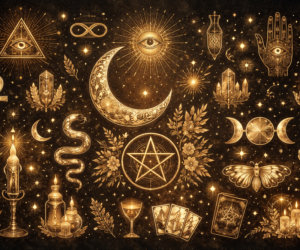
Draw a circle. Just a simple circle. Now look at it. In that curved line returning to its starting point, you’ve created something that means simultaneously wholeness, eternity, cycles, protection, the sun, the moon, the wheel of the year, unity, completion, and infinite possibility. You’ve drawn a single line, yet encoded layers upon layers of meaning. This is the power of symbols. They compress vast concepts into simple forms, they speak to consciousness below language, and they carry energy independent of the person who created them. Symbols are magic’s alphabet. They’re the shorthand of the universe, the concentrated essence of ideas made visible. A word requires you to know the language; a symbol speaks directly to something deeper. The cross means something to billions of people regardless of what language they speak. The pentacle carries power whether drawn in New York, Tokyo, or Cairo. An eye symbol has protected against evil for thousands of years across dozens of cultures that never met each other. This is because symbols don’t just represent power – they contain it, transmit it, and activate it. When you understand that symbols carry power, you unlock the ability to speak in the universe’s native language. You can encode intentions into visual form, activate ancient energies that have been building for millennia, and create concentrated magical tools that work simply by existing. No ritual required, no incantation necessary. The symbol itself does the work. What Makes Symbols Powerful Symbols derive power from multiple sources simultaneously, creating a resonance that makes them extraordinarily effective magical tools. Archetypal Resonance Certain symbols tap into archetypes, universal patterns that exist in the collective unconscious of humanity. The circle, the cross, the spiral, the tree, these appear across cultures that never contacted each other because they emerge from deep structures in human consciousness itself. When you use archetypal symbols, you’re not inventing meaning; you’re accessing meaning that already exists in the psyche of every human. This gives the symbol tremendous power. It speaks to something ancient and universal within everyone who sees it. Accumulated Energy Symbols gain power through repeated use across time. Every time someone uses a pentacle for protection, they add energy to the pentacle as protective symbol. Every time someone draws a heart to represent love, the connection between that shape and that emotion strengthens. Over centuries and millennia, certain symbols accumulate enormous reservoirs of energy. Using these symbols is like plugging into a battery that’s been charging for thousands of years. Concentrated Meaning Symbols compress complex concepts into simple forms. This compression creates density, like coal compressed into diamond, ideas compressed into symbols become harder, more durable, more powerful. A protection spell might require paragraphs to express verbally, but a single protective symbol contains all that meaning in an instant. This concentration makes symbols efficient and potent. Bypassing Rational Mind Symbols communicate with parts of consciousness that language cannot reach. The rational, verbal mind processes words. Symbols speak to the intuitive, visual, dreaming mind, the part of you that understands meaning without explanation, that recognizes patterns instantly, that knows before thinking. This direct access to deeper consciousness makes symbols powerful for magic, which often works best when the conscious mind isn’t interfering. Geometric and Mathematical Harmony Many powerful symbols are based on sacred geometry, mathematical relationships that exist in nature and cosmos. The golden ratio, the Fibonacci spiral, the flower of life, these aren’t arbitrary designs. They’re visual representations of universal principles. Using geometrically sound symbols aligns your magic with fundamental patterns of reality itself. Intentional Creation When you create or draw a symbol with clear intention, you… …
Membership Required

You must be a member to access this content.

View Membership Levels

Already a member? Log in here

The Magic of Color ~ A Guide to Color Symbolism in Mystical Practice

Color has been woven into magical traditions across cultures for thousands of years. Each hue carries its own energetic signature, associations, and symbolic meanings that practitioners draw upon in spells, rituals, and meditation. Whether you’re selecting candles for a ritual, choosing crystals for healing work, or simply surrounding yourself with intentional energy, understanding color symbolism can deepen your practice. White ~ Purity and Divine Connection White represents purity, clarity, and spiritual enlightenment. In magical practice, white serves as a universal color that can substitute for any other when specific colors aren’t available. It’s associated with new beginnings, cleansing, and connection to higher consciousness. How to Use: Burn white candles during full moon rituals or when cleansing a space with sage or incense. Wear white clothing for purification ceremonies. Use white crystals like clear quartz or selenite on your altar. Write intentions on white paper when seeking clarity or new beginnings. Light Blue ~ Tranquility and Communication Light blue embodies peace, serenity, and calm waters. This gentle shade is connected to healing, particularly emotional healing, and promotes tranquility in chaotic times. Light blue also governs communication and truth-speaking, making it ideal for throat chakra work or when you need clarity in expression. How to Use: Light blue candles during meditation or before difficult conversations to promote peaceful dialogue. Place blue lace agate or aquamarine on your throat while speaking affirmations of truth. Visualize light blue light surrounding you when you need emotional calm. Use light blue cloth to wrap healing tools or create a calming altar space. Drink water from a light blue glass while setting intentions for peaceful communication. Dark Blue ~ Wisdom and Intuition Deeper shades of blue align with wisdom, intuition, and psychic abilities. This is the color of the third eye, associated with inner vision and spiritual insight. Dark blue supports deep meditation, dreamwork, and the development of psychic gifts. It’s also connected to loyalty, trust, and the mysteries of the subconscious mind. How to Use: Burn dark blue or indigo candles during divination sessions with tarot or scrying. Place lapis lazuli or sodalite on your third eye during meditation. Keep a dream journal with a dark blue cover and review it by dark blue candlelight. Wear dark blue during psychic development work or when you need to access deep wisdom. Green ~ Growth and Prosperity Green pulses with the energy of nature, growth, and renewal. This is the color of abundance, fertility, and physical healing. In magical work, green attracts prosperity, supports plant magic, and encourages new ventures to flourish. It’s also deeply connected to the heart chakra, promoting balance, compassion, and harmony with the natural world. How to Use: Burn green candles anointed with prosperity oil during money spells. Plant seeds in green pots while visualizing your goals taking root. Carry green aventurine or jade in your wallet to attract abundance. Create a prosperity altar with green cloth, fresh herbs, and coins. Work with green during spring rituals or when starting new projects. Use green in healing sachets with herbs like mint and basil. Orange ~ Creativity and Enthusiasm Orange combines red’s energy with yellow’s joy, creating a vibrant color of creativity, enthusiasm, and personal power. This warm hue stimulates the sacral chakra, enhancing creative expression, sensuality, and emotional balance. How to Use: Burn orange candles in your creative workspace to overcome blocks. Place carnelian on your lower abdomen during sacral chakra meditation. Drink orange juice or tea mindfully while setting creative intentions. Use orange paper for brainstorming sessions or vision boards. Wear orange when you need a confidence boost before presentations or performances. Surround… …

Membership Required

You must be a member to access this content.

View Membership Levels

Already a member? Log in here

Building Your First Apothecary ~ A Beginner’s Essential Guide

Starting your herbal apothecary journey can feel overwhelming. Walk into any herb shop or browse online suppliers and you’ll find hundreds of plants, oils, tools, and supplies. All promising to be essential. The truth is, you need far less than you think to begin making effective remedies, tinctures, salves, and magical preparations. This guide breaks down exactly what you need as a beginner, why you need it, and how to use it. Think of this as your apothecary starter pack – the foundation you’ll build on as your knowledge and practice grow. Essential Tools ~ Your Apothecary Toolkit Mason Jars and Glass Containers What you need: A variety of sizes from 2 oz to quart-sized jars Mason jars are the backbone of any apothecary. You’ll use them for storing dried herbs, making tinctures, infusing oils, creating herbal vinegars, mixing salves, and storing finished products. Glass is non-reactive, doesn’t leach chemicals, and allows you to see your preparations at a glance. Start with at least six 4-oz jars for storing dried herbs, four 8-oz jars for tinctures and infusions, and two or three pint or quart jars for larger batches. Having lids that seal properly is crucial. A standard two-piece canning lids work perfectly for most applications. For long-term herb storage, consider investing in a few amber or cobalt blue glass jars to protect light-sensitive herbs from UV degradation. However, regular clear jars stored in a dark cupboard work just fine and are much more budget-friendly when you’re starting out. Mortar and Pestle What you need: One medium-sized mortar and pestle (4-6 inch diameter) This ancient tool grinds, crushes, and powders dried herbs, releasing their essential oils and increasing surface area for better extraction. You’ll use it constantly, breaking down resinous herbs like frankincense, grinding seeds and roots, creating custom spice and herb blends, and pulverizing ingredients for incense. Materials matter. Granite, marble, and stone mortars are heavy, stable, and excellent for tough materials like roots and resins. Ceramic works well for most herbs and is easier on your budget. Wooden mortars are beautiful but can absorb oils and colors from herbs, making them harder to clean and potentially causing cross-contamination between batches. Avoid tiny decorative mortars, they’re frustrating to actually use. A bowl diameter of 4-6 inches gives you room to work without herbs flying everywhere. Mixing Bowls What you need: Two or three bowls in various sizes (glass, ceramic, or stainless steel) You’ll need dedicated bowls for mixing salves, combining dry herb blends, preparing poultices, and general preparation work. Glass and ceramic are ideal because they’re non-reactive and easy to clean. Stainless steel works well too. Avoid plastic when working with essential oils or hot preparations, as some plastics can leach chemicals or absorb strong scents. Having at least one small bowl (for quick herb blends), one medium bowl (for salve mixing), and one large bowl (for big batches) covers most needs. Strainers and Cheesecloth What you need: Fine-mesh strainer, cheesecloth or muslin cloth, and a funnel Straining is a constant task in apothecary work. You’ll strain tinctures, infused oils, herbal teas, and decoctions. A fine-mesh stainless steel strainer handles most jobs and can be washed and reused indefinitely. Cheesecloth or unbleached muslin cloth allows you to squeeze out every last drop from your preparations. Essential when working with expensive herbs or carefully crafted tinctures. You can wash and reuse these cloths multiple times before composting them. A funnel (glass or stainless steel) helps you pour strained liquids into bottles without spilling. Once you’ve lost half a batch of laboriously made tincture to a clumsy pour, you’ll never skip… …

Membership Required

You must be a member to access this content.

View Membership Levels

Already a member? Log in here

The Witch’s Cupboard

There’s something deeply satisfying about opening a wooden drawer to reveal dried lavender, rose petals, or carefully labeled jars of moon water. A witch’s cupboard, often called an apothecary cabinet or herbal pantry, is more than just storage. It’s a curated collection of magical tools, a living pharmacy, and a sacred space that connects modern practitioners to centuries of herbal wisdom. The Historical Roots ~ From Apothecaries to Witches The witch’s cupboard as we know it today has its roots in a much older tradition – the apothecary cabinet. The practice of apothecary work can be traced back to at least 2600 BC in ancient Babylon, where clay tablets recorded medical symptoms, prescriptions, and compounding directions. Ancient Egypt’s Papyrus Ebers, written around 1500 BC, contains over 800 prescriptions listing more than 700 different drugs. By the Middle Ages, apothecary shops existed in Baghdad during the Islamic Golden Age around 754 AD, and were active in Al-Andalus by the 11th century. In medieval Europe, apothecaries weren’t quite doctors in the modern sense. They were herbalists, chemists, and skilled practitioners who stored and dispensed remedies. Their best weapon was a sturdy cabinet, usually made of oak and fitted with dozens of small drawers, each housing different ingredients from powdered beetle shells to dried wolfsbane to mercury. In 1353, royal statutes in Paris established that no one could practice as an apothecary without knowing how to read prescriptions, and required labeling bottles with the year and month the remedy was prepared. These early cabinets were crafted from solid timber like oak or walnut and housed everything from dried herbs and opium to ground minerals and mercury. But apothecaries weren’t the only ones maintaining these herb stores. Wise women, hedge witches, and village healers kept their own collections. Often in more humble cupboards, root cellars, or hanging bundles. These women were the true keepers of folk medicine, passing down knowledge of plants, spells, and remedies through generations, often in secret to avoid persecution. In Renaissance Italy, nuns became prominent sources for medicinal needs, using their knowledge first for religious purposes within convents, then expanding to create profit which they used for charitable goals. This created a fascinating overlap where sacred and medicinal knowledge merged. Much like modern witchcraft practices blend spirituality with herbalism. The metaphorical names many witches still use today, “eye of newt” for mustard seed, “wool of bat” for holly leaves, weren’t just poetic flourishes. These cryptic names served as a form of code, protecting herbal wisdom from those who might misuse it or persecute its holders during times when accusations of witchcraft could lead to dire consequences. Why Witches Keep Cupboards ~ The Modern Purpose Today’s witch’s cupboard serves multiple interconnected purposes that go far beyond simple storage. Practical Herbalism At its most basic level, the witch’s cupboard is an herbal pharmacy. It houses the dried plants, roots, flowers, and resins you use for teas, tinctures, salves, and remedies. Having these ingredients organized and accessible means you can respond quickly when you or someone you love needs support. Whether that’s chamomile for sleeplessness, ginger for nausea, or elderberry for immune support. Magical Working Your cupboard holds your spell components.  Herbs for money drawing, protection, love work, and banishing. Candles, oils, salts, and resins wait ready for ritual use. When inspiration strikes or urgent magical work is needed, you don’t have to run to the store, everything you need is at your fingertips. Sovereignty and Self-Reliance In times when essential supplies may run short due to pandemics and supply chain issues, having a stocked apothecary provides backup and increases your independence. There’s… …

Membership Required

You must be a member to access this content.

View Membership Levels

Already a member? Log in here

How Witches Manifest Money ~ Ancient Practices for Modern Abundance

Money manifestation in witchcraft isn’t about waving a wand and watching cash appear. It’s about aligning your energy, intention, and action with abundance. For centuries, witches have used specific practices to shift their relationship with prosperity and open pathways for wealth to flow into their lives. Understanding Magical Money Work In witchcraft, manifestation operates on the principle that energy follows intention. When you work magic for money, you’re not just asking the universe for a handout. You’re removing energetic blocks, raising your vibration to match abundance, and creating conditions that allow opportunities to reach you. Think of it as clearing the channel so prosperity can flow naturally. Essential Tools and Correspondences Witches work with specific tools that carry money-drawing energies. Green candles represent growth and wealth, while gold symbolizes prosperity and success. Herbs like basil, cinnamon, and mint have long been associated with attracting money. Crystals such as citrine, pyrite, and green aventurine amplify abundance energy. Many practitioners keep a few coins or bills on their altar as a focal point for their work. The timing matters too. The waxing moon phase, when the moon grows fuller, supports manifestation and growth. Thursday, ruled by Jupiter, is considered the most powerful day for prosperity magic. Practical Money Manifestation Techniques One fundamental practice is the abundance jar. Fill a jar with prosperity herbs, coins, bay leaves inscribed with money amounts, and a green or gold candle on top. As you add each ingredient, speak your intentions clearly. Keep this jar in a place where you handle finances or near your front door to welcome wealth into your home. Another powerful technique is sigil magic. Create a symbol that represents your financial goal by writing out your intention, removing repeated letters, and arranging the remaining letters into a unique design. Charge this sigil by focusing your energy on it during meditation, then carry it in your wallet or place it under a green candle. Many witches practice regular money drawing baths. Add salt for cleansing, basil for prosperity, and a few drops of essential oils like patchouli or bergamot to your bathwater. As you soak, visualize golden light surrounding you and affirm your worthiness to receive abundance. The Role of Gratitude and Mindset This is where witchcraft diverges from toxic positivity. Witches understand that manifestation requires both magical work and practical action. Gratitude isn’t about pretending everything is fine when it isn’t. It’s about acknowledging what’s working while you actively work to change what isn’t. Keep a prosperity journal where you track money that comes to you, no matter how small. Found a quarter? Write it down. Got a discount? Record it. This practice trains your mind to notice abundance already present in your life, which energetically attracts more. Money Blocks and Shadow Work Before money can flow freely, you need to address your beliefs about wealth. Many people unconsciously believe that money is evil, that they don’t deserve it, or that wanting it makes them greedy. These beliefs create energetic blocks. Sit with these questions: What did your family teach you about money? What fears come up when you imagine having wealth? Shadow work around money involves identifying these limiting beliefs and consciously choosing new ones. You might create affirmations like “I am worthy of financial security” or “Money flows to me easily and frequently.” Taking Aligned Action Here’s the truth that separates effective manifestation from wishful thinking: magic works best when paired with practical steps. If you’re manifesting a better job, you still need to update your resume and apply for positions. If you want business success, you need to market… …

Membership Required

You must be a member to access this content.

View Membership Levels

Already a member? Log in here

Protecting Your Peace ~ The Witch’s Guide to Boundaries

You can cast all the protection circles you want, but if you won’t close the door on people who drain you, you’re not actually practicing protection magic. You’re performing theater. Real witches understand something that gets left out of most spell books – protecting your peace requires both spiritual and mundane action. You can’t sage away problems you refuse to address in the physical world. Magic amplifies your will, but your will has to actually be willing to set boundaries. Know When to Shut the Door There’s a particular kind of witch who will meticulously ward their home against negative entities but let toxic people walk right through the front door because they “don’t want to be mean.” This is backwards. Spiritual protection starts with knowing when to close doors, literally and metaphorically. When someone consistently drains your energy, disrespects your boundaries, or brings chaos you didn’t invite, you shut the door. You don’t need to be cruel about it. You don’t need to justify it with a list of grievances. You just stop leaving the door open. Some relationships need hard boundaries. Complete separation, blocked numbers, no contact. These aren’t failures of compassion. They’re recognitions that your peace matters more than someone else’s access to you. Other relationships need softer boundaries. Limited contact, specific topics off-limits, interactions only in certain contexts. You’re not cutting them off, but you’re controlling the terms of engagement. The magic is simple: a door that’s closed to what harms you is automatically a door that’s open to what serves you. Energy flows where there’s space. If all your space is occupied by people who drain you, there’s nowhere for nourishing connections to land. Practice the word “no” like it’s an incantation. Because it is. “No, I can’t take that on.” “No, that doesn’t work for me.” “No, we’re not doing this again.” Each “no” is a small banishment spell, clearing space for your actual life to exist. Cleanse Without Excuses You know you need to cleanse your space. You can feel the stagnant energy, the emotional residue from that fight last week, the general heaviness that’s accumulated like dust. But you’re waiting for the right moon phase, or you don’t have the specific herbs, or you’ll do it this weekend when you have time. Stop waiting. Cleanse now. Spiritual hygiene isn’t optional. You wouldn’t wait for a full moon to take out the trash when it starts to smell. Your energetic space needs the same regular maintenance as your physical space. Possibly more, because you can’t see the buildup until it’s already affecting you. Cleanse after difficult conversations. Cleanse after hosting people in your space. Cleanse when you’ve been consuming too much news or social media. Cleanse when you’re feeling off and can’t pinpoint why. Cleanse as regular maintenance even when nothing obvious has happened. You don’t need perfect conditions. You need to actually do it. Open a window and visualize stagnant energy flowing out. Burn whatever cleansing herb you have on hand. Rosemary from your kitchen works as well as imported white sage. Sprinkle salt water while stating your intention. Clap loudly in the corners where energy gets stuck. Ring a bell. Use sound, smoke, salt, intention, or all of the above. The key is consistency, not perfection. A quick cleanse done regularly is infinitely more effective than an elaborate ritual you keep putting off. Your space should feel clear and yours. If it doesn’t, cleanse it. Now, not later. You don’t need an excuse or permission or ideal conditions. Make cleansing as automatic as taking out the trash. Because that’s essentially what… …

Membership Required

You must be a member to access this content.

View Membership Levels

Already a member? Log in here

Intentions Over Tools ~ A Witch’s Truth

There’s a principle at the heart of all effective magic, yet it’s the one most often forgotten by beginners: your intention matters infinitely more than your tools. Walk into any metaphysical shop and you’ll find it packed with aspiring practitioners clutching shopping lists. The perfect athame. Genuine rose quartz. Hand-carved wands from specific trees. Authentic herb blends. They believe that magic lives in these objects, that the right collection of tools will unlock their power. This gets witchcraft fundamentally backwards. The Beginner’s Trap Every experienced practitioner has watched this unfold. The newcomer who spends hundreds on elaborate altar setups, crystals sorted by moon phase, premium incense imported from three continents, color-coded candles for every possible working. Their altar looks like it belongs in a magazine. Their spellwork produces nothing. Meanwhile, the hedge witch down the road performs powerful magic with whatever’s growing in her garden, a kitchen knife, and sheer focused will. The difference isn’t the tools. It’s the intention behind them. What the Tools Actually Do Here’s what experienced witches understand – tools are focal points for your intention. They give your will something to flow through, something to anchor to, something to direct it. But they don’t create that will. They don’t generate the power. You do. A wand doesn’t make you magical. Your focused intention channeled through that wand creates the magic. Remove the intention and you’re just waving a stick. Remove the wand and a true practitioner can still work with their finger, their breath, their words alone. This is why folk magic traditions around the world have thrived for millennia with whatever people had on hand. Kitchen witchery. Crossroads dirt. Knot magic with whatever cord was available. The intention was clear, the need was real, and the magic worked. The Power of Clear Intent Strong magical intention has three qualities: clarity, purpose, and will. Clarity means you know exactly what you’re calling for. Not vague wishes but specific outcomes. “I need protection during my commute” beats “general good vibes” every time. Purpose means you understand why this matters. Magic fueled by genuine need moves differently than magic done because a book said to do it on a Tuesday. Will means you’re committed to the work. You’re not testing whether magic is real or hedging your bets. You’re directing energy with the full force of your being. When these three align, the specific tools become almost irrelevant. You could work with elaborate ceremonial implements or a gas station candle, and the magic would flow. When Tools Actually Matter This isn’t an argument against tools. Tools matter. But they matter for specific reasons that beginners often miss. Some tools are force multipliers. A well-made blade that feels right in your hand focuses energy more efficiently than one that doesn’t. Herbs chosen for their actual correspondences amplify specific intentions better than random plants. Tools you’ve worked with for years become extensions of your will in ways new tools aren’t. Some tools are necessary for the tradition you practice. Ceremonial magic requires specific implements not because magic won’t work without them, but because the tradition itself creates power through precise symbolism and structure. The tools are part of the language. Some tools create the right headspace. Ritual robes signal to your psyche that you’re entering sacred space. Lighting specific incense triggers the mental state where magic flows easily. The tool isn’t doing the magic, but it’s helping you access the state where you can. Notice what’s consistent here! The tool serves your intention. Your intention doesn’t serve the tool. The Crystal Trap Let’s talk about crystals, because they’re where… …

Membership Required

You must be a member to access this content.

View Membership Levels

Already a member? Log in here

Reading the Subtle Language ~ How Spirits and Energies Actually Speak

If you’re waiting for spirits to announce themselves with booming voices and physical manifestations, you’re going to miss most of what they’re actually saying. The spirit world doesn’t operate on our frequency. It doesn’t work in our language. When energies and entities communicate with us, they do it subtly, sideways, through the cracks in consensus reality. And the practitioners who miss this spend their entire lives deaf to a conversation happening all around them. The Hollywood Problem We’ve been conditioned to expect the dramatic. Doors slamming. Objects flying. Disembodied voices speaking in complete sentences. That’s cinema, not spirit work. Real communication from the other side is quieter. A chill that runs down your spine at a specific moment. Numbers appearing in patterns too consistent to dismiss. Lights flickering when you ask a question. A song playing at the exact instant you think of someone who’s passed. These aren’t coincidences. They’re the vocabulary spirits use because it’s the vocabulary available to them. Crossing the boundary between worlds takes enormous energy. Most entities can’t sustain the force needed for dramatic manifestations. So they work with what requires less, subtle shifts in electromagnetic fields, synchronicities in probability, gentle tugs on your awareness. The Language of Sensation Your body is the first receiver. Before your mind catches up, your physical form registers spiritual presence. Sudden chills in warm rooms. The hair standing up on the back of your neck. A pressure in your chest or a tightness in your throat. These aren’t random physical responses. They’re your body detecting shifts in energy that your conscious mind hasn’t processed yet. Experienced practitioners learn to read these sensations. A chill down the left side might mean one thing in their practice, while warmth in their palms means another. There’s no universal dictionary. This is a language you develop through relationship and attention. The mistake beginners make is dismissing these sensations as imagination or explaining them away with mundane causes. Sometimes a chill is just a draft. But when that chill arrives the moment you ask a question, when it happens in a room with no drafts, when it’s accompanied by that particular quality of presence you’ve come to recognize – that’s communication. Numbers as Messages The universe speaks in patterns, and numbers are one of its clearest dialects. You keep seeing 11:11 on clocks. The same number appears on receipts, license plates, addresses you pass. You wake at 3:33 for three nights running. Your phone battery dies at exactly 22% every day for a week. This is how spirits get your attention when they can’t tap you on the shoulder. Repeated numbers are energetically efficient for entities to manipulate. Digital displays are particularly susceptible to subtle electromagnetic influences. And numbers carry symbolic weight that transcends language. A spirit can make you see 444 without needing to explain in words what 444 means in your system of understanding. The key is noticing when numbers stop being random. When the same sequence appears in different contexts, when timing becomes too precise to be probability, when you feel a pull of attention toward specific numbers – that’s signal, not noise. Some practitioners develop entire systems of number communication with their guides. Three means yes, five means pay attention, eight means you’re on the right path. But even without a formal system, your intuition will start recognizing which number patterns carry weight. Electromagnetic Whispers Spirits interact most easily with electricity. It’s energy in a form they can influence without fully manifesting. Lights flicker when you’re thinking about someone who’s passed. Your phone behaves strangely during divination. Electronics malfunction in specific… …

Membership Required

You must be a member to access this content.

View Membership Levels

Already a member? Log in here

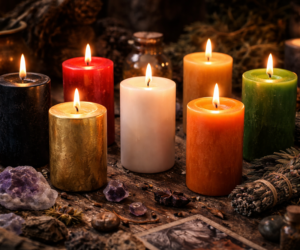
Candle Colors ~ Meanings and How to Use Them in Your Practice

Fire has always been sacred. It transforms, illuminates, consumes, and purifies. When you light a candle with intention, you’re working with one of humanity’s oldest tools for magic and prayer. The flame becomes a focal point for your will, carrying your intention into the universe as it burns. But color matters. Each hue carries its own vibration, its own energy, its own particular way of working. Choosing the right candle color for your intention isn’t about rigid rules. It’s about understanding the language of color and speaking it fluently in your practice. Here’s your guide to candle colors, what they mean, and how to work with them effectively. White ~ Purity, Truth, and the Universal Substitute Energy: Cleansing, purification, truth, protection, peace, spirituality, healing, new beginnings Best Used For:~ Cleansing and purifying spaces or yourself~ Truth-seeking and clarity work~ Protection rituals~ Meditation and spiritual connection~ Healing of any kind~ Peace and tranquility spells~ Baby blessings or new beginnings How to Use: White candles are the universal substitute in candle magic. If you don’t have the “right” color, white works for any intention because it contains all colors within it. Light a white candle when you need a clean slate, when you’re seeking truth in a murky situation, or when you want to establish peace. White candles are excellent for full moon rituals, cleansing your space before other workings, or simply creating sacred atmosphere. Practical Tip: Keep white candles on hand always. They’re your foundation, your go-to, your “I need to do magic right now but don’t have a specific colored candle” solution. Black ~ Protection, Banishing, and Shadow Work Energy: Protection, banishing negativity, breaking hexes, shadow work, absorbing negative energy, endings, mystery, the void Best Used For:~ Banishing unwanted energy, people, or situations~ Breaking curses or hexes~ Protection from psychic attack~ Shadow work and confronting your darkness~ Ending toxic patterns or relationships~ Absorbing negativity from a space~ Dark moon rituals How to Use: Black candles get a bad reputation, but they’re incredibly protective and useful. Light a black candle when you need to banish something from your life. Whether that’s a bad habit, negative energy, or unwelcome attention. Black absorbs, so it pulls negativity away from you. Use black candles during the dark moon, when you’re doing deep shadow work, or when you need serious psychic protection. Practical Tip: Carve what you’re banishing into the candle, then burn it completely. As the wax melts and the words disappear, visualize the thing leaving your life. Bury the remains away from your home or dispose of them at a crossroads. Red ~ Passion, Power, and Vitality Energy: Passion, love (particularly sexual love), courage, strength, willpower, vitality, energy, survival, action Best Used For:~ Sexual attraction and passionate love~ Courage and bravery spells~ Physical strength and vitality~ Survival and root chakra work~ Taking action on delayed projects~ Overcoming fear~ Blood magic (symbolically) How to Use: Red is the color of life force itself, blood, fire, the beating heart. Light red candles when you need to tap into primal power, when you want to attract passionate love (not gentle romance, use pink for that), or when you need the courage to do something that terrifies you. Red candles are excellent for motivation, for lighting a fire under yourself, for calling in desire and manifestation through sheer force of will. Practical Tip: Red candles burn hot, metaphorically and literally. Use them for short, intense workings rather than prolonged meditation. Anoint red candles with cinnamon oil for extra heat and attraction power. Pink ~ Love, Friendship, and Emotional Healing Energy: Romantic love, self-love, friendship, emotional healing, compassion,… …

Membership Required

You must be a member to access this content.

View Membership Levels

Already a member? Log in here

Meanings & Symbolism ~ Reclaiming the Language of Power

The word “witch” carries weight. Say it aloud and watch how the air changes. For centuries, it’s been used as an accusation, a threat, a death sentence. But before that, and increasingly now, it meant something else entirely. A person who walks between worlds, who knows the language of herbs and stars, who refuses to be limited by what others say is possible. The symbols associated with witchcraft tell stories too. Some are ancient, rooted in pre-Christian traditions. Others emerged during the witch trials, assigned to witches by those who feared them. And some have been reclaimed in recent decades by those who wear the title proudly. Let’s explore what these symbols mean, where they come from, and what they represent to those who practice the craft today. The Witch Herself ~ What Does It Mean? Before diving into symbols, we need to understand what “witch” actually signifies. Etymology: The word likely derives from Old English “wicce” (feminine) and “wicca” (masculine), possibly related to “wiccian” meaning “to practice sorcery” or “witan” meaning “to know.” A witch is, fundamentally, one who knows. Particularly knowledge that exists outside acceptable channels. Historical Meaning: Throughout history, witches were healers, midwives, herbalists, and wise women who served their communities. They knew which plants stopped bleeding, eased childbirth, prevented pregnancy, or caused visions. This knowledge made them essential, and dangerous to those in power. Modern Meaning: Today, witch encompasses many practices, Wicca, traditional witchcraft, folk magic, chaos magic, eclectic practices, and more. What unites them is working with energy, intention, and the natural world to create change. To call yourself a witch is to claim agency, to say you won’t wait for permission or divine intervention. You’ll work the magic yourself. The Pentacle/Pentagram ~ Protection and the Elements The Symbol: A five-pointed star, often enclosed in a circle. When the point faces up, it’s generally considered protective. Point down has been associated (often incorrectly) with dark magic, though some traditions use it deliberately to represent different aspects of the craft. Meaning: Each point represents one of the five elements.~ Earth (lower left): grounding, stability, the physical body~ Air (lower right): intellect, communication, breath~ Fire (upper right): passion, transformation, will~ Water (upper left): emotion, intuition, the subconscious~ Spirit (top point): the divine, consciousness, what connects all things The circle around it represents unity, protection, and the infinite nature of energy. History: The pentagram is ancient, appearing in Mesopotamian and Greek contexts long before Christianity. Pythagoras used it as a symbol of mathematical perfection. Early Christians associated it with the five wounds of Christ. It wasn’t until much later that it became exclusively linked with witchcraft and paganism. Often through the very trials that sought to destroy these practices. Modern Use: Witches wear pentacles for protection, to signify their path, and to remind themselves of the elemental balance they work to maintain. The Cauldron ~ Transformation and the Womb of Creation The Symbol: A large pot, usually cast iron, often depicted bubbling with mysterious contents. Meaning: The cauldron represents transformation, the place where raw ingredients become something new. It’s the womb, the grave, the place of death and rebirth. What goes into the cauldron emerges changed. History: Cauldrons appear in Celtic mythology as vessels of plenty and rebirth. The Dagda’s cauldron never ran empty. Cerridwen’s cauldron brewed inspiration and knowledge. In practical terms, cauldrons were essential tools for cooking, brewing medicine, and yes, creating herbal preparations that looked suspiciously like “potions” to the uninformed. Modern Use: Witches use cauldrons (or any fireproof bowl) for burning herbs, mixing ingredients, scrying, or as a symbolic representation of the Goddess. The… …

Membership Required

You must be a member to access this content.

View Membership Levels

Already a member? Log in here