
Folk Magic ~ The Everyday Craft That Never Needed a Book

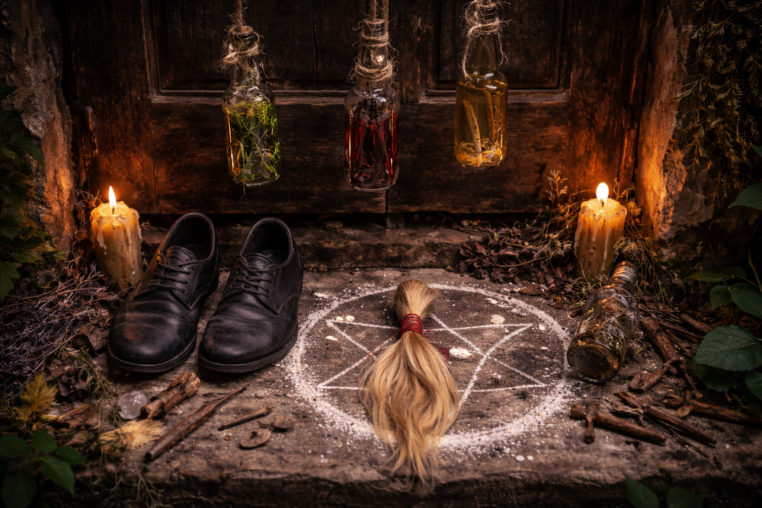
Before there were grimoires, before there were covens, before anyone wrote a word about the Wiccan Rede or the Law of Threefold Return, there was folk magic.It lived in kitchens and doorsteps. In the hands of grandmothers who would not have called themselves witches. In gestures so ordinary they had stopped looking like magic centuries ago. The pinch of salt thrown over the left shoulder, the coin placed under the doormat, the way a particular family always hung something upside down and nobody quite remembered why anymore but everyone knew not to change it.Folk magic is the oldest living tradition in the world. It does not belong to any one culture, and it does not require initiation, tools, a moon phase, or a spiritual lineage. It requires only the knowledge of what works. Passed down, adapted, borrowed, worn smooth by generations of hands using it until it became instinct.Folk magic is endless, geographically specific, and still evolving. The Logic Underneath All of ItFolk magic does not operate on a single coherent theology. But it does operate on consistent underlying principles that appear across cultures and traditions worldwide:Like affects like. A thing that resembles another thing can be used to influence it. A poppet made in someone’s image, a written name, a photograph – these become the person in magical terms and can carry intention toward them.The part contains the whole. A lock of hair, a nail clipping, a worn piece of clothing, any part of a person or thing holds an energetic connection to the whole. Folk magic uses these as links.Words have power. The spoken word, especially in specific forms, the charm, the curse, the blessing, the sworn oath, carries force beyond its literal meaning. How something is named determines what it is.Reversal undoes. If something was done, it can be undone by doing the opposite. The logic of inversion, turning things backward, upside down, inside out, runs through folk magic across every tradition.Thresholds are powerful. Doorways, crossroads, the boundary between night and day, the edge of a body of water, these liminal spaces are charged with potential and are the natural location for folk magical practice.What you do at the beginning determines the whole. The first moment of any new thing, first day of the year, first customer of the day, first words spoken in the morning, carries disproportionate power and can be used to set the entire course.Hold these principles and most folk magic practices will make immediate sense. Protective MagicTurning Things Upside DownOne of the most widespread and least understood folk practices: inverting an object to confuse, deflect, or reverse an unwanted influence.Shoes placed upside down on a doorstep in British and Appalachian tradition confused witches or ill-wishers trying to follow you home. An inverted shoe points in no useful direction. Bottles placed upside down in the garden (the witch bottle tradition, which we will come to) were turned to confuse and trap spirits. Brooms hung upside down at the door in multiple European and African-American folk traditions turned away evil and ill-wishers who could not cross the threshold while the broom was inverted.The logic is the logic of disorientation. A thing turned upside down has lost its orientation in the world. It cannot find its way. It cannot function. Applied to an unwanted influence, inversion makes it directionless and therefore harmless.You will still find this in practice: a broom bristles-up in the corner means company is not welcome to stay. A glass left upside down on the table in some Southern American households is still a signal that the household is protected.The Witch BottleOne of the...

Membership Required

You must be a member to access this content.

View Membership Levels

Already a member? Log in here