

The reverence for cats in Norse culture manifested in various ritual practices and sacred observances. Harming a cat, particularly one associated with a household or a religious practitioner, was considered not just cruel but spiritually dangerous, likely to bring curse and misfortune upon the perpetrator.
The plant kingdom has been humanity’s greatest teacher in the magical arts, offering healing, wisdom, and spiritual connection for millennia. Every herb, flower, and tree carries its own unique energy signature and magical properties. Understanding these botanical allies deepens your craft and creates powerful partnerships with the natural world.
There’s something magnetic about certain oracle decks that draws you in before you even understand why. For me, that pull came from the **W.I.T.C.H – Women in Total Control of Herself** Oracle deck by Angi Sullins, featuring stunning artwork by Silas Toball.
The ninth is Folkvangr, there Freyja rules / Over who shall have a seat in the hall; / Half of the slain, she choose each day, / The other half is Odin’s.” Grímnismál – Sayings of Grimnir | Poetic Edda
A celebration of authentic magical practice rooted in identity, love, and personal truth
Magic Beyond Boundaries
Magic has always been a realm where transformation is not just possible, it’s fundamental. For LGBTQ+ practitioners, witchcraft offers a uniquely powerful space where identity, spirituality, and personal empowerment intersect. This sacred practice invites us to honor our authentic selves while connecting with ancient wisdom that transcends traditional boundaries.
Queer magic and gender-expansive witchcraft aren’t separate traditions. They’re expressions of how diverse practitioners bring their whole selves to their spiritual practice. These approaches celebrate the full spectrum of human experience while honoring the sacred nature of personal identity and self-discovery.
The Historical Foundation
Throughout history, individuals who existed outside conventional gender and sexuality norms have often held special roles in spiritual communities. From the galli priests of ancient Rome to the fa’afafine of Samoa, many cultures have recognized the spiritual power that comes from embodying multiplicity and transcending binary thinking.
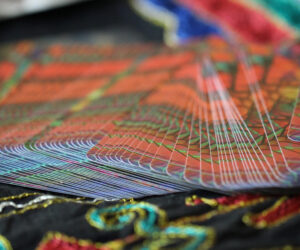
Shuffling tarot cards is more than just mixing up the deck. Iit’s a ritual that helps you connect with your intuition and prepare for a meaningful reading. Whether you’re a beginner just starting your tarot journey or an experienced reader looking to refine your technique, proper shuffling is essential for accurate and insightful readings.
Why Proper Shuffling Matters
Tarot cards are typically larger and thicker than standard playing cards, which means they require different handling techniques. Proper shuffling ensures that the cards are truly randomized, prevents damage to your deck, and creates a meditative moment that helps you focus your energy and intention before a reading.
Essential Shuffling Techniques
1. The Overhand Shuffle
This is the most gentle and beginner-friendly method, perfect for protecting your cards while ensuring good randomization.
Some mornings, all I need is a single card.
Before emails, before the news, before coffee even – I shuffle my deck. No question in mind, just an open heart. I pull one card and sit with it for a moment. Sometimes it speaks loud and clear. Sometimes it’s a whisper I carry with me throughout the day, slowly unfolding.
Today, it was the Six of Swords.
A quiet card. One of transition, movement, and healing. It often shows someone being ferried across water, leaving behind something heavy. Not escaping, not running, just finally ready to move forward.
It felt fitting. There’s something about the early morning light that makes you honest with yourself. I thought about what I’ve been holding onto a little too tightly, where I’ve stayed out of fear instead of choice. The card didn’t demand answers, just awareness.
Shadow work is a powerful practice for anyone on a spiritual, magical, or self-healing path. If you’ve heard the term but aren’t quite sure what it means – or how to begin – this guide is for you.
What Is Shadow Work?
At its core, shadow work is the process of facing and integrating the hidden parts of yourself – your “shadow.” These are the aspects you’ve repressed, denied, or buried over time: old wounds, limiting beliefs, painful memories, or behaviors that make you uncomfortable.
The term comes from the work of psychologist Carl Jung, who believed that the “shadow” is the unconscious part of the psyche that influences our actions, thoughts, and emotions. In spiritual or magical practice, shadow work becomes a form of deep inner alchemy.
Why Does Shadow Work Matter in Witchcraft?
For many witches and mystics, shadow work is essential because:
~ 🪞 You can’t heal what you don’t face.
Ignoring your shadow keeps you stuck in patterns. Working with it brings awareness and transformation.
~ 🔮 It strengthens your magic.
In witchcraft and pagan traditions, greetings often reflect shared spiritual understanding, seasonal energies, or ritual language. Here are some commonly used phrases:
“Blessed be” ~ Perhaps the most well-known witch greeting, used as both hello and goodbye. It originates from traditional Wiccan liturgy:
“Blessed be thy feet that have brought thee in these ways.”
“Merry meet” ~ A joyful way to say hello, often paired with “Merry part, and merry meet again” as a farewell.
“Bright blessings” ~ A warm and positive greeting, wishing light and good energy to the recipient.
Seasonal blessings, such as:
The moment I first held a tarot deck in my hands, I felt a connection that transcended the mere physical cards. There was something magical about the weight of them, the whisper of card against card as I shuffled, and the stories that unfolded with each spread. Whether you’re just beginning your journey with tarot or looking to expand your collection, choosing the right deck is both a deeply personal and practical decision. In this guide, we’ll explore the rich history of tarot, how to select decks that resonate with your spirit, and which types of decks serve different magical purposes.
The Rich History of Tarot
Contrary to what many believe, tarot cards weren’t originally created for divination or spiritual practice. The earliest known tarot decks appeared in 15th century Italy as elaborate playing cards called tarocchi, used by the nobility for games similar to modern bridge. These early decks featured the familiar structure we recognize today – major arcana (trump cards) and minor arcana (suited cards). But their purpose was entertainment, not enlightenment.