Why Black Cats Have Such a Dark History

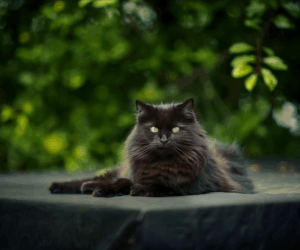
There’s something undeniably magical about a black cat crossing your path. Their sleek ebony fur, luminous eyes, and graceful movements have captivated humans for millennia. Yet these beautiful creatures have endured centuries of persecution, superstition, and fear. So how did black cats become so entwined with darkness, witchcraft, and bad luck?

Ancient Reverence Turned to Fear
The story of black cats hasn’t always been dark. In ancient Egypt, all cats were revered as sacred, and black cats were associated with the goddess Bastet, representing protection, fertility, and good fortune. Celtic mythology also held black cats in high regard, believing they brought blessings to homes.

But this reverence began to shift dramatically during the Middle Ages in Europe. As the Christian church expanded its influence, it sought to suppress pagan traditions and beliefs. Cats, particularly black ones, became caught in this cultural transformation.

The Witch Hunt Connection

Halloween: Ancient Roots, Sacred Symbolism, and Modern Commercialism

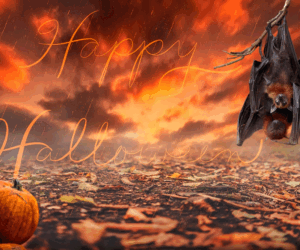
As October 31st approaches, store shelves overflow with plastic decorations, mass-produced costumes, and candy by the ton. But beneath the commercial veneer lies a holiday steeped in ancient tradition, spiritual significance, and genuine magic. Let’s peel back the layers to discover what remains of Halloween’s sacred origins and what we’ve lost to capitalism.

The Ancient Beginning: Samhain
Halloween traces its roots to Samhain (pronounced “SOW-win”), the Celtic festival marking the end of harvest season and the beginning of winter, the “darker half” of the year. Celebrated from sunset on October 31st to sunset on November 1st, Samhain was one of the four major Gaelic seasonal festivals, alongside Imbolc, Beltane, and Lughnasadh.

The Celts believed that on this night, the veil between the physical world and the spirit realm grew impossibly thin. The boundary between the living and the dead became permeable, allowing spirits, fairies, and otherworldly beings to cross over. This wasn’t viewed with horror, but with reverence and caution. A liminal time when the rules of ordinary reality loosened.

Sacred Practices of Samhain
Our ancestors honored this sacred night with rituals that carried deep meaning:

~ Lighting bonfires on hilltops to guide spirits and provide protection

The Case for One Beautifully Illogical Thing: Why Your Home Needs an Object That Makes No Sense

We live in an age of optimization. Our homes are curated for function, flow, and aesthetic cohesion. Marie Kondo taught us to keep only what sparks joy. Minimalism tells us less is more. Every lifestyle influencer has a system, a method, a five-step process for making your space “work better.”

And yet, I’m here to argue for the opposite: You need at least one object in your home that makes absolutely no logical sense.

Not something quirky-but-practical. Not a conversation starter that you can explain away. I mean something truly, wonderfully, stubbornly illogical. Something that violates every principle of good design and sensible living. Something that exists simply because it exists, and for no other reason.

Why You Need the Illogical
It Keeps You Human
When everything in your life has a purpose, you start to feel like a machine. The coffee maker makes coffee. The meditation cushion facilitates mindfulness. The art on the wall “ties the room together.” But humans aren’t efficient. We’re gloriously, messily irrational creatures who fall in love with things for reasons we can’t articulate.

The Witch’s Mark: Spiritual Meanings of Beauty Marks and Birthmarks

Your body is a map of your soul’s journey. Every scar tells a story, every freckle holds meaning, and those seemingly random beauty marks and birthmarks? They’re anything but random. Across cultures and throughout history, the marks we’re born with have been seen as signs, symbols, and messages. From past lives, from the divine, from our own spirit choosing where to place reminders of who we are and what we came here to do.

In the witch trials of Europe and colonial America, officials searched accused witches for unusual marks, believing these were signs of demonic pacts or places where familiars suckled. While that dark history speaks to fear and persecution, it also acknowledges something our ancestors understood – the body bears witness to the spiritual.

Modern witches and spiritual practitioners have reclaimed this knowledge, reading birthmarks and beauty marks not as signs of evil, but as sacred texts written on skin, soul signatures, karmic markers, and spiritual fingerprints left by our higher selves.

Let’s explore what your marks might be telling you.

Face: The Window to Your Soul’s Purpose
Forehead

Everyday Magic: Common Sayings with Witchy Origins

Language is one of humanity’s most powerful forms of magic. And many phrases we use daily carry the remnants of ancient beliefs, folk wisdom, and yes, witchcraft. These common expressions, woven into our everyday conversations, are linguistic spells that connect us to centuries of magical thinking and supernatural beliefs. Most people have no idea they’re invoking protection, warding off evil, or calling upon ancient powers when they casually drop these phrases into conversation.

Let’s explore the fascinating witchy origins behind some of our most common sayings and discover the hidden magic in our everyday speech.

“Knock on Wood” / “Touch Wood”
What We Say: We knock on or touch wood after making a positive statement to prevent jinxing ourselves.

The Witchy Origins: This practice has multiple magical roots, all centered around the belief that trees house, protective spirits. The phrase comes from at least the 19th century, with reports of it originating in pagan communities around the world, including the Celts.

Separating Myth from Reality: Debunking Common Witchcraft Misconceptions

The world of witchcraft is shrouded in centuries of misinformation, Hollywood dramatization, and well-meaning but misguided folklore. From the idea that you must be “born a witch” to the belief that all magic comes back threefold, these myths can create barriers for newcomers and perpetuate harmful stereotypes. Let’s illuminate the shadows and separate fact from fiction in the modern practice of witchcraft.

The “Born Witch” Myth
Myth: You must be born into a witching family or have “natural gifts” to practice witchcraft.

Reality: Anyone can learn and practice witchcraft, regardless of their family background or perceived natural abilities.

This persistent myth suggests that witchcraft is some kind of inherited superpower that only flows through certain bloodlines. While it’s true that some practitioners come from families with magical traditions, and others may seem to have natural intuitive abilities, witchcraft is fundamentally a learned practice. Much like cooking, gardening, or playing an instrument.

The Sacred Language of Dreams: A Guide to Dream Interpretation

Unlock the hidden messages from your subconscious mind and spiritual realm

Core Content:

What dream interpretation is and its historical significance
How dreams work psychologically and spiritually
Different types of dreams and their purposes
Step-by-step interpretation process
Common symbols and their meanings
Magical approaches to dream work
Practical Elements:

Dream journaling techniques
Herbs and crystals for dream work
Advanced interpretation methods
How to work with challenging dreams
Building a personal dream practice
Common interpretation mistakes to avoid
The post balances:

The Ten Commandments: Ancient Wisdom Beyond Biblical Boundaries

The Ten Commandments stand as one of humanity’s most enduring moral frameworks, transcending their biblical origins to influence spiritual traditions, magical practices, and ethical systems across cultures and millennia. While traditionally viewed through Judeo-Christian lenses, these ancient principles contain layers of esoteric wisdom that have captivated mystics, witches, and spiritual seekers far beyond conventional religious boundaries.

Ancient Origins: More Than Meets the Eye
According to biblical tradition, the Ten Commandments were first received by Moses on Mount Sinai, carved into stone tablets by divine hand. However, archaeological and historical evidence suggests a more complex origin story that reveals fascinating connections to ancient Near Eastern legal and spiritual traditions.

The commandments appear in two slightly different versions within biblical texts, Exodus 20:1-17 and Deuteronomy 5:4-21, suggesting an evolution in their understanding and application. More intriguingly, similar moral and legal principles appear in earlier Mesopotamian codes, such as the Code of Hammurabi (c. 1750 BCE) and various Egyptian moral teachings, indicating that these ethical principles may have emerged from a broader ancient wisdom tradition.

The Sacred Number 13: Reclaiming Magic from Superstition

Walk into any hotel and you’ll likely find that the 13th floor doesn’t exist. At least not officially. Many airlines skip row 13, and countless people avoid important events on Friday the 13th. But what if I told you that this widespread fear of the number 13 represents one of history’s most successful campaigns to demonize sacred feminine wisdom?

The Making of a “Cursed” Number
The mainstream fear of 13, known as triskaidekaphobia, didn’t emerge in a vacuum. Like many superstitions we take for granted, it has roots in the systematic suppression of pre-Christian spiritual traditions.

The most commonly cited origin story points to the Last Supper, where 13 people gathered before Jesus’s crucifixion, with Judas supposedly being the 13th to take his seat. This Christian narrative helped cement 13’s reputation as harboring betrayal and death. But this explanation only scratches the surface of a much deeper cultural shift.

During the centuries-long Christianization of Europe, many symbols and practices sacred to pagan traditions were deliberately reframed as evil or unlucky. The number 13, with its profound connections to lunar cycles and goddess worship, became a prime target in this spiritual makeover.

The Magic of Wish-Making ~ Enchanted Moments All Around Us

Life is full of tiny magical moments. Fleeting instances when the universe seems to pause and invite us to dream a little bigger. These are the moments when wishes feel possible, when hope takes flight on a whisper or a flutter of wings. From childhood traditions passed down through generations to spontaneous moments of wonder, the art of wish-making transforms ordinary experiences into something extraordinary.

The Classic Wish-Makers
Some wish-making traditions are so beloved they’ve become universal. The birthday candle stands as perhaps the most famous. That single moment when you close your eyes, take a deep breath, and blow out the flames while your heart holds tight to a secret hope. There’s something deeply satisfying about the ritual: the gathering of loved ones, the anticipation, and that magical puff of breath that sends your wish into the world.

Shooting stars have captivated wish-makers for millennia. These celestial messengers streak across the night sky for just a few seconds, but