

The Sacred Language of Dreams: A Guide to Dream Interpretation

Unlock the hidden messages from your subconscious mind and spiritual realm

Core Content:

What dream interpretation is and its historical significance
How dreams work psychologically and spiritually
Different types of dreams and their purposes
Step-by-step interpretation process
Common symbols and their meanings
Magical approaches to dream work
Practical Elements:

Dream journaling techniques
Herbs and crystals for dream work
Advanced interpretation methods
How to work with challenging dreams
Building a personal dream practice
Common interpretation mistakes to avoid
The post balances:

Membership Required

You must be a member to access this content.

View Membership Levels

Already a member? Log in here

The Ten Commandments: Ancient Wisdom Beyond Biblical Boundaries

The Ten Commandments stand as one of humanity’s most enduring moral frameworks, transcending their biblical origins to influence spiritual traditions, magical practices, and ethical systems across cultures and millennia. While traditionally viewed through Judeo-Christian lenses, these ancient principles contain layers of esoteric wisdom that have captivated mystics, witches, and spiritual seekers far beyond conventional religious boundaries.

Ancient Origins: More Than Meets the Eye
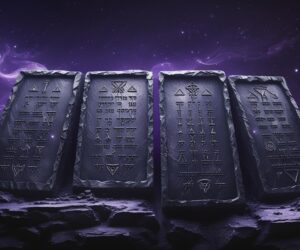
According to biblical tradition, the Ten Commandments were first received by Moses on Mount Sinai, carved into stone tablets by divine hand. However, archaeological and historical evidence suggests a more complex origin story that reveals fascinating connections to ancient Near Eastern legal and spiritual traditions.

The commandments appear in two slightly different versions within biblical texts, Exodus 20:1-17 and Deuteronomy 5:4-21, suggesting an evolution in their understanding and application. More intriguingly, similar moral and legal principles appear in earlier Mesopotamian codes, such as the Code of Hammurabi (c. 1750 BCE) and various Egyptian moral teachings, indicating that these ethical principles may have emerged from a broader ancient wisdom tradition.

Membership Required

You must be a member to access this content.

View Membership Levels

Already a member? Log in here

The Day Out of Time: Understanding July 25th’s Mystical Significance

Every year on July 25th, something remarkable happens in the world of alternative timekeeping. We encounter what’s known as the “Day Out of Time.” While most of us are busy with our regular Friday routines, this date holds profound meaning for those who follow ancient Mayan concepts of cosmic time.

What Makes July 25th Special?
The Day Out of Time exists because of a beautiful mathematical reality within the 13 Moon Calendar system. This day “is the culmination of the 13 Moon Calendar year originated from the Mayan science of time. It closes 13 moons of 28 days = 364 days.” Simply put, when you multiply 13 moons by 28 days each, you get 364 days—leaving one day that exists outside this structure.

The 13 Moon calendar consists of “13 moons of 28 days = 364 days” making July 25th “the extra day, the 365th day” that doesn’t belong to any moon cycle. This makes it literally a day that exists outside of time as measured by this ancient system.

Ancient Wisdom Meets Modern Practice
The concept isn’t entirely modern. The Mayans called this day “Weyeb” and considered it “a day free of time.” This ancient understanding recognized that certain days held special significance in the cosmic order, moments when the usual flow of time seemed to pause.

Membership Required

You must be a member to access this content.

View Membership Levels

Already a member? Log in here

Guardians of the Veil: Mythical Creatures in Pagan Practice

In the liminal spaces between worlds, where shadow meets light and the mundane brushes against the magical, dwell the creatures of myth and legend. For those who walk the pagan path, these beings are far more than folklore. They are teachers, guardians, and embodiments of the natural forces that shape our world.

The Basilisk: Sovereign of Shadow and Transformation
In the depths of medieval bestiaries and alchemical texts, the Basilisk reigns as the “King of Serpents.” This creature, born from a serpent’s egg incubated by a cockerel, represents the ultimate fusion of opposing forces – earth and air, creation and destruction.

From a pagan perspective, the Basilisk embodies the shadow work essential to spiritual growth. Its deadly gaze that turns flesh to stone mirrors our own ability to become paralyzed by fear or rigid in our thinking. Yet this same petrifying power can be viewed as preservation, the ability to halt harmful energies in their tracks.

In ritual work, the Basilisk serves as a guardian of thresholds, particularly those between the conscious and unconscious mind. Its association with alchemy makes it a powerful ally for practitioners working with transformation magic, helping to burn away what no longer serves while protecting the essential self during times of profound change.

Fairies: The Wild Court of Nature’s Wisdom

Membership Required

You must be a member to access this content.

View Membership Levels

Already a member? Log in here

Understanding the Qabalah: A Journey Through Jewish Mysticism

The Qabalah (also spelled Kabbalah, Cabala, or other variations) stands as one of humanity’s most profound mystical traditions, offering seekers a systematic approach to understanding the divine mysteries that connect God, universe, and soul. Far from being a single, monolithic system, the Qabalah has evolved through centuries of spiritual inquiry, each era contributing its own unique perspectives and innovations to this rich tapestry of Jewish mysticism.

The Foundation: Core Concepts and Structure
At the heart of Qabalistic teaching lies the Tree of Life (Etz Chaim), an intricate diagram consisting of ten interconnected spheres called sephiroth, linked by twenty-two paths. This sacred geometry maps the divine emanation from the highest spiritual source, Keter (Crown), down through various levels of consciousness and reality, culminating in Malkuth (Kingdom), our physical world.

The tradition encompasses several interconnected elements that work together to create a comprehensive spiritual system. The sacred texts, primarily the medieval Zohar alongside earlier works like the Sefer Yetzirah (Book of Creation), employ complex symbolism and allegory to explore divine mysteries.

Membership Required

You must be a member to access this content.

View Membership Levels

Already a member? Log in here

Honoring Your Body, Instincts, and Cycles as Sacred Growth: A Path to Embodied Wisdom

A Path to Embodied Wisdom
In our culture of constant productivity and mind-over-matter thinking, we often disconnect from the profound wisdom that lives within our physical being. Yet our bodies, instincts, and natural cycles contain ancient intelligence that can guide us toward authentic growth and spiritual development. Learning to honor these aspects of ourselves as sacred represents a return to wholeness and embodied living.

Understanding Sacred Embodiment
Sacred embodiment is the recognition that our physical form is not merely a vessel for consciousness, but rather an intelligent, wise teacher that holds keys to our deepest growth and transformation. This perspective shifts us from seeing the body as something to control or transcend, to honoring it as a sacred temple of wisdom.

What It Means to Honor Your Body
Honoring your body means recognizing it as:

~ A source of wisdom: Your body constantly provides information about your needs, boundaries, and authentic desires

Membership Required

You must be a member to access this content.

View Membership Levels

Already a member? Log in here

Peering Through the Veil: A Practitioner’s Guide to Prophecy and Prediction

Blessed be, seekers of hidden knowledge…

Since the dawn of consciousness, humans have gazed into the swirling mists of tomorrow, desperate to glimpse what fate has woven for us. From the sacred smoke of ancient temples to the glowing screens of modern mystics, the art of prophecy has evolved, yet remains as alluring, and as controversial, as ever.

As practitioners walking between worlds, we understand that the universe speaks in whispers, signs, and symbols. But how do we separate true visions from mere wishful thinking? How do we honor the ancient arts while avoiding the traps that have ensnared even the most gifted seers?

Let us light our candles, cast our circles of discernment, and explore the shadowy realm where time bends and futures unfold…

The Sacred Archetypes of Prophecy
The Prophet: Divine Messenger
Prophets claim direct communion with divine forces, receiving visions and messages meant to guide or warn humanity. Unlike other divinatory practitioners, prophets typically frame their insights as religious or spiritual revelations rather than personal psychic abilities.

Membership Required

You must be a member to access this content.

View Membership Levels

Already a member? Log in here

Lucid Journeying: Conscious Travel Through Inner Realms

Lucid journeying is the practice of entering altered states of consciousness with full awareness and intention, allowing you to explore spiritual realms, connect with guides and allies, and gather wisdom from beyond ordinary reality. Unlike dreams, which often occur spontaneously and with limited conscious control, lucid journeying is a deliberate spiritual practice where you maintain awareness and can direct your experience.

This ancient shamanic technique involves entering a trance-like state while remaining conscious, enabling you to travel through what many traditions call the “otherworld” or “spirit realm.” During these journeys, practitioners can seek guidance, perform healing work, retrieve lost soul parts, communicate with spiritual beings, and explore dimensions of reality normally hidden from everyday consciousness.

The Difference Between Lucid Journeying and Dreaming
While both involve altered states of consciousness, lucid journeying and dreaming are fundamentally different practices:

Dreams: The Unconscious Mind’s Expression
Characteristics of Dreams:
~ Occur naturally during sleep cycles

Membership Required

You must be a member to access this content.

View Membership Levels

Already a member? Log in here

Mercury in Retrograde: Navigating the Cosmic Tides

Three to four times a year, the cosmos offers us a sacred pause. A time when Mercury, the swift messenger of the gods, appears to journey backward through the heavens. For those who walk the spiritual path, these periods hold profound meaning and transformative power.

Understanding Mercury’s Sacred Dance
When Mercury enters retrograde, we witness one of the universe’s most beautiful illusions. Though science tells us it’s merely a matter of orbital perspective, like passing another car on a cosmic highway, those attuned to celestial energies know there’s deeper magic at work.

Mercury, racing around the Sun in just 88 days, periodically appears to slow, stop, and reverse its path against the starry backdrop. This celestial choreography creates a unique energetic shift that sensitive souls have recognized for millennia. The illusion itself carries meaning: sometimes we must appear to move backward to gain the perspective needed for our next leap forward.

Ancient astrologers understood that celestial movements reflect earthly patterns. As above, so below. The hermetic principle that guides much of our spiritual understanding today.

Membership Required

You must be a member to access this content.

View Membership Levels

Already a member? Log in here

The Sacred Number 13: Reclaiming Magic from Superstition

Walk into any hotel and you’ll likely find that the 13th floor doesn’t exist. At least not officially. Many airlines skip row 13, and countless people avoid important events on Friday the 13th. But what if I told you that this widespread fear of the number 13 represents one of history’s most successful campaigns to demonize sacred feminine wisdom?

The Making of a “Cursed” Number
The mainstream fear of 13, known as triskaidekaphobia, didn’t emerge in a vacuum. Like many superstitions we take for granted, it has roots in the systematic suppression of pre-Christian spiritual traditions.

The most commonly cited origin story points to the Last Supper, where 13 people gathered before Jesus’s crucifixion, with Judas supposedly being the 13th to take his seat. This Christian narrative helped cement 13’s reputation as harboring betrayal and death. But this explanation only scratches the surface of a much deeper cultural shift.

During the centuries-long Christianization of Europe, many symbols and practices sacred to pagan traditions were deliberately reframed as evil or unlucky. The number 13, with its profound connections to lunar cycles and goddess worship, became a prime target in this spiritual makeover.

Membership Required

You must be a member to access this content.

View Membership Levels

Already a member? Log in here