
The Ten Commandments: Ancient Wisdom Beyond Biblical Boundaries

The Ten Commandments stand as one of humanity’s most enduring moral frameworks, transcending their biblical origins to influence spiritual traditions, magical practices, and ethical systems across cultures and millennia. While traditionally viewed through Judeo-Christian lenses, these ancient principles contain layers of esoteric wisdom that have captivated mystics, witches, and spiritual seekers far beyond conventional religious boundaries.

Ancient Origins: More Than Meets the Eye
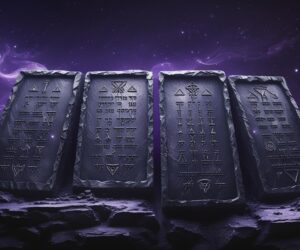
According to biblical tradition, the Ten Commandments were first received by Moses on Mount Sinai, carved into stone tablets by divine hand. However, archaeological and historical evidence suggests a more complex origin story that reveals fascinating connections to ancient Near Eastern legal and spiritual traditions.

The commandments appear in two slightly different versions within biblical texts, Exodus 20:1-17 and Deuteronomy 5:4-21, suggesting an evolution in their understanding and application. More intriguingly, similar moral and legal principles appear in earlier Mesopotamian codes, such as the Code of Hammurabi (c. 1750 BCE) and various Egyptian moral teachings, indicating that these ethical principles may have emerged from a broader ancient wisdom tradition.

The Sacred Number 13: Reclaiming Magic from Superstition

Walk into any hotel and you’ll likely find that the 13th floor doesn’t exist. At least not officially. Many airlines skip row 13, and countless people avoid important events on Friday the 13th. But what if I told you that this widespread fear of the number 13 represents one of history’s most successful campaigns to demonize sacred feminine wisdom?

The Making of a “Cursed” Number
The mainstream fear of 13, known as triskaidekaphobia, didn’t emerge in a vacuum. Like many superstitions we take for granted, it has roots in the systematic suppression of pre-Christian spiritual traditions.

The most commonly cited origin story points to the Last Supper, where 13 people gathered before Jesus’s crucifixion, with Judas supposedly being the 13th to take his seat. This Christian narrative helped cement 13’s reputation as harboring betrayal and death. But this explanation only scratches the surface of a much deeper cultural shift.

During the centuries-long Christianization of Europe, many symbols and practices sacred to pagan traditions were deliberately reframed as evil or unlucky. The number 13, with its profound connections to lunar cycles and goddess worship, became a prime target in this spiritual makeover.

The Magic of Wish-Making ~ Enchanted Moments All Around Us

Life is full of tiny magical moments. Fleeting instances when the universe seems to pause and invite us to dream a little bigger. These are the moments when wishes feel possible, when hope takes flight on a whisper or a flutter of wings. From childhood traditions passed down through generations to spontaneous moments of wonder, the art of wish-making transforms ordinary experiences into something extraordinary.

The Classic Wish-Makers
Some wish-making traditions are so beloved they’ve become universal. The birthday candle stands as perhaps the most famous. That single moment when you close your eyes, take a deep breath, and blow out the flames while your heart holds tight to a secret hope. There’s something deeply satisfying about the ritual: the gathering of loved ones, the anticipation, and that magical puff of breath that sends your wish into the world.

Shooting stars have captivated wish-makers for millennia. These celestial messengers streak across the night sky for just a few seconds, but